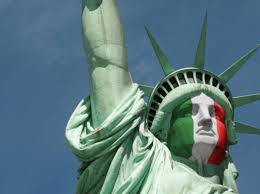
Italian is Cool

In June 2018 I read an article in an Italian newspaper about the growth of studying the Italian language in and around New York City.  In the last five years, the number of children that study Italian, from elementary school through high school, has more than doubled, from 22,000 to 54,000 in the three states of New York, New Jersey and Connecticut.

At the same time, there is an increase in the number of bilingual Italian / English programs in which all of the materials are taught half time in Italian and half time in English. The first such program is already in its fourth year in a public school in Bensonhurst in Brooklyn.  The second will begin next fall in a public school in Harlem in Manhattan.  A third is ready to launch in Williamsburg, Brooklyn.  And even in Staten Island, the borough most populated by Italian-Americans, there is talk of a similar initiative.  The demand for placement is great; for example, for the first year of kindergarten, the program in Bensonhurst received 242 requests for only 18 places available.

There are several reasons for this growth and trend in studying Italian.  It is a beautiful language, fun (even if difficult) and at times useful.  Italy is a favorite destination for tourists.  The food and culture are widely recognized.  Italy and its culture are loved by New Yorkers and in general by Americans, but unfortunately the language is spoken little.  Therefore, more and more families in New York are showing interest in bilingual Italian-English programs because they are convinced that they will be good for their children from a scholastic point of view and for their characters and open minds.

To start a bilingual program, families must guarantee the attendance of 20 children up to the 5thgrade.  Among the other requirements are that about half the students must have a parent whose mother tongue is Italian.  And a teacher must be available who speaks both languages and has all the certificates necessary to teach children.  One difficulty for the young Italian families who have emigrated to New York with little kids is that they are not concentrated in a few neighborhoods (like in the past) but are dispersed throughout the city.  If they don’t live near the school, it is not easy to organize commuting in the Big Apple.

There are many groups behind this trend in bilingual education.  The Italian American Committee on Education (IACE) is a non-profit founded in 1975 to promote the study of Italian language and culture in the tri-state area.  It is under the supervision of the Consul General of Italy in New York.  They also furnish books and resources and finance a part of the stipend of the bilingual teacher.  And then there is the team that the Consul Generals of New York calls “The Mamma Tigers” who promote the campaign and recruit interested families.

To attract more students, the IACE is also launching “extra curriculum” initiatives focused on Made in Italy in collaboration with major Italian brands, like “Eat healthy and speak Italian” with Eataly and “Design the car of your dreams” with Ferrari. This type of cultural marking helps to increase the propensity of Americans to buy authentic products that are Made in Italy.
Posted in Abitudini, English, Foto, Italoamericani, La Gente, La Lingua, New York | Leave a comment

La Crema di Pistacchio

Dopo il proprio matrimonio lo scorso luglio (nel 2018) a Verona, Jacopo si è imbarcato sullo yacht della famiglia di sua moglie per navigare lungo la costa d’Italia. Che esperienza gloriosa deve essere stata! Quando è tornato negli Stati Uniti (dopo un contrattempo con l’immigrazione), ha portato un regalo speciale da una delle tante tappe: un barattolo di Crema di Pistacchio dalla Sicilia. Dopo averne assaggiato un piccolo cucchiaio, ci siamo subito innamorati.

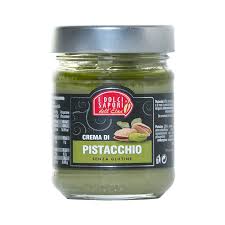
Questo particolare vasetto è fatto da I Dolci Sapori dell’Etna, e la crema è fatta con i noccioli coltivati a Bronte, nel ricco terreno lavico sulle pendici del vulcano.  Il pistacchio di Bronte DOP (Designazione di Origine Protetta di Europa) è famoso fin dall’antichità per il sapore dolce e delicato, il profumo aromatico, e per il suo intenso colore verde.  Bronte e i due paesi limitrofi (Adrano e Biancavilla) producono solo circa l’1% della produzione mondiale di pistacchi, ma i loro pistacchi sono ricercati dagli chef di tutto il mondo.  I noccioli (in realtà frutta) vengono utilizzati in molti prodotti nazionali, che vanno dalla salsiccia alla pasta, dalle torte ai torroni, dai formaggi ai biscotti.   Il gelato al pistacchio brontese è uno dei più apprezzato al mondo (vedete il post, “Lo Smeraldo della Sicilia” di dicembre del 2017).

La crema di pistacchio è così vellutata e dolce che è pericolosa, proprio come la Nutella è per gli altri. Questa crema spalmabile può essere utilizzata in tanti modi diversi:

·      Metti un cucchiaino nel tuo espresso mattutino

·      Spalmalo sul pane tostato o sui crostini

·      Condisci un croissant o altra pasta frolla

·      Combinalo con la crema pasticcera o la panna montata come ripieno per dolci

·      Usalo come condimento o come base per il gelato

·      Mescolalo con yogurt o ricotta

·      Usalo come ripieno per amaretti o biscotti

·      Mangiatelo a cuchiaiate

Il problema è che è costoso. Amazon vende il barattolo di Crema di Pistacchio da 6,7 ​​once (190 gr) di I Dolci Sapori dell’Etna ad oltre $36 (31 euro). Amazon riporta molti altri tipi di creme al pistacchio (non di Bronte) per un minimo di $16 (meno di 14 euro). Immagino che la qualità vari ampiamente.

Un’opzione è farselo da soli con pistacchi della California. Per prima cosa devi acquistare i gherigli crudi e non salati. Un sacchetto da 1 libbra di noci nel guscio produrrà circa mezzo libbra di chicchi. Una busta di noccioli da 2 libbre o 3 libbre costa circa $35 a seconda di dove la si acquista. Alla fine, un batch viene a costare $0,05 per oncia invece di $5 per quello industriale.  Ecco una ricetta raccolta da diverse fonti:

Ingredienti

·      150 g pistacchi sgusciati (non salati)

·      100 g cioccolato bianco

·      100 g zucchero

·      20 g burro

·      50 ml latte

Preparazione

1.      Mettete dell’acqua in un pentolino a bollire.  Fate bollire i pistacchi per almeno 2 minute in modo da rendere più semplice l’eliminazione della pellicina di cui sono rivestiti.

2.     Scolateli e metteteli sopra un panno di cotone asciutto.  Staccate la pellicina con le dita o strofinando delicatamente il panno lungo la superficie.

3.     Arrostite i pistacchi sbucciati su una teglia da forno in un forno preriscaldato a 360 gradi per 10 minuti o fino a quando saranno leggermente dorati e fragranti. Togliete dal forno e lasciateli raffreddare.

4.     Trasferiteli in un frullatore e polverizzateli con lo zucchero. Aggiungete solo un po’ di latte per rendere la miscela cremosa. Miscelate di nuovo finché non ottenete un composto omogeneo.

5.      Fate fondere a bagnomaria, in un tegamino, il cioccolato bianco assieme al burro ed il resto di latte e fate sciogliere lentamente mescolando delicatamente con un mestolo di legno.

6.     Unite la miscela di pistacchio al cioccolato ed amalgamate il tutto fino ad ottenere una crema abbastanza densa; se dovesse essere troppo densa, potete aggiungere ancora un goccio di latte.

7.     Fate raffreddare la crema di pistacchi nei barattoli piccoli e puliti.


Posted in Cucina italiana, Foto, Italia, Italiano, Sicilia, Storia | Leave a comment

Pistachio Cream

After Jacopo’s marriage in July 2018 in Verona, he boarded his wife’s family’s yacht to sail around Italy. What a glorious experience it must have been!  When he returned to the States (after a hassle with immigration), he brought back a special gift from one of his many stops along the way:  a jar of Crema di Pistacchio (pistachio cream) from Sicily.  After one small spoonful, we instantly fell in love.

This particular jar made by I Dolci Sapori dell’Etna (the sweet tastes of Etna), and the cream is made with pistachios grown in Bronte, in the rich, lava soil on the slopes of the volcano.  The pistachio of Bronte DOP (Europe’s Protected Designation of Origin) has been famous throughout the world since antiquity for its sweet and delicate flavor, its aromatic scent, and its intense green color.  Bronte and its two neighboring towns (Atrano and Biancavilla) produce only about 1% of the world’s pistachios, but they are sought after by chefs worldwide.  The nuts (actually, a fruit) are used in many Italian products, ranging from sausage to pasta, from cakes to nougats, from cheeses to biscuits.  The Brontese pistachio gelato is one of the most appreciated in the world.  (See post, “The Emerald of Sicily” from December 8, 2017.)

The pistachio cream is so velvety smooth and sweet that it is dangerous (just like Nutella can be to other folks)!  This spreadable nut cream can be used in so many ways:

  • Put a small spoonful in your morning espresso
  • Smear it on toasted bread or use it to top crostini
  • Spread it on a croissant or any other pastry
  • Combine it with pastry cream or whipped cream as a filling for cakes or eclairs
  • Use it as a topping for or a base of gelato
  • Mix it with yogurt or ricotta cheese
  • Use it as a filling to sandwich macarons or cookies
  • Eat it right out of the jar

The problem is that it is expensive.  Amazon sells the 6.7 oz jar of Crema di Pistacchio by I Dolci Sapori dell’Etnafor more than $36.  Amazon lists many other types of pistachio creams (not from Bronte) for as low as $16.  I imagine the quality varies widely.

An option is to make it yourself using California pistachios.  First you need to buy the raw, unsalted kernels (a 2-pound or 3-pound bag costs around $35 depending on where you purchase it).  A 1-pound bag of nuts in the shell will yield about a half pound of kernels.  In the end, you can make a batch that costs $.05 per ounce as opposed to buying one for $5 an ounce.  Here is a recipe gleaned from several sources:

Ingredients

  • 5 oz pistachios, unsalted and shelled
  • 5 oz granulated sugar (preferably superfine), or less if you prefer
  • 5 oz white chocolate chips
  • 1 oz unsalted butter
  • 2 oz milk
  • Seeds of ¼ vanilla bean (or a couple of drops of extract)

Preparation

  1. Bring a small pot of water to a rolling boil. Add pistachios and boil for about 2 minutes.  You will notice the skin starting to lift off.    Remove the skins with your fingers or by rubbing them with a dry dishtowel.
  2. In a 360 F oven, toast the pistachios on a baking sheet for about 10 minutes until lightly browned and fragrant. Remove from oven and let cool.
  3. Using a food processor, grind the toasted pistachios with the sugar. Add just enough milk to make the mixture creamy. Blend again until quite smooth.
  4. In a double boiler arrangement, melt the white chocolate with the butter and the rest of the milk. Do not boil. Add the pistachio mixture and the vanilla seeds or extract.  Cook a little longer on low heat until a little denser.
  5. Remove from heat, let cool, and pour into small, clean jars.


Posted in Cucina italiana, English, Foto, Italia, Sicilia | 3 Comments