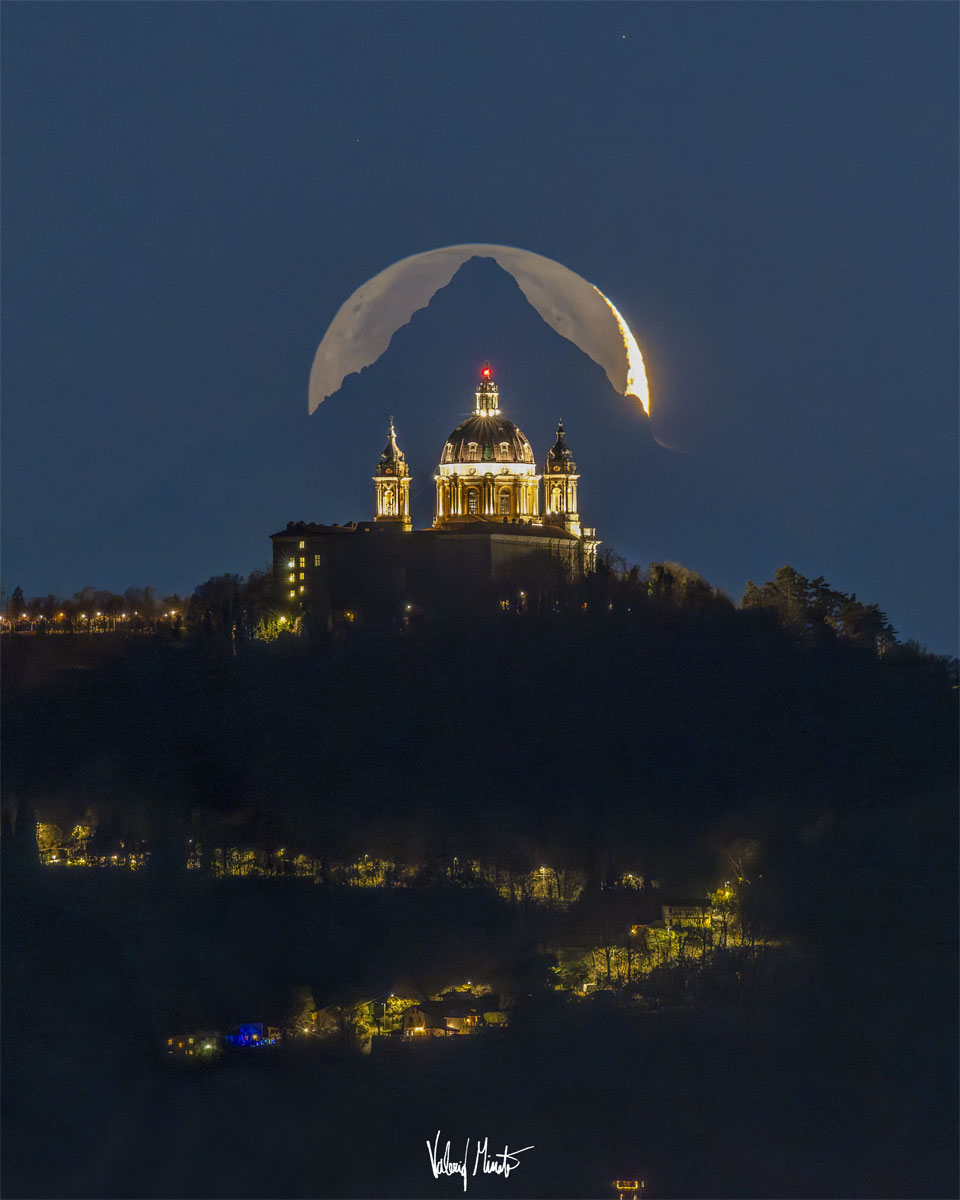
NASA, the American Space Agency, awarded a Turin photographer, Valerio Minato, astronomical picture of the day for Christmas 2023. The image, taken 10 days earlier on December 15, shows the alignment of the Basilica Superga, Monviso, and the moon. The Basilica is located near Turin, and Monviso is the highest mountain of the Cottian Alps, located in Italy close to the French border.
NASA titled the photograph ‘Cathedral, mountain, Moon’ and explained the recognition: “Single shots like this require planning. The first step is to realize that such an incredible triple alignment actually happens. The second step is to find the best place to photograph it. The third step is the most difficult: to be in that spot exactly at the right moment when the skies are clear.
Minato, a self-taught photographer, tried to capture this shot five times in the last six years, but encountered bad weather. He described this year’s photo on Facebook: “December 15, 2023, 6:52 pm. Superga and Monviso had an unforgettable appointment with the Moon. Yesterday afternoon, from the heights of Castagneto Po, a truly magical moment took place. In a very small portion of the sky, for a few seconds, the King of Stone, the Basilica of Superga and the crescent moon met, giving a unique spectacle.”
NASA concludes: “This was a photographic dream come true…. Although the setting Moon was captured in a growing phase, the exposure was long enough to allow doubly reflected Earth light from the Sun, called the DaVinci glow, to illuminate the entire top of the Moon.”
Ottobre 2023: La Torre Garisenda nel centro di Bologna è in massima allerta per crollo. Nessuno sa quando potrebbe accadere—tre mesi, un anno, 5 o dieci anni. L’allerta è gialla. Una allerta rossa significa che il crollo è imminente.
Un comitato scientifico monitora il sito dal 2019. Sensori forniscono interpretazioni ogni 15 minuti. Durante l’ultimo mese, il monitoraggio ha rivelato una tendenza inaspettata e accelerata di compressione alla base della torre.
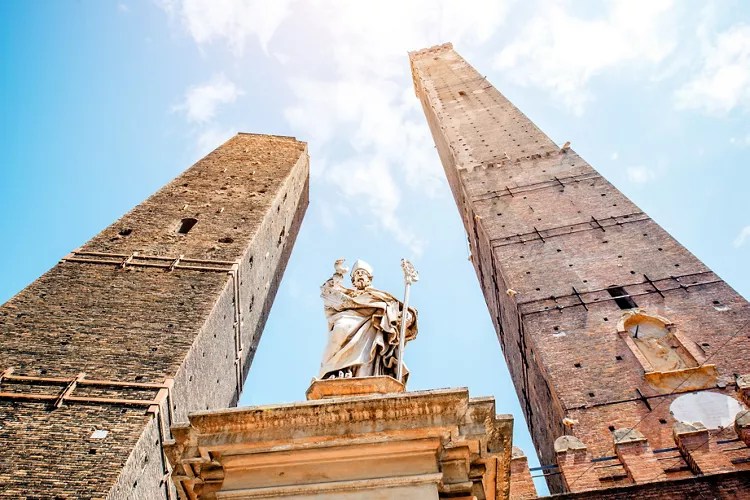
La Torre Garisenda è una delle torri gemelle famose di Bologna. Oggi la torre Garisenda è alta 48 metri (158 piedi) e la vicina torre degli Asinelli è alta quasi il doppio con 97,2 metri (319 piedi). Entrambe furono costruiti nel XII secolo quando Bologna era come una piccola Manhattan, con decine di torri. Ognuna è stata costruita da una famiglia locale che cercava di costruire la propria più alta delle altre.
Il terreno e le fondamenta della torre Garisenda probabilmente iniziarono a cedere subito dopo la sua costruzione, probabilmente a causa di un errore di costruzione. A metà del 1300 la torre venne accorciata per il timore che crollasse. La sua pendenza spaventò perfino Dante Alighieri, che nell’Inferno della Divina Commedia la paragonò alle sembianze di un gigante, Anteo.
La torre Garisenda pende con un angolo di quattro gradi, poco meno dei cinque gradi della Torre pendente di Pisa. La pendenza potrebbe essere stata accelerata da condizioni meteorologiche estreme, comprese le alte temperature della scorsa estate e le inondazioni all’inizio del 2023. Come tutte le torri e i grattacieli, la Torre Garisenda ha sempre oscillato leggermente. Persino gli esperti del comitato scientifico – geologi, ingegneri, architetti e chimici – non sono d’accordo sulle cause del problema e sulle relative soluzioni, che potrebbero richiedere anni.
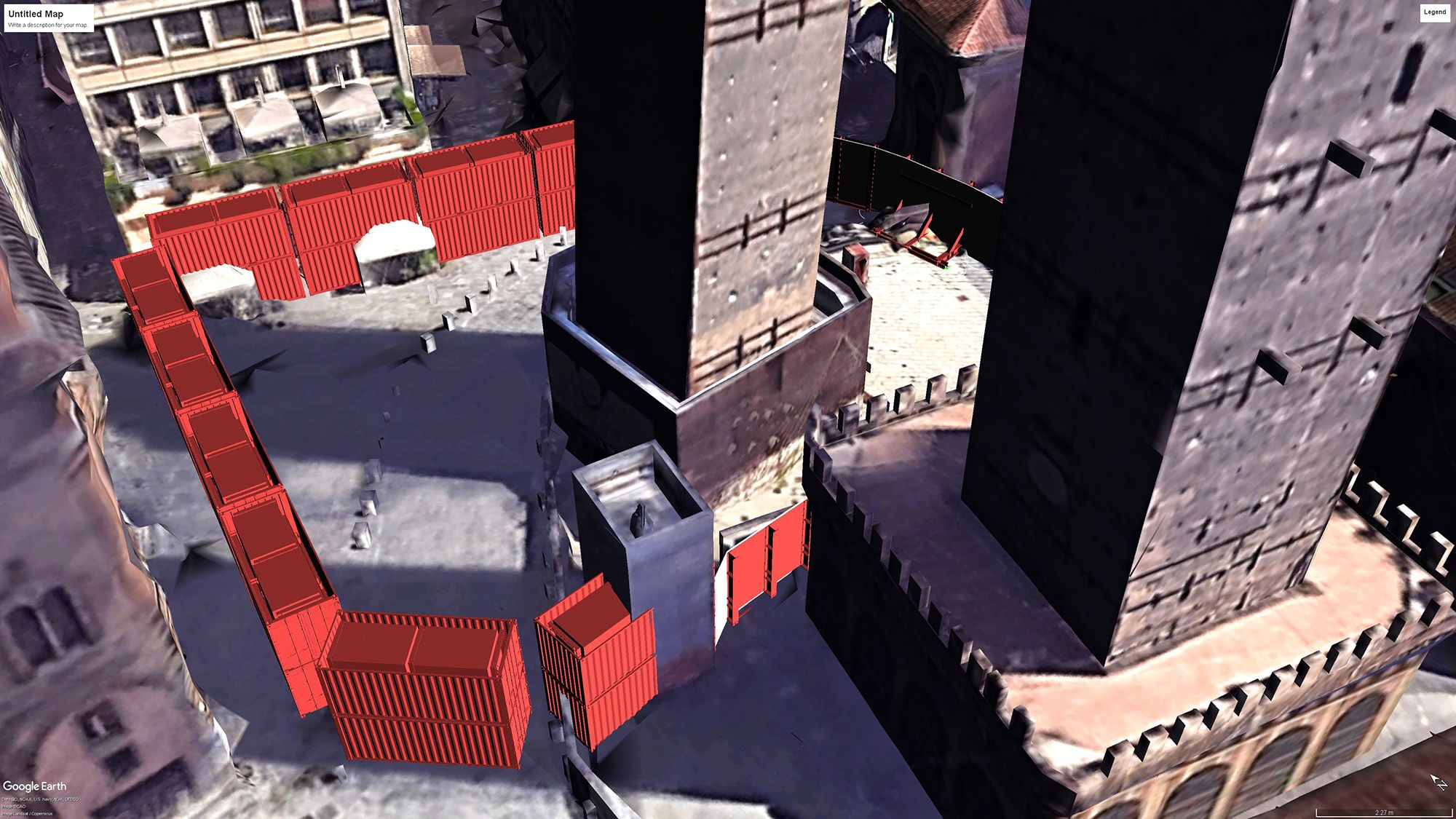
Nel frattempo, la zona attorno alle torri è stata transennata per isolarle per ragioni di ricerca e di sicurezza. I turisti non potranno più salire i 498 gradini della Torre degli Asinelli, che anche deve essere monitorata. Il turismo è cresciuto in modo esponenziale in questa vivace città del nord, e la chiusura del centro cittadino sta influenzando il traffico, in un momento in cui la città sta costruendo nuove linee tranviarie. Il sindaco spera di cogliere l’occasione per ridisegnare la mobilità in città e renderla più a misura di pedoni.
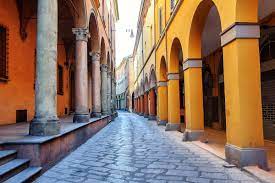
Come i portici di Bologna, le Torri Gemelle sono importanti simboli della città. Nel 2021 i portici di Bologna sono diventati patrimonio dell’umanità UNESCO. Costruiti in legno, pietra o mattoni, coprono circa 62 chilometri di strade, piazze e sentieri e della città. Sebbene offrano piacevoli passeggiate al riparo dalla pioggia e dal sole, originariamente non erano state progettate per fornire riparo dagli elementi, ma per offrire spazio alle migliaia di studenti che iniziarono ad arrivare a partire dal XIII secolo senza alloggi universitari. I residenti locali decisero di aggiungere stanze ai loro edifici ampliando il primo piano, non il piano terra.
Il sindaco di Bologna vorrebbe che le due torri venissero inserite nella lista dell’UNESCO, cosa che “ci aiuterebbe in termini di promozione e visibilità”– ha detto – “ma anche in termini di manutenzione e preservazione per il futuro”.
October 2023: The Garisenda Tower in Bologna’s city center is on “high alert” for collapse. No one knows when it could happen—three months, a year, 5 or 10 years. The alert is yellow. A red alert would imply an imminent problem.
A scientific committee has monitored the site since 2019. Sensors furnish readings every 15 minutes. Last month, readings revealed un unexpected and accelerated trend in compression at the tower’s base.
The Garisenda Tower is one of the famous “twin towers” of the city. Today the tower stands at 158 feet, and the nearby Asinelli Tower is almost twice as tall at 319 feet. Both were constructed in the 12th century when Bologna was like a mini-Manhattan with dozens of towers. Each one was constructed by a local family that tried to construct its own tower taller than the preceding one.
The ground and the foundation of Garisenda probably began to sink soon after it was built because of a construction error. In the middle of the 1300s, the tower was shortened for fear that it would collapse. Its leaning even scared Dante Alighieri who in “Inferno” of La Divina Commedia compared it to the appearance of a giant, Antaeus.
Garisenda leans at a four-degree angle, a little less than the five degrees of the Leaning Tower of Pisa. The trend could have been accelerated by extreme weather conditions, including the high temperatures of last summer and the floods at the beginning of 2023. Like all towers and skyscrapers, Garisenda has always swayed slightly. Even the experts on the scientific committee – geologists, engineers, architects, and chemists – do not all agree on the causes of the problem nor the solutions, which could take years, if not decades, to complete.
In the meantime, the area around the towers has been cordoned off to isolate them for reasons of both research and safety. Tourists can no longer climb the 498 steps of Asinelli, which is also being monitored by sensors. Tourism has grown exponentially in this bustling city of the north. The closure of the center is affecting traffic, at a time when the city is constructing new tram lines. The mayor hopes to take this opportunity to redesign mobility around the city, making it more pedestrian-friendly.
Like the porticoes of Bologna, the Twin Towers are important symbols of Bologna. In 2021, the porticoes became a UNESCO world heritage site. Constructed in wood, stone, or brick, they cover about 39 miles of streets, piazzas, paths, and walkways in the city. Although they offer pleasant walks protected from the rain and sun, originally, they weren’t designed to offer shelter from the elements, but to offer more space to the thousands of students that began to arrive at the beginning of the 13th century without university accommodation. Local residents decided to add extra room to their buildings by extending the first floor and not the ground floor.
Bologna’s mayor would like the two towers to be included in UNESCO’s world heritage list because “it would help us in terms of promotion and visibility,” he said, “but also in terms of maintenance and preservation for the future.”