Cohabitation: Bears and humans

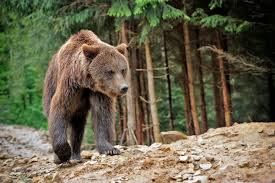
For centuries cohabitation had been the normal state of life in the Alps.  Over the last century, however, as Alpine landscapes underwent radical changes, bear habitat shrank markedly.  By the end of the 1930s, most bear colonies had become extinct.  From the mid-twentieth century, as the conservation movement gained momentum, plans were developed for a nature reserve in the Alps of Trentino, in northern Italy.  But these efforts succeeded only when, in the late 1990s, new bears were introduced into the area thanks to wildlife programs funded by both Italy and the European Union.

Now with about 80 bears in the area, inevitably there have been some unfortunate human-bear encounters.  And they always seem to grab the headlines.  As a rule, bears seldom attack humans; in fact, they usually avoid people.  While they generally have a calm temperament, they can be unpredictable and can attack if surprised or threatened.

In August 2017, foresters shot and killed Kj2, a 14-year old female bear after it reportedly mauled an elderly man walking his dog.  Yet some accounts say that Kj2 may have had two or three cubs with her; she may have been acting in self defense from a scared and stick-wielding human and his dog.  If so, the bear’s response was natural, and the killing was extreme.  Couldn’t Kj2 have been relocated with her cubs? 

In June 2020, Trentino’s governor, Maurizio Fugatti, signed an ordinance to euthanize a bear that mauled two men walking on an alpine path.  The national plan in Italy mandates that when a human is attacked, the animal must be euthanized. The rationale is that this could happen again, although there has been no evidence that bears are serial attackers. Animal rights groups say that determining the circumstances surrounding the aggression is critical, because bears shouldn’t have to die because of human errors.  To identify the bear, researchers are using saliva and fur on the men’s clothing to extract DNA.  They will seek a match in a database that has been built up over five years to monitor the bear population, including its numbers, the ratio of males to females, fertility rates, and movements.  The database can also be used if a bear is poached or poisoned, or, as in this case, if it injures a human.
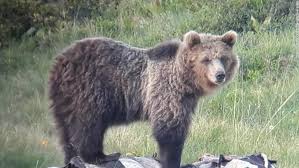
The most headline-grabbing story of 2020 belongs to M49, the bear nicknamed “Papillon” after the escaped convict from Devil’s Island.  The most wanted bear in the Alps, “Papillon” has never attacked humans but he has decimated livestock, including cows, sheep and donkeys.  Over a 14-month period, he has been captured and put in an electrified cage three times, only to escape again.  Despite being well fed, not even 7,000 volts can deter this bear’s instinct for freedom.

The government must be able to safeguard the personal and economic security of local communities while, at the same time, defending the rights of these iconic animals to roam their historic territory.  It’s a very tricky balance.   Preventive actions to minimize bear-human interaction include:  planting trees higher in the hills, ensuring an adequate food supply away from human settlements, and erecting electric fences around farms and vegetable gardens.  Ongoing human education is essential.  Humans need to clearly understand what they can and should do in areas frequented by bears.  They should not approach bears.  They should not threaten them with sticks or clubs.  They should not allow their dogs to be off-leash. The costs and risks of cohabitation need to be fairly distributed among all participants—citizens, tourists, herders, the government, and, indeed, the bears too.  The Alps deserve their bears, and the bears deserve their Alps.

Posted in Alpe, Animali, educazione, English, Foto, Italia | 2 Comments

Denim e jeans

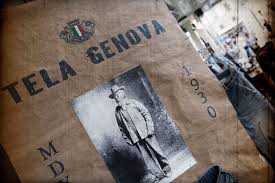
Oggi le parole “denim” e “jeans” sono usate quasi in modo intercambiabile (negli Usa). Ma non è sempre stato così. La loro origine risale a più di 400 anni fa nella città di Genova, in Italia e nella città di Nimes, in Francia. All’epoca la città portuale di Genova faceva parte della Francia ed era conosciuta con il nome francese “Geane” o “Jeane”. Produceva un tessuta di qualità industriale per abiti da lavoro, chiamato fustagno “jeans”, simile al velluto a coste. Tinto con color indaco, il tessuto era usato per fabbricare forti pantaloni da lavoro per gli operai portuali. All’epoca Genova era una potenza navale notevole e la marina genovese dotava i suoi marinai di jeans, pioché avevano bisogno di un tessuto che potesse essere indossato sia bagnato, che asciutto.

In quel periodo, i tessitori di Nîmes, in Francia, cercarono di riprodurre il famoso tessuto realizzato a Genova, ma senza fortuna. Attraverso prove ed errori, crearono un altro tessuto che divenne famoso come denim perché proveniva “de Nimes”. Era un tessuto in twill di cotone, in cui la trama passava sotto due o più fili di ordito. I fili di ordito erano tinti in indaco, mentre i fili di trama rimanevano bianchi. Era molto resistente e utilizzato da persone che avevano bisogno di vestiti che durassero a lungo.

Nel XVII secolo i jeans erano un tessuto fondamentale per la classe operaia nel nord Italia. Ciò si può osservare in una serie di dipinti di genere di quel periodo attribuiti al misterioso artista ora soprannominato “Il maestro della tela jeans”. Scoperta di recente, questa serie di 10 dipinti ad olio raffigura persone povere in ambienti domestici semplici. Ogni dipinto contiene cibo o stoviglie e almeno un bambino. Nei dipinti viene prestata grande attenzione agli abiti blu o ai pezzi di stoffa, che sono spesso strappati, spiegazzati o sporchi.

Nel 1853 in America, Levi Strauss si trasferì a San Francisco per fondare un ramo occidentale del business dei prodotti secchi della famiglia. Tra i vari prodotti, vendeva un tessuto denim molto resistente, soprattutto ai minatori che lo usarono durante la corsa all’oro. Uno dei suoi clienti era Jacob W. Davis, un sarto di Reno, Nevada, che realizzava articoli molto utili a quei tempi, come tende, coperte per cavalli e coperture per carri. In risposta a un ordine di un cliente per pantaloni robusti, Davis li realizzò con il denim che aveva acquistato da Strauss e li rese più resistenti inserendo rivetti di rame nei punti in cui i pantaloni si potevano strappare più spesso: tasche e patte. Per brevettare questi pantaloni, Davis scrisse a Strauss e divennero così soci in affari.

Nasce quindi la versione americana dei blue jeans, che da più di 150 anni ha creato una propria cultura dell’abbigliamento. Progettati originariamente per i minatori, i jeans moderni furono resi popolari come abbigliamento casual da Marlon Brando e James Dean nei film degli anni ’50, in particolare “The Wild One” e “Rebel without a Cause”. Ciò ha portato il tessuto a diventare un simbolo di ribellione tra gli adolescenti, nonché un simbolo di simpatia per le classi lavoratrici. Al giorno d’oggi, sono indossati da tutti e sono diventati i pantaloni più popolari nella cultura occidentale. Oggi, il 75% dei jeans firmati nel mondo proviene dalla California.

Posted in Abitudini, California, Film, Foto, Genova, Italia, Italiano, La Moda, Storia | 1 Comment

Denim and Jeans

Today the words “denim” and “jeans” are used almost interchangeably in the United States.  But this wasn’t always so.  Their origins date back more than 400 years to Genoa, Italy, and Nimes, France.  At the time the port city of Genoa was part of France and was known by its French name “Geane” or “Jeane.”  It produced an industrial-grade fabric for work clothes called fustian “jean,” which was similar to corduroy.  Dyed with indigo, the fabric made strong work pants for harbor workers.  Back then, Genoa was a superior naval power, and the Genoese navy equipped its sailors with jeans, as they needed a fabric that could be worn both wet or dry.

Around that time, weavers in Nimes, France tried to reproduce the famous fabric made in Genoa but with no luck.  Through trial and error, they developed another fabric that became known as denim because it was “de Nimes.”  It was a cotton twill textile in which the weft passes under two or more warp threads.  Warp threads were dyed in indigo while weft threads remained white.  It was highly durable and used by people that needed clothes that would last a long time.

By the 17th century, jean was a crucial textile for the working class in northern Italy. This is seen in a series of genre paintings from that period attributed to the mysterious artist now nicknamed “The Master of the Blue Jeans.”  Recently discovered, this series of 10 oil paintings depict poor people in simple domestic settings.  Every painting has food or crockery in it and at least one child.  Great attention is paid in the paintings to the blue clothing or pieces of cloth, which are often torn, wrinkled or soiled.

In 1853 in America, Levi Strauss moved to San Francisco to establish a western branch of the family’s dry goods business.  Among other things, he sold a durable denim cloth to miners in the Gold Rush.  One of his customers was Jacob W. Davis, a tailor from Reno, Nevada, who made functional items like tents, horse blankets and wagon covers.  In response to a customer order for sturdy pants, Davis made them from denim he had purchased from Strauss and made them stronger by placing copper rivets at the places that pants rip most often—pockets and flies.  When he wanted to patent these pants, Davis wrote to Strauss, and they went into business together.

Thus was born the American version of blue jeans, which has defined the clothing culture for more than 150 years. Originally designed for miners, modern jeans were popularized as casual wear by Marlon Brando and James Dean in their 1950s films, particularly The Wild One and Rebel without a Cause.  This led to the fabric becoming a symbol of rebellion among teenagers as well as a symbol of sympathy with the working classes.  Nowadays, they are worn by everyone, and they have become the most popular specialty pant in Western culture.  Today, 75% of the designer jeans in the world come from California.

Posted in Abitudini, California, English, Film, Foto, Genova, Italia, La Moda, Storia | 3 Comments