A survey on cats

This post was adapted from an article in Focus.it.   The answers will appear next week.
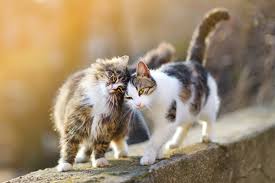
What is your cat telling you when…

1.      You enter the house and the cat comes to meet you rubbing your legs.

a.   He is telling you that he is happy to see you

b.   He is leaving his smell on you to indicate that you are “his property”

c.    He is smelling the odors that you bring from the outside

2.      Lying on his favorite sofa, your cat stares at you intently, slowly blinking one or both eyelids. Meanwhile, he thinks:

a.    I’m keeping an eye on you

b.    I’m so sleepy

c.    I am relaxed and I feel comfortable here with you

3. Kitty stares at you motionless, with wide eyes, without moving a muscle: what is he trying to tell you?

a.  I am the strongest, surrender

b.  How scary!

c.  What is happening?

4.     Our cat’s ears contract quickly and keep moving:

a.     I have otitis. Why are you waiting to take me to the vet?

b.     What an itch, these fleas

c.     There is something that annoys me a lot…

5. You are in your favorite armchair with the cat on your knees: between one scratch and aother, suddenly, his ears change position and turn outwards.

a.     No more pampering. If you don’t stop, you risk a scratch or a bite

b.     Keep pampering, go ahead

c.     I’m tired, I could fall asleep at any moment

6.     Lying on his favorite window, kitty looks at you with the whiskers facing outwards. If he could speak he would tell you:

a.     Something strange is about to happen

b.     I don’t like this smell

c.     How good it is here 7

7. Whiskers forward facing, attentive look and tense muscles: your cat is telling you that …

a. Time to eat: why are you waiting for to fill my bowl?

b. I am very excited: have you seen my prey pass by too?

c. Let’s play?

8. Fur puffed and turned outwards, tail with bristly hair and kept well away from the body. What happened to our cat?

a. He got scared and puffed up his fur to look bigger and more threatening

b. He ate something that made him ill

c. You washed him with the wrong shampoo

 9.  The cat is looking out the window: it has an attentive gaze and a tail that whips in every direction and continually knocks on the windowsill.

a.  There’s something very interesting out there, let me out

b.  I’m very happy

c.  I feel alone 

10.  Your cat comes towards you with a straight tail, perpendicular to the ground. He is thinking:

a.  Be careful, I am very angry and I could attack you

b.  I am so happy to see you

c.  I’m ready for the hunt

11. If the cat is seated on its back legs with its tail curled around its body, he is manifesting:

a. Insecurity and discomfort, like a person with folded arms

b. Fear, and is ready to flee

c. Fear, and is ready to attack

 12. The cat looks out the window, its ears forward, its tail whipping in the air and its teeth banging loudly together. He is thinking:

a.  I’m cold: do you want to close this window?

b.  Let me out, it’s full of little birds out there waiting for me

c.  I have a toothache. Why are you waiting to bring me to the vet? 

13.   Our cat refuses to use the litter box and leaves his business around the house: under the furniture, on top of the furniture, in the middle of the sofa…in the meantime, he is thinking:

a.  I am the boss, I do what I want. For me the rules don’t exist.

b.  I can spite you

c.  I have a problem: Let’s try to solve it together? 

14.   Ears flattened against the head until they almost disappear, tense muscles, eyes wide open. The cat is telling us that:

a.  He is very hungry: better to prepare the bowl

b.  He is very scared: better not to approach because he might attack

c.  He is very scared: better to take him in your arms to reassure him

15. Comfortably sitting on the terrace with the cat, you suddenly notice that he is watching you: his pupils are very tight, like two pins.  What do you do?

a. Intense light bothers the cat

b. You should look for another place: the cat is very angry and could attack you

c. Bring him back in the house: he had a heat stroke

 16. Every time you enter the house, the cat comes to meet you and turns on his back with his stomach in the air:

a.   He wants an energetic scratch on his belly

b.   He wants to interact with you and shows you his complete trust

c.   He is scratching his back: have you checked that he has no fleas?

Posted in Abitudini, Animali, English, Foto | 1 Comment

Tradizioni natalizie in Italia

Il Natale ovunque è ispirato a differenti tradizioni, come quelle dei romani, dei celti, dei norvegesi, dei druidi e di altre culture pagane. Tutte condividevano una celebrazione che cadeva nel periodo natalizio: il solstizio d’inverno, il giorno più corto dell’anno nell’emisfero settentrionale. Per gli agricoltori, l’inverno segnava la fine del raccolto dell’anno e la possibilità di riposarsi dalle fatiche dei campi e di godersi la compagnia dei propri cari.

Sia le tradizioni pagane che quelle cristiane si sono fuse nella festa oggi celebrata in tutto il mondo. L’Italia ha delle tradizioni che differiscono da quelle degli Stati Uniti. E, naturalmente, le tradizioni in Italia sono diverse da città a città, da regione a regione, dal cibo servito all’apertura dei regali.

Gli italiani danno il via alla stagione l’8 dicembre, giorno dell’Immacolata Concezione. (Questo è il giorno in cui la Chiesa dichiara che Maria è nata senza peccato originale.) L’8 dicembre è il giorno tradizionale per decorare l’albero, per fare il presepe e segna anche l’inizio dei mercatini natalizi. Enormi alberi di Natale si possono trovare nelle piazze principali, come davanti al Colosseo o in Piazza Duomo a Milano, con Babbo Natale diffonde l’allegria natalizia. L’8 dicembre è anche l’inizio delle novene speciali, una serie di preghiere e altri riti religiosi.

Negli otto giorni prima di Natale, conosciuti anche come Novena, gli Zampognari suonano con la loro tradizionale  cornamusa musiche festose risalenti all’epoca dell’antica Roma. I suonatori di cornamusa erano pastori che, per guadagnare qualcosa in più, a Natale scendevano dalle loro case di montagna per esibirsi nelle piazze del mercato. Le regioni in cui è più probabile ascoltare gli zampognari sono Abruzzo, Basilicata, Campania, Calabria, Molise, Puglia e Lazio.

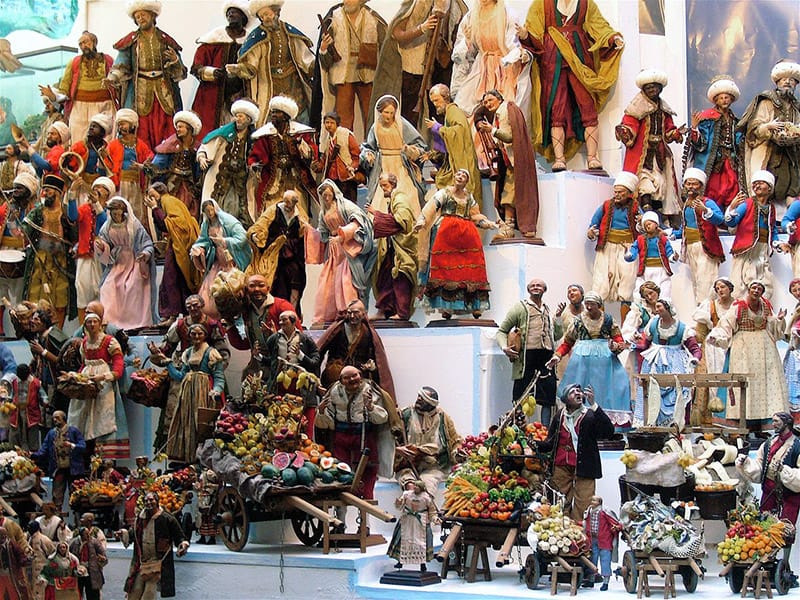
La città di Napoli è famosa nel mondo per i suoi presepi. Il primo presepe napoletano si ritiene risalga al 1025, allestito nella Chiesa di Santa Maria del Presepe. A partire dal 1223, San Francesco d’Assisi rese popolare il presepe, come un modo per le chiese e i monasteri di raccontare la storia del Natale. I presepi in casa divennero popolari nel XVI secolo. Oggi vengono fatti a partire dall’8 dicembre, ma naturalmente la figura di Gesù bambino non viene messa nella mangiatoia fino alla sera del 24 dicembre.

La fantasia è padrona nella costruzione dei presepi: a volte i presepi sono a forma di piramide, alta anche molti metri. Composti di scaffali decorati con carta colorata, pigne ricoperte d’oro e piccole candele. Decorati con frutta, caramelle e regali. Una stella cometa è spesso posta sopra la capanna. Una cosa speciale dei presepi napoletani è che possono contenere persone e oggetti contemporanei, come case, cascate, animali e persino figure di politici e personaggi famosi. Napoli ospita il presepe più grande del mondo con oltre 600 oggetti.

Sebbene gli italiani evitino di mangiare la carne alla vigilia di Natale, consumando un pasto a base di pesce, tra gli italo-americani la festa dei sette pesci è una tradizione ancora viva. Probabilmente fu portata in America da immigrati italiani nell’Ottocento. I pesci comunemente consumati sono il baccalà, le vongole, i calamari, le sarde e l’anguilla. Perché sette pesci? Forse sette rappresenta i sette giorni della creazione nella Bibbia o i sette santi sacramenti della Chiesa cattolica. Dopo la cena della vigilia di Natale, alcuni italiani si recano tradizionalmente alla messa di mezzanotte. 

Nelle Dolomiti gli sciatori con le fiaccole scendono lungo le piste per dare il benvenuto al giorno di Natale (simili tradizioni sono presenti anche in altre zone), che si celebrerà l’indomani in tutte le regioni con piatti come pasta in brodo, arrosti e dolci come il panettone.  La varietà dei piatti e soprattutto dei dolci tradizionali richiederebbe tempo per elencarli tutti

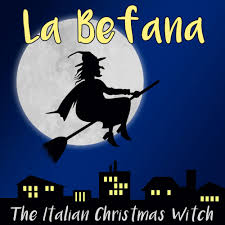
In alcune parti d’Italia, i regali vengono scambiati la mattina del ​​giorno di Natale. Altri li scambiano la sera della Vigilia, il 24. Alcuni paesi e città più piccole dell’Italia settentrionale credono che la cieca Santa Lucia porti doni ai bambini il 13 dicembre, quindi li aprono quella mattina. Infine il 6 gennaio i bambini aprono i doni della Befana. Festa religiosa e popolare, l’Epifania è sia manifestazione della divinità Gesù ai tre Re Magi, sia festa in cui la Befana, una “vecchia strega buona”, volando in cielo sulla sua scopa, scende per i camini e riempie di dolcetti le calze dei bambini.  Secondo la leggenda, si credeva che la befana avesse seguito i re, ma si perse.  La Befana è una tradizione in tutta Italia, molto forte a Roma (ricordiamo in passato la Befana fascista nata per distribuire doni ai bambini più poveri), a Bologna e a Venezia, dove la gente crede che la Befana arrivi ogni anno in barca.

Posted in Alpe, Campania, Cucina italiana, Foto, Italia, Italiano, Napoli, Storia, Uncategorized, Venezia | Leave a comment

Christmas Traditions in Italy

Christmas is inspired by traditions from the Romans, Celtics, Norse, Druids and other pagan cultures.  They all shared one celebration that happened to fall around Christmas time—the winter solstice, which is the shortest day of the year in the Northern Hemisphere.  For agricultural people, winter marked the end of the year’s harvest and the chance to rest from toiling in the fields and to enjoy the company of loved ones.

Both pagan and Christian traditions have coalesced into the holiday that is celebrated throughout the world.  Italy has some traditions that differ from those in the United States.  And, naturally, traditions can differ in Italy from city to city, from region to region, from what food is served to when presents are opened. 

Italians kick off the season on December 8, the Day of the Immaculate Conception.  (This is the day the Church declares that Mary was born without original sin.)  December 8 is when decorations go up in homes and on the streets and when Christmas markets begin.  Huge Christmas trees can be found in main piazzas, like in front of the Colosseum or in Milan’s Piazza Duomo, and Babbo Natale, a Santa counterpart, spreads Christmas cheer.  December 8 is also the start of special Novenas, which are a series of prayers and church services. 

The eight days before Christmas, also known as the Novena, the Zampognari (pipers) continue the tradition of festive bagpipe playing that dates back to ancient Roman times.  The pipers were shepherds, who, to earn an extra income, would travel down from their mountain homes at Christmas to perform in market squares.  The regions one is most likely to see the zampognari are Abruzzo, Basilicata, Campania, Calabria, Molise, Puglia and Lazio.

The city of Naples is world famous for its Nativity scenes, known as Presepe Napoletano.  The first in Naples is believed to date back to 1025 in the Church of Santa Maria del Presepe.  Beginning in 1223, St. Francis of Assisi popularized the Nativity scene as a way for churches and monasteries to tell the Christmas story.  Nativity scenes in the home became popular in the 16th century.  Today they are put out on December 8, but the figure of the baby Jesus is not put in the manger until the evening of December 24.

Sometimes Nativity scenes are displayed in the shape of a pyramid that can be many meters tall.  It is made of tiers of shelves that are decorated with colored paper, gold-covered pinecones and small candles.  The shelves might also contain fruit, candy and presents.  A star is often hung at the top.  One special thing about Neapolitan Nativity scenes is that they contain extra “every day” people and objects, such as houses, waterfalls, animals and even figures of politicians and celebrities.  Naples is home to the largest Nativity scene in the world with over 600 objects on it.

Although Italians avoid meat on Christmas Eve (la vigilia) and may instead have a light seafood meal, among Italian-Americans The Feast of the Seven Fishes is a popular tradition. It was probably brought to America by Italian immigrants in the 1800s.  Fish commonly eaten are baccalà (salted cod), clams, calamari, sardines and eel. Why seven fishes?  Possibly seven represents the seven days of creation in the Bible or the seven holy sacraments of the Catholic Church. 

After dinner on Christmas eve, some Italians head to midnight Mass, but in the Dolomites, skiers carry torches down slopes to welcome Christmas day, which is celebrated with traditional dishes like pasta in brodo, roasts and desserts like panettone.

In some parts of Italy, gifts are exchanged on the morning of Christmas day. Others exchange them on Christmas Eve, the 24th. Some smaller towns and cities in northern Italy believe that blind Santa Lucia brings gifts to children on December 13th, so they open them that morning. Finally, on January 6, the children open the gifts of the Befana.  Both a religious and popular festival, the Epiphany is both a manifestation of the divinity Jesus to the three Magi, and a festival in which the Befana, a “good old witch”, flying in the sky on her broom, goes down the chimneys and fills children’s socks with sweets. According to legend, the witch was believed to have followed the kings, but she got lost. The Befana is a tradition throughout Italy, very strong in Rome (we remember in the past the fascist Befana was born to distribute gifts to the poorest children), in Bologna and in Venice, where people believe that the Befana arrives every year by boat.

Posted in Alpe, Campania, Cucina italiana, English, Foto, Italia, Italoamericani, Napoli, Storia, Uncategorized | 2 Comments