Ann Goldstein, translator of Elena Ferrante

Translators rarely attain celebrity status.  But as Elena Ferrante has achieved worldwide acclaim through her books, so too has Ann Goldstein.  Her notoriety is spurred by the steadfast anonymity of Elena Ferrante, which is a pseudonym.  Apparently distrusting the celebrity status of authors, Ferrante refuses to do book signings and interviews.  Therefore, Ann Goldstein has occasionally been a “stand in” for the author.  Her English translations of the Neapolitan quartet have sold more than a million copies in English-speaking countries.  And more recently, she has appeared in virtual discussions of Ferrante’s The Lying Life of Adults sponsored by Europa Editions, the American publisher of her works in English
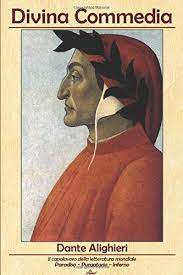
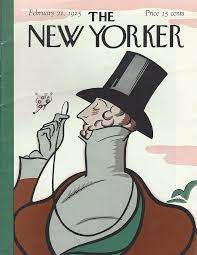
How did it all start?  Since the mid 1970s, Goldstein has worked in the copy department of the prestigious weekly magazine, The New Yorker, becoming the department head since the mid 1980s.  About that time, she and several colleagues formed an evening class to learn Italian.  She had been enchanted by Dante in college; within three years of studying the Italian language, the evening class had read The Divine Comedy in the original language.  Then, in 1992, Goldstein translated an essay from Chekhov in Sondrio, a book by Aldo Buzzi, for The New Yorker.  It was Goldstein’s first published translation .

In 2004, when Europa Editions was seeking a translator for Elena Ferrante’s The Days of Abandonment, the company asked candidates to submit sample pages.  Ann Goldstein won the job.  Nearly a dozen Ferrante books later, she is still on the job.  Her colleagues and reviewers praise her humility and her translation style: “The virtues of a copy editor serve her well as a translator…she disappears, in a sense…in the way that a copy editor is a sieve for the writer and the language, the same is true of a translator.”  Yet, translating also involves being a writer, and Ann imparts that talent as well.

Goldstein describes herself as a highly literal translator, an approach that serves well Ferrante’s idiosyncratic prose style.  Ferrante is known for her long, emotive sentences, and Goldstein’s style closely represents what the author wrote in the original language.  “I feel my work should be as transparent as possible so that you hear the voice of the author. While I don’t think it’s necessary to have an affinity for the writer, with Ferrante I do.”  Yet, Goldstein has never met Ferrante.  If she has a question, she communicates via e-mail with the publisher.

While Goldstein is most closely associated with Ferrante, she has completed many other translation projects, including The Complete Works of Primo Levi, Pasolini’s Petrolio and works by Elsa Morante, Giacomo Leopardi and Jhumpa Lahiri.  For Goldstein, working on translations during the pandemic and quarantine have created feelings of both escape and longing.  “The longing comes from being cut off, literally, from the country of the language you are working in.  But as you’re working, you are absolutely being transported.”

In an interview with Corriere della sera, Goldstein concludes by saying, “The Italian language should absolutely be studied, by anyone.  It opens up to other cultures, other points of view, not to mention other literatures.  But is can also allow you to see your language and culture from a different perspective, which can be an enlightening experience.  So I think it doesn’t matter where you start from: studying or learning Italian is precious.”
Posted in Abitudini, Arte, Differenze culturali, English, Foto, Italia, La Lingua, Libri, Napoli, New York | 2 Comments

La città dalle porte dipinte

La costa italiana, che va dal confine franco-italiano alla Toscana, si estende per circa 350 km (215 miglia). Costituita dal litorale ligure, attraversa tutte e quattro le province liguri e i loro capoluoghi, da Imperia a Savona, da Genova a La Spezia. I turisti si sono riversati a lungo sulle bellissime spiagge da Sanremo alle Cinque Terre, ma pochi si sono avventurati nell’entroterra… fino ad ora. Nell’entroterra di Imperia, a soli 15 km dal mare, si trova un piccolo comune di circa 40 abitanti all’interno della frazione di Prelà.

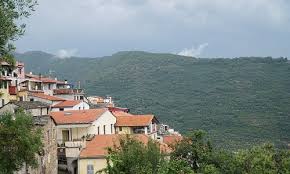
Il borgo si chiama Valloria. È arroccato su una collina e circondato da ulivi. Il suo nome deriva dal latino Vallis Aurea, che significa valle d’oro, per via della produzione del pregiato olio di oliva,fra l’altro maggiormente prodotto in passato rispetto ad oggi. Il borgo medievale è rimasto immutato per secoli, con muri in pietra sorreggere i terrazzamenti coltivati, case in pietra, architravi in ​​legno e stretti vicoli, i cosiddetti carrugi  liguri.

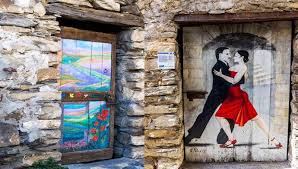
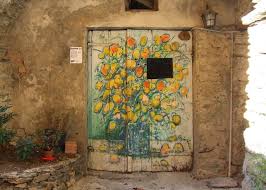
Come tanti bei borghi italiani, Valloria negli anni ha visto i suoi giovani partire per grandi città come Milano. Poi nel 1994 alcuni residenti hanno avuto un’idea, anzi due: un progetto artistico e una festa. Hanno invitato artisti per dipingere le porte della città, tutto nella più completa libertà artistica per creare le proprie opere. I primi artisti erano quasi tutti milanesi (da dove proveniva uno dei fondatori della città). Quindici porte furono dipinte durante il primo anno. Ora, 25 anni dopo, più di 150 in totale, dal magazzino alla stalla, fino alle porte di casa, sono state progettate e dipinte da artisti provenienti da tutta Italia, dalla Polonia, dalla Spagna, dal Giappone, dalla Cina e dai altri paesi. Le porte ritraggono paesaggi, pescatori, poeti, fiori, bambini, musicisti e altro ancora. Il risultato? Una galleria d’arte all’aperto con uno stile unico ad ogni porta e un messaggio di ospitalità colorata. Il piccolo borgo è divenuto una meta ambita da artisti e turisti di tutto il mondo. Non esiste una mappa per le porte dipinte … la gente gira per i carrugi e le scopre da sola.

La festa? Il primo anno sono stati allestiti lunghi tavoli sotto gli ulivi e le persone delle zone limitrofe andavano a mangiare, a bere e a ballare. È stato un tale successo che la città ripete questa festa ogni anno, in luglio e in agosto. Le famiglie di Valloria preparano piatti della tradizione ligure: ravioli di erbette, fritto misto di pesce, torta di riso, corzetti con funghi e noci, e le famose trenette o trofie al pesto. Durante il 2020 la festa non ha potuto avere luogo; ma un ristorante locale ha offerto un’alternativa: uno speciale aperitivo ogni lunedì, da giugno a ottobre, per stimolare l’afflusso di visitatori dalle zone costiere.

Valloria offre anche altre opzioni per i turisti. L’oratorio di Santa Croce, edificato nel 1587, ospita il Museo delle Cose Dimenticate, dove si possono trovare oggetti non più in uso, per lo più egati alla vita contadina, come gli attrezzi utilizzati per la coltivazione dell’olivo e per la produzione dell’olio, aratri, strumenti musicali, lucerne e strumenti per arrostire il caffè o macinare il grano. Si possono fare passeggiate nel centro storico fra le sue tre antiche fontane o passeggiate sui pendii fra gli olivi, oppure escursioni per ammirare panorami spettacolari, dalla valle al mare. In una giornata limpida, si può persino scorgere la Corsica.

Posted in Architecture, Arte, Cucina italiana, Foto, Italia, Italiano, Liguria, Storia | 1 Comment

The Town of Painted Doors

The Italian Riviera stretches 350 km (215 miles) from the French-Italian border to Tuscany.  Encompassing the coastline of Liguria, it crosses all four Ligurian provinces and their capitals, from Imperia to Savona to Genoa to La Spezia.  Tourists have long flocked to the beautiful beaches from San Remo to Cinque Terre, but few have ventured inland…until now.  In the hinterland of Imperia only 15 km (9 miles) from the sea is a small town of about 40 residents within the hamlet of Prelà. 

The village is called Valloria.  It is perched on a hill and surrounded by olive trees.  Its name derives from the latin Vallis Aurea, which means golden valley, because of the harvesting of olives and the production of the prized Ligurian olive oil, which was more active in the past than it is today.  The medieval village remained unchanged for centuries with the stone walls of the cultivated terraces, stone houses, wood lintels and narrow alleys called carrugi in Liguria. 

But like so many beautiful Italian villages, over the years Valloria saw its youth leave for larger cities like Milan.  Then in 1994 some residents had an idea, actually two ideas:  an art project and a party.  The town invited artists to paint the town’s doors with complete artistic freedom to create their own works.  The first artists were almost all from Milan (where one of the town’s founders came from).  Fifteen doors were painted during the first year.  Now, 25 years later, more than 150 doors—from warehouse to stable to house doors—have been designed and painted by artists from Italy, Poland, Spain, Japan, China and other countries.  The doors show landscapes, fishermen, poets, flowers, children, musicians and more.  The result?  An outdoor art gallery with a unique style to every door and a message of colorful hospitality.  The small village became a popular destination for artists and tourists from all over the world.  There is no map to the painted doors…people wander around the carrugi and discover them on their own.

The Party?  The first year, long tables were set up under the olive trees and people from neighboring areas came to eat, drink and dance.  It was such a success that the town hosts celebrations in July and August every year.  The Valloria families prepare traditional Ligurian dishes from ravioli di erbette (ravioli with herbs), fritto misto di pesce (mixed fried fish), torta di riso (rice cake), corzetti con funghi e noci (a coin-shaped pasta with mushrooms and walnuts), and the famous trenette o trofie al pesto (traditional Ligurian pasta shapes with pesto sauce)During 2020, the party wasn’t possible; instead, a local restaurant offered an alternative: a special aperitif every Monday from June until October to stimulate an influx of visitors from the coastal areas.

Valloria offers other options for tourists.  The oratory of Santa Croce, built in 1587, houses the Museum of Forgotten Things where you can find objects, mostly related to the farmer’s life, that are no longer in use, such as tools used in the cultivation of olives and the production of olive oil, plows, musical instruments, oil lamps, and accessories for roasting coffee or grinding wheat.  One can take walks in the historic center with its three ancient fountains, or walk among the olive trees on the hillsides, or take hikes to admire the spectacular views…from the valley to the sea.  On a clear day, you might even see the profile of Corsica.

Posted in Architecture, Arte, Cucina italiana, English, Foto, Italia, Liguria, Storia | 1 Comment