Why the word “mafia” is never uttered in The Godfather

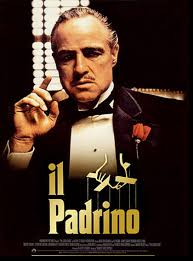
il-padrinoThe Godfather (1972) is one of the most famous and best loved films of all times.  It won 3 Academy Awards, including Best Picture.  But there are some people who believe that films about the Mafia only depict or reinforce pejorative stereotypes about Italian-Americans.

fbi-and-italiansThis was especially true in the 1960s and 1970s.  The Italian-American Civil Rights Leagueiacrl (IACRL) was a political organization founded in 1970 by mobster Joseph Colombo to combat negative stereotypes of Italian-Americans.  When it heard that an American film company planned to make a film based on the bestselling novel (1969) by Mario Puzo, the IACRL “expressed” its opposition.  Ironically, unlike other “pressure” groups, it used some questionable tactics.

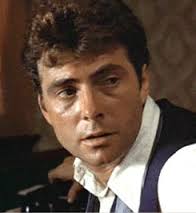
For example, the first surprise came when Francis Ford Coppola, the director, went to Little Italy with a small caravan to do the first film tests.  When the group returned from gianni-russolunch, the truck had disappeared along with the equipment that was worth millions of dollars.  According to Gianni Russo, who played Vito Corleone’s wife-beating son-in-law in the film, close to the Colombo family were “idiots that were capable of anything.”

The threats didn’t stop there.  The producer Robert Evans received an anonymous phone call at the hotel where he was staying in New York: “We don’t wish to smash your beautiful face,” said the voice, “and we don’t even want to hurt your son.  Get out of our neighborhood and don’t make the film.  Understood?”

The producer decided to contact Colombo directly “to settle the matter.”  According to Tom Santopietro, author of “The Godfather Effect” (2012), the mob boss finally accepted that the film would be made…but under certain conditions.  “Neither the word “Mafia” nor ‘Cosa Nostra” must appear in the screenplay.”  Moreover, the production had to promise to donate the proceeds from the film’s preview to a hospital building fund supported by the IACRL.

Ironically, the word “mafia” appeared only once in the original screenplay.  Colombo had also asked that the characters in the film be given less Italian-sounding names.  The answer was “no.”  Nonetheless, a deal was struck.

In the Godfather, there were 5 crime families:  Corleone, Barzini, Tattaglia, Stracci, and Cuneo.  In the real world at the time, there were 5 crime families in the New York area:  Genovese, Gambino, Bonanno, Lucchese, and Colombo.  But not all of the other Mafiosi took kindly to the Colombo deal, and a few months afterward Joseph Colombo was punished.  He was shot by a hitman several times in the head and neck and remained paralyzed for seven years, until his death in 1978.  Carlo Gambino and Frank Costello (from the Luciano family) had warned him.  Giving the go ahead to the film would turn the spotlight on the mafia and its way of life.  Criminal organizations operate in secrecy.

All of this could be a film too.

Posted in Abitudini, English, Film, Foto, Italia, Italoamericani, New York, Sicilia, Storia | 4 Comments

I Misteri dei Bronzi di Riace

Il sommozzatore, che era un chimico romano, li ritrovò il 16 agosto 1972.  A trecento metri under-waterdalla costa di Riace, ad otto metri di profondità, il subacqueo prima vide un braccio.  Pensò che appartenesse a un cadavere.  A quel tempo, non sapeva che questo sarebbe stato uno dei più straordinari ritrovamenti archeologici del secolo.  E non sapeva del mistero che sarebbe seguito.

Chi erano quei due ragazzi di bronzo tirati fuori dalle acque cinque giorni dopo dai carabinieri sommozzatori di Messina?  Da dove provenivano?  Chi li aveva creati?  Erano statue trafugate e affondate in un naufragio?  Molte domande emersero nei giorni e negli anni seguenti e non hanno mai avuto risposta.  Ecco alcune delle questioni.

i-bronzi-1I due bronzi—a volte chiamati Il Giovane e l’Adulto –sono stati ribattezzati dal paese della Calabria dove furono portati a riva: Riace.  Non sono gemelli e non furono opera della stessa mano.  Chi li immaginò e ne definì i lineamenti creando un modello di cera per farne uno stampo di argilla su cui far colare il bronzo fuso (la cosiddetta fusione a cera persa) furono due artisti diversi.  Ancora oggi non sappiamo i loro nomi.

A causa dell’argilla che rimase all’interno dei bronzi, gli esperti oggi credono che fossero prodotti ad Argo e ad Atene, nelle botteghe dei migliori artisti dell’antichità durante il quinto secolo a.C.  Il Giovane sembra appartenere allo stile detto Severo, tra il 480 e il 450 a.C.  L’Adulto sembra appartenere, invece, allo stile Classico, trent’anni più tardi.  Ci sono molte ipotesi sugli autori di questi capolavori.  Secondo alcuni, Ageladas di Argo, bronzista della Scuola del Peloponneso, creò il Giovane mentre l’Adulto fu opera del discepolo più celebre di Ageladas, Policleto, con cui scrisse il Canone, che definisce per gli artisti rinascimentali e per sempre le proporzioni geometriche con cui ricreare la bellezza.  Secondo altri, il primo fu opera di Fidia, il più straordinario artista chiamato da Pericle alla realizzazione dell’Acropoli di Atene, e il secondo fu creato da Alcamene, un allievo di Fidia.

Chi o che cosa i bronzi rappresentano?  Alcuni storici dell’arte pensano che l’atteggiamento testealtero del Giovane è simile a quello di Agamennone.  L’Adulto è più maturo, e la calotta che copre il capo riproduce una cuffia in cuoio indossata sotto l’elmo dagli strateghi.  Secondo un’altra ipotesi invece i due guerrieri sarebbero un Greco e un trace.  Possiamo vedere che impugnavano uno scudo nella sinistra e, secondo la maggior parte delle ipotesi, una lancia nella destra, mentre in testa, reclinato all’indietro, come usavano nei momenti di riposo, portavano un elmo corinzio.

Ma nessuno può dire dove siano finite l’elmo, la lancia, e gli scudi.  Erano stati persi in un naufragio?  Fu un vero naufragio?  O la nave che li portava se ne sbarazzò quando il pericolo del mare rese il carico insopportabile?  Il fondale di Riace, esplorato accuratamente solo un anno dopo la scoperta, non ha restituito nulla.  E dove si dirigevano allora i bronzi, quando si inabissarono?  Probabilmente arrivavano dalla Grecia e andavano a Roma nell’epoca in cui i Romani, sedotti dalla bellezza che i Greci avevano creato, cercavano di adornare le loro case con pezzi di arte che si sarebbero affannati a riprodurre in copie di marmo.  I bronzi greci erano costosi, magnifici e unici, benché all’epoca innumerevoli sono arrivati solo attraverso le riproduzioni in marmo.  Ci furono epoche in cui l’ignoranza spinse a fondere il bronzo per ricavare tutto fuorché arte, soprattutto armi.

museoBei bronzi sono, infatti, abbastanza rari nel mondo d’oggi.  Ma i Bronzi di Riace sono ora in mostra nel nuovo Museo Archeologico Nazionale di Reggio Calabria.  Ha aperto nell’aprile 2016.


Posted in Arte, Foto, Italia, Italiano, Storia | Leave a comment

The Mysteries of the Riace Bronzes

The deep-sea diver, who was a Roman chemist, found them in August of 1972.  At 300 under-watermeters from the coast of Riace, at 8 meters deep, the diver first saw an arm.  He thought it belonged to a cadaver.  At that time, he did not know that this would be one of the most extraordinary archeological finds of the century.  And he certainly didn’t anticipate the mysteries that would follow.

Who were these two bronze youths retrieved from the water five days later by carabinieri scuba divers from Messina?  Where did they come from?  Who created them?  Were they smuggled statues that sunk in a ship wreck?  Many questions would emerge in the days and years following that have never been answered.  Here are some of the issues and theories.

i-bronzi-1The two bronzes—at times called the Youth and the Adult—were “baptized” by the town in Calabria where they were brought ashore: Riace.  They are not twins and they are not the work of the same hand.  Whoever imagined them and defined their features by creating a wax model to make a clay mold in which to pour the molten bronze (the so-called lost wax casting) were two different artists.  Even today we do not know their names.

Because of the clay that remained inside the bronzes, experts today believe that they were created in Argos and Athens, in the workshops of the best artists of antiquity during the fifth century BC.  The Youth seems to be in the style called “Severe” between 480 and 450 BC.  The Adult seems to be in the Classical style, 30 years later.  There are many theories about the authors of these masterpieces.  According to some, Ageladas of Argos, a bronze artist from the School of Peloponnesus, created the Youth, while the Adult was the work of the more famous disciple of Ageladas, Polyclitus, with whom he wrote the Canon, defining for Renaissance artists and those who followed the geometric proportions with which to recreate beauty.  According to others, the first was the work of Phidias, the most extraordinary artist called by Pericles to create the Acropolis of Athens.  And the second was created by Alcamene, a student of Phidias.

Who or what do these bronzes represent?  Some art historians think that the haughty testeattitude of the Youth is similar to that of Agamemnon.  The Adult is more mature, and the shell that covers the head is like the leather cap worn under the helmet by those in battle.  According to another theory, instead of two warriors, they could be a Greek and a trace (a type of gladiator).  We can surmise that they were holding a shield in the left hand, and, according to most hypotheses, a spear in the right, while on his head, leaning back as in moments of rest, they wore a Corinthian helmet.

But no one can say where the helmet, the spear, and the shields ended up.  Were they lost in a shipwreck?   Was there, in fact, a shipwreck?  Or did the ship that brought them dump them when the sea conditions made them an unbearable burden?  The backdrop of Riace, thoroughly explored only a year after the discovery, turned up nothing.  And where were the bronzes headed when they sank?  Most likely they started from Greece and were heading to Rome at a time when the Romans, seduced by the beauty that the Greeks created, sought to adorn their houses with art that they would have strived to reproduce in marble.  The Greek bronzes, in fact, were expensive, beautiful and unique, and countless have come to us only through marble reproductions.  There were times, too, in which the ignorance of such beauty led to the melting of the bronze to gain other things, notably weapons.

museoBeautiful bronzes are, in fact, rare in the world today.  But the Bronzes of Riace are now on display at the new National Archeological Museum of Reggio Calabria, which opened in April of 2016.


Posted in Arte, English, Foto, Italia, Storia | 2 Comments