
 In the 17thand 18thcenturies, the most famous luthiers of all time worked in Cremona, Italy. The names Amati, Guarneri, and especially Stradivari connote excellence in instrument making and the pinnacle of sound production. But how Antonio Stradivari and the other luthiers of the period created these instruments of such extraordinary sound is an enduring mystery. For hundreds of years,
 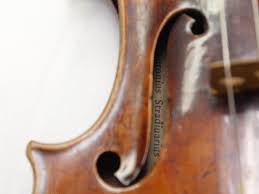 scientists have been trying to discover the secrets behind their craftsmanship. Researchers studied everything from the types of wood used, to the impact of weather at the time on the wood, to the chemicals used to protect the instruments against woodworm, to the role of the decorations on the sound production. The theories are interesting but inconclusive (see post, “The Mystery of Stradivari,” July 21, 2016).
 Today Cremona is home to the Museum of the Violin, which houses some of the finest stringed instruments created by the masters. They are carefully preserved in glass cases—seen but not touched. In January 2019, they came out of their cases and were played by carefully selected musicians as part of an extraordinary project to preserve the sound of
  the world’s best stringed instruments. Called the “Stradivarius Sound Bank,” this project is designed to capture the tones created by instruments selected from the Museum of the Violin’s collection. According to the museum’s curator, Fausto Cacciatori, each Stradivarius has “its own personality.” But their distinctive sounds will inevitably change and could be lost within just a few decades. “It’s part of their life cycle,” he added. “We preserve and restore them, but after they reach a certain age, they become too fragile to be played and they ‘go to sleep,’ so to speak.”
 Here is how the Stradivarius Sound Bank was conceived and is being conducted (as reported in Italian publications and the New York Times) … with some surprises along the way. Three sound engineers wanted to create a database of all the possible sounds that stringed Stradivarius instruments can produce. Not only would this enable future generations to hear these instruments, but the database would be able to be manipulated in order to produce new recordings when the tone of the original instruments degraded. Musicians of the future would also be able to record a sonata with an instrument that no longer functions. This would be a way to make the finest instruments ever crafted become immortal.
Thomas Koritke, one of the sound engineers who is from Hamburg, Germany, and who is 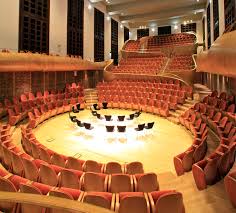 leading the project, said that organizing it has taken a long time. First, “it took us a few years to convince the museum to let us use 500-year-old stringed instruments,” he said. Then they had to find top musicians who knew the instruments inside out. Then, the acoustics of the auditorium in the museum where they would play were studied. Thirty-two ultrasensitive microphones were set up in the auditorium to capture the sounds from the 4 instruments selected (2 violins, a viola, and a cello). In 2017, the engineers thought that the project was finally ready to begin. But a soundcheck revealed a major problem.
As in many Italian cities, the streets of Cremona around the museum are made of cobblestone. The sound of car engines, a woman walking in stilettos, the voices at bars and restaurants produced vibrations that ran underground and reverberated in the microphones. Either the project — or the town — had to be shut down. Luckily for the visionary engineers, Cremona’s mayor, Gianluca Galimberti, is also the president of the Stradivarius Foundation, the municipal body that owns the museum. On January 7 the streets around the museum were closed for five weeks. The streets in the busy city center were cordoned off and traffic was diverted. At a news conference, Galimberti implored the citizens to avoid any noise. Even those who lived in apartments near the piazza of the museum were asked to walk barefoot and to refrain from banging dishes and pans in the kitchen. Sudden unexpected noise could even generate a visit from the local police. Within the museum’s auditorium, the ventilation and elevator systems were turned off. Every light bulb in the concert hall was unscrewed to eliminate a faint buzzing sound.
 In the ensuing silence throughout January and beyond, the four musicians played hundreds of scales and arpeggios, using different techniques with their bows, or plucking the strings of the famous instruments. According to Koritke, it is both physically and mentally challenging. They have to play hundreds of thousands of individual notes and transitions for eight hours a day, six days a week, for more than a month. The payoff for future generations should be staggering.
Ironically, silence is not a new phenomenon for the city of Cremona. During the Renaissance, a convent stood on the current site of the Museum of the Violin. Also during the Renaissance, the area around Piazza Marconi in Cremona was called the Island of Silence because it was populated by weavers of linen and wool and other fabrics. The citizens then, however, did not have to walk on tiptoe.
 Galileo modificò la sua lettera a Castrelli per moderare le sue opinioni sulla chiesa e la sua visione “eretica” eliocentrica dell’universo? O qualcuno inviò una falsa lettera all’Inquisizione contro lo scienziato? O la chiesa modificò la sua lettera per provare la sua colpevolezza durante l’Inquisizione? In altre parole, Galileo stava facendo “controllo del danno” (nel linguaggio di oggi) o, come sosteneva Galileo, era questa “falsa notizia” concepita dai suoi nemici a causa di “cattiveria e ignoranza”?
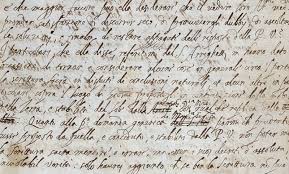 Una nuova copia della lettera di Galileo è venuta alla luce per risolvere questo mistero. La lettera è stata scoperta nell’agosto 2018 a Londra nella biblioteca della Royal Society. Un giovane ricercatore bergamasco, Salvatore Ricciardo, alla fine della giornata stava sfogliando un catalogo e l’ha scoperta per caso. Era stata datata erroneamente e quindi era stata “persa” per più di 250 anni. L’origine della lettera è stata verificata.
 fosse al centro dell’universo ma che i pianeti orbitassero attorno al sole. Nel 1600 l’Inquisizione a Roma condannò un frate e matematico domenicano, Giordano Bruno, di eresia per aver supportato, oltre ad altre case, il modello copernicano. Bruno fu bruciato sul rogo. Poi nel 1610 Galileo pubblicò un libro basato sulle sue scoperte con il suo nuovo telescopio che supportava la tesi copernicana.
 E ora inizia il putiferio. Il frate domenicano Niccolò Lorini inviò la lettera di Galileo all’Inquisizione a Roma nel 1615. (Una copia di questa lettera è conservata nell’Archivio dei Segreti Vaticani). Una settimana dopo Galileo scrisse al suo amico Piero Dini, suggerendo che la versione inviata da Lorini era stata alterata. Allegò una versione meno urgente della lettera originariamente inviata a Castrelli, presentandola come la versione originale, e gli chiese di portarla ai teologi vaticani. Nei successivi 15 anni, nonostante gli avvertimenti della chiesa, Galileo continuò a esprimere le sue opinioni sul Sistema Solare.
 L'Olivo Santa Barbara