
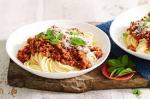
 The mayor of the Italian city Bologna, Virginio Merola, prefers to call it “fake news.” He’s incensed that tourists who come to his city ask for spaghetti Bolognese (or “spag bol”) at local restaurants. He claims that it does not exist. And he is launching an awareness campaign to teach people the truth.
“Dear residents, I am collecting photos of spaghetti Bolognese from around the world in  relation to fake news,” Merola wrote on Twitter, alongside a picture of a blackboard of a London restaurant where it is the specialty of the house at 6.95 pounds sterling. “This one is from London, please send me yours. Thank you.” Merola is collecting all the photos to display them at Bologna’s FICO Eataly World, which is the world’s largest food theme park that opened in November 2018.
 Spaghetti Bolognese – or “spag bol” — doesn’t exist in Italy, yet it is famous the world over. Merola is happy that it draws attention to his city, but prefers that Bologna be known for the quality of food that is part of its culinary tradition, like tagliatelle, tortellini, and lasagne. What you do find in Bologna is “ragù,” a meat-based sauce served most often with tagliatelle, a pasta with a greater surface area to hold the sauce.
 Proud of its strong food culture, Bologna is also home to Mortadella, a large Italian sausage often sliced as charcuterie or luncheon meat. It is made of finely ground pork and small cubes of port fat and is flavored with spices, such as whole or ground black pepper, myrtle berries and / or pistachios. It is the cousin
 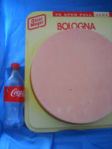 of “bologna,” the impossibly pink and perfectly round pork slices slapped between slices of white bread and served in the lunch boxes of school kids in the United States many years ago. In Newfoundland, it is a popular breakfast food called the Newfie Steak. In Britain it goes by “Polony,” which may be derived from Polonia (Poland) or from the Italian city famous for its sausages.
In America, bologna deli meat is often pronounced and spelled “baloney,” which is also a common slang term. The expression took off in the 1930s thanks for Alfred E. Smith, governor of New York, who often used the term “baloney” in reference to Washington bureaucracy. To say that someone is “full of baloney” means that he is full of falsehoods, nonsense or foolishness.
So why do we pronounce the name of the meat “baloney” and not “bologna”? One linguistic theory is that it follows the pattern of Italian words ending in “-ia” such as Italia, Sicilia, and Lombardia, which in English took on “-y” endings: Italy, Sicily, and Lombardy. But it’s “bologna” not “bolognia.” Others believe that it could be derived from Italians’ penchant for shortening words like “prosciut” for “prosciutto,” or alterations that you often see in Italian dialects.
In summary, what is baloney? There are at least 3 answers: “spag bol,” Washington bureaucracy, and pink pork slathered with mustard. And also nonsense.
 Gli inquirenti lo consideravano il capo indiscusso di Cosa Nostra—“U curtu”, il boss delle stragi. Quando morì nel novembre 2017 (vedete il post, “La lunga ombra di Salvatore ‘Totò’ Riina”, nel 14 dicembre 2017), Riina stava scontando una pena di 26 ergastoli. Il primo fu un delitto commesso a Corleone negli anni ’50. L’accusa più famigerata nei suoi confronti erano gli attentati che costarono le vite ai magistrati Falcone e Borsellino nel 1992, che dedicarono la loro vita alla lotta contro la mafia (vedete due post, “Il coraggio di essere eroi”, nell’agosto 10 e 17, 2017).
 Poi, sempre in gennaio, l’ultimogenita di quattro figli di Riina, Lucia, ha annunciato su Facebook che aveva aperto un ristorante a Parigi nel novembre precedente. Chiamato “Corleone di Lucia Riina”, il ristorante promette “autentica cucina siciliana-italiana da scoprire in un ambiente elegante e accogliente”. A due passi dall’Arco di Trionfo, il ristorante “Corleone” mostra anche i dipinti di Lucia all’interno.
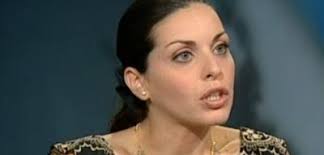 nome “Vincenzo Bellomo” durante la latitanza. Quando fu finalmente arrestato, il boss corleonese venne trovato in possesso di una carta di identità intestata proprio ad un Vincenzo Bellomo di Mazara del Vallo, ragioniere. Da bambina, Lucia pensava di chiamarsi Lucia Bellomo. Afferma di aver scoperto la vera identità del padre solo dopo l’arresto, il 15 gennaio 1993. Tuttavia, Lucia usa il cognome Riina non solo per il ristorante, ma anche come la firma dei suoi quadri.
 assistito spesso all’abuso del marchio Corleone, servito per promuovere beni di ogni tipo. Se questo uso viene fatto da aziende in regola, da persone perbene per far conoscere nel mondo le eccellenze del territorio, non possiamo che esserne felici. Non è ammissibile, invece, che a usare il nome del paese sia chi ha maltrattato Corleone, siano persone legate al boss Totò Riina, come in questo caso. Faremo di tutto per neutralizzare questa iniziativa…e l’uso dello stemma del paese, il leone rampante con il cuore”.
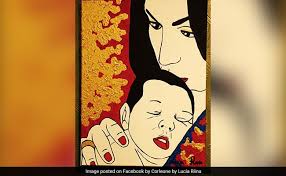 tolto il nome di famiglia dall’insegna del ristorante: “Non ho cercato di provocare né di offendere nessuno,” spiega, “volevo soltanto valorizzare la mia identità di artista-pittrice, e anche mettere in risalto la cucina siciliana….Vi annuncio che ho deciso di ritirare il mio nome dall’insegna del ristorante e dalle pubblicità, anche se mi dispiace che la mia identità di pittrice e di donna venga negata….Ho una vita normale adesso. Oggi sono pittrice e madre di una bambina. Mio padre ha la sua storia, io la mia”.
 L'Olivo Santa Barbara