
 Italy has the inglorious record of having the highest number of art thefts in the world. But Italy is also home to some of the most incredible art in the western world. Italy is also the first country in the world to have a specialized police force dedicated to the protection of artistic heritage. And this specialized command of the Carabinieri has become the gold standard throughout the world.
The nickname “Monuments Men” comes from George Clooney’s film based on the allies tasked with finding art looted by the Nazis at the end of the second world war. The Carabinieri Taskforce, which is called, Il Comando Carabinieri per la Tutela del Patrimonio Culturale (Tpc),was founded in 1969. To celebrate the 50thanniversary, Italy has issued a set of stamps depicting stolen artworks recovered by this command of the Carabinieri—one for each decade.
 The first stamp is Raphael’s La Muta (the Mute girl). The painting was stolen in 1975 from the Ducal Palace in Urbino (Raphael’s birthplace), along with two others by Piero della Francesca. At the time it was called the “greatest art theft in modern Italy,” in part because the gallery was considered one of Italy’s best secured museums even though it lacked an electronic burglar-alarm system. The theft was discovered by a guard on routine inspection at 2:30 am. The police discovered that the thieves had climbed a scaffold erected on the palace wall for restoration work, broke a window and escaped with the 3 paintings. Italy’s Central Institute for Art Restoration in Rome appealed to the thieves over television on and radio to handle the paintings, which had been taken from their frames, with utmost care. As the Carabinieri predicted, the thieves were unable to sell the famous paintings. Posing as wealthy buyers, they recovered the paintings undamaged in Locarno, Switzerland a year later.
The second stamp represents il Foglio di Salterio, The Page of Psalter, a precious illuminated sheet. In 1986, 12 parchment chorales were stolen from the convent of Santa Maria in Aracoeli in Rome. The Carabinieri Command immediately began to investigate the Italian antique markets and found one chorale in Bollate (Milan) in 1987. Later, the Carabinieri recovered many other sheets and, in the same investigation, numerous assets that had been taken from libraries, archives and convents.
 The third stamp depicts The Gardener or Portrait of a Young Peasant by Vincent Van Gogh, which was stolen in 1998, along with two other paintings, from the National Gallery of Modern and Contemporary Art in Rome. Three thieves in bare feet and wearing balaclavas were closed inside the museum after hours. The night guards, threatened with guns, were tied up and gagged. The alarm was raised when the museum’s bartender noticed that the entrance to the museum was still open. The paintings were recovered 46 days later, and the Carabinieri arrested 8 people. The Italian-Belgian gang leader commented to the police on his arrest: “Congratulations, you did a good job, I’m fucked.”
The fourth stamp shows the image of il Volto d’avorio,the Ivory Face, from the first century, CE. In the 1990s, tomb robbers took it from the archaeological area of Anguillara Sabazia. It was then resold on the illegal market. A few years later the Carabinieri discovered that the sculpture had ended up in London, in the hands of a well-known international art dealer. The investigative pressures forced the man in 2003 to return the sculpture to Italy.
 The fifth stamp represents la Sacra Famiglia con una Santa, Sacred Family with a Saint, by Andrea Mantegna, which was stolen from the Castelvecchio Museum in Verona in 2015. Shortly before closing, three masked and armed men tied up and gagged the security officer and a cashier. One robber watched the hostages while the others raided the exhibition rooms. They took the security officer’s keys and used his car to escape. The Carabinieri discovered that with the guard’s complicity, the men had brought the paintings first to Moldavia and then to the Ukraine, where they were recovered 6 months later.
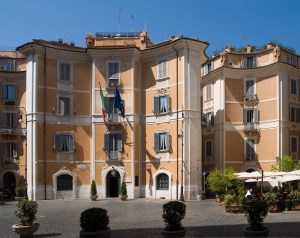
The final stamp shows the historic headquarters of the Tpc Command, the 18th-century Palazzo Raguzzini, which is located in Piazza San Ignazio in Rome. All 6 stamps are held in a folio with a background of a famous painting stolen in 1969, just months before the Carabinieri Command was founded. This painting, which has not yet been recovered, will be discussed in next week’s post. For other posts, see “The Controversy over who owns the Art of the World” (October 1, 2015), “The Theft of the Mona Lisa “(November 12, 2015), “Art Masterpieces Stolen from Verona Museum” (January 21, 2016), “A Century of Art Thefts” (May 5, 2016), “Stolen Art Recovered” (December 29, 2016), “Stolen, Gestohlen, Rubato” (April 25, 2019), and “The Trap” (June 27, 2019).
 incontrano una serie di reazioni da parte degli chef italiani. Un recente incidente è scoppiato sui social e sui tabloid europei dopo che il proprietario di un tradizionale ristorante italiano a Londra ha cacciato un cliente dal suo locale perché ha avuto il fegato di chiedere il Parmigiano grattugiato sui ravioli al granchio.
 ha le stesse note di sapore e sta al talento dello chef scegliere quelli più adatti alle diverse combinazioni di gusto. Il consorzio continua: “Un Parmigiano-Reggiano di 12 mesi – delicato, con sentori di latte, yogurt e frutta fresca – è perfetto per arricchire le insalate e si abbina bene a un vino bianco frizzante; un parmigiano di 36 mesi ha un sapore più forte – con note di spezie, frutta secca e brodo di carne – ed è ideale per le paste ripiene o da gustare alla fine di un pasto con frutta e miele, accompagnato da Marsala o anche una grappa trentina”.
 da mani esperte e sotto gli occhi attenti dei formaggiai che usano gli stessi metodi artigianali tramandati dal XIII secolo. È prodotto con latte vaccino nelle province di Parma, Reggio Emilia, Bologna e Modena; le mucche sono alimentate solo con erba o fieno. Si aggiungono siero di latte e caglio di vitello. Seguendo diverse procedure, il formaggio viene messo in forme di acciaio inossidabile che vengono stretti con una fibbia a molla (un tocco di modernità). Dopo un giorno o due, la fibbia viene rilasciata e una cintura di plastica su cui è impresso con il nome del Parmigiano Reggiano, il numero dell’impianto, il mese e l’anno di produzione vengono messi attorno al formaggio e la forma di metallo viene di nuovo rimessa. La ruota viene quindi immersa in
 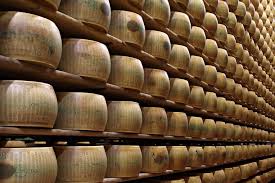 un bagno di sale, l’unico additivo del processo. Le ruote vengono trasferite in magazzini di stagionatura e collocate su scaffali di legno che possono contenere 24 formaggi in altezza e 90 formaggi per lunghezza, per un totale di 2.160 ruote per corridoio. La ruota media è alta 18-24 cm, ha un diametro di 40-45 cm e pesa circa 38 kg.
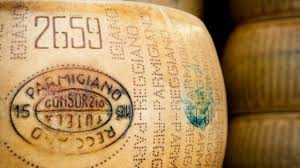 sono marchiate a caldo sulla crosta con il logo del consorzio. Le ruote possono essere ulteriormente invecchiate. Fondato nel 1928, il Consorzio stabilisce e applica gli standard di produzione del formaggio e tutti i produttori ne fanno parte. A partire dal 2017 vengono prodotte annualmente circa 3,6 milioni di ruote. L’Unione europea ha designato il Parmigiano-Reggiano (dalle province specificate) come prodotto DOP (Denominazione di Origine Protetta). Al di fuori dell’UE, il nome “Parmesan” può essere
  utilizzato legalmente; tuttavia, ci sono molte pratiche ingannevoli e ambigue che fanno apparire alcuni prodotti realizzati come se fossero fatti in Italia. Secondo Coldiretti, (l’organizzazione che rappresenta gli interessi agricoli in Italia e nell’Unione Europea), queste pratiche ingannevoli iniziate con gli Stati Uniti e con il Parmigiano Reggiano. Questo formaggio è così apprezzato in Italia, che anche la mafia va a caccia di camion per contenenti Parmigiano. Tra il 2013 e il 2015, la criminalità organizzato ha rubato 2.039 ruote dai magazzini italiani.

