The Pasta Shortage

At first, pandemic shortages seem surprising.  After all, we had not heard that factories making pasta or toilet paper or canned tomatoes had shut down or that there were any interruptions in the supply chain.  But as 2020 unfolded, empty supermarket shelves revealed which commodities consumers prized for their safety and comfort, how the “new normal” changed eating habits, and how quickly manufacturers responded to changing demand.  

Even consumers who are not hoarders or don’t subscribe to conspiracy theories changed their buying habits.  They didn’t always know when they would be able to get to the store, so just one more box of pasta couldn’t hurt.  After all, pasta is inexpensive, easy to prepare, has a long shelf life and is the ultimate “comfort food” in uncertain times.  Multiply one box per family per week by an entire country and supermarkets were forced to limit sales (“only one per customer”) as they struggled to replenish their shelves.  Besides pasta, high demand items during the pandemic include canned goods, bicycles and bike parts, baking supplies like flour and yeast, cleaning supplies, paper towels, and hand sanitizer.

The problem is compounded by different supply chains for consumer and commercial use.  For food supplies, about one-fourth of consumption used to be in restaurants.  That consumption has shifted to supermarket purchases, and that supply chain is finding it difficult to meet demand.  But with restaurants closed or restricted, their warehouses are full.  Hence, some restaurants have offered a free roll of toilet paper for every takeout order.  Why not?  Without indoor dining, the restaurants aren’t using the paper.  It proved to capture consumer attention and be a creative marketing move.

The changes in supply and demand led to another problem—packaging challenges.  Closure of public venues like stadiums and restaurants depressed demand for the bulk packaging of food and other products.  For home use, consumers needed the same products in great quantity but in small packaging forms.  Manufacturers had to decrease the production line for bulk-size packaging and run those devoted to smaller packaging at much higher speeds…if they could.  This isn’t easy for some manufacturers who might have to buy brand-new equipment or retrofit older units at a high cost.  Even if the food manufacturers can meet demand, it goes hand-in-hand with the packaging manufacturers who produce the cardboard boxes, cans, bottles and plastic containers—not to mention the caps, nozzles, and dispensing pumps.  And all of this depends on market projections for 2021 and beyond. 

Let’s get back to pasta.  Not only were some supermarket shelves almost depleted of this beloved product, but some types of pasta were barely available throughout America.  Let’s take bucatini, the long pasta with the hole down the middle.  A journalist in New York who lives and dies by this pasta, which apparently absorbs more than 200% more sauce than its hole-free brethren, investigated this shortage with both Barilla and De Cecco.  During a shortage, pasta manufacturers in Italy and the United States first make pasta with the most demand— spaghetti and penne in America.  Add to this the complexity of making bucatini.  Because of the hole in the middle, the production is much more complicated.  So it is one of the shapes more likely to suffer during a shortage.  And this, despite, a “bucatini craze” due to both the charitable contributions to Amatriciana, the city in the Lazio region rocked by an earthquake a few years ago, and the popularity these days of bucatini used in place of plastic straws to protect the environment.

Add to this a little “hiccup” with the FDA (the U.S. Federal Drug Administration).    Many years ago, the federal government mandated that pasta be made with “enriched flours,” that is, with minimum and maximum levels of certain vitamins and nutrients.  The FDA found De Cecco’s bucatini iron levels lacking…by 2.1 milligrams, which is one fourteenth of one one thousandth of an ounce.  Apparently, the FDA doesn’t routinely check the iron levels of pasta.  So it’s possible that a competitor became a whistleblower.  But let’s not go into conspiracy theories.  Let’s hope that the FDA will focus on the bigger issues of today and will let the pasta lovers find their favorite pasta shapes.

Posted in Cucina italiana, English, Foto, Italia, New York, Uncategorized | Leave a comment

La Luna Rossa: La sfidante per la Coppa America

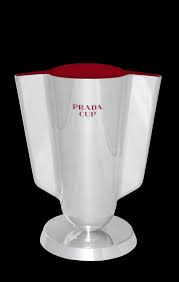
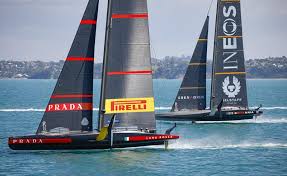
Domenica 21 febbraio, Luna Rossa Prada Pirelli si è guadagnata il diritto di correre contro Emirates Team New Zealand per la Coppa America 2021. La barca italiana ha vinto la gara di qualificazione nel Golfo di Hauraki (Auckland, Nuova Zelanda) battendo INEOS Team UK in 7 a 1, dimostrando la propria superiorità di Luna Rossa in ogni aspetto della regata: barca più veloce, migliori manovre, un posizionamento quasi perfetto in campo. Di proprietà di Patrizio Prada, CEO di Prada, Luna Rossa è guidata da Max Sirena. L’equipaggio di 11 uomini comprende i timonieri Francesco Bruni e Jimmy Spithill (australiano). Mentre il team ha festeggiato con rum aggiunto allo champagne all’interno della Coppa Prada, che è passata di mano in mano, da marinaio in marinaio, il team ha anche giurato di fare tutto il necessario per vincere la “Vecchia Brocca” (the “Auld Mug”), come viene affettuosamente chiamata: “Non lasceremo niente di intentato per portare la Coppa America in Italia per la prima volta in 170 anni “.

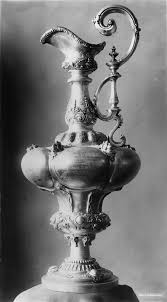
Il più antico trofeo nello sport, la Coppa America iniziò nel 1851 quando il Royal Yacht Squadron ospitò una regata intorno all’isola di Wight nel Regno Unito. Vinse allora la goletta America. Il trofeo fu chiamato “America’s Cup”,  lo yacht fu donato al New York Yacht Club (NYYC) e la coppa fu dedicata alla competizione internazionale. La gara si svolge tra due yacht a vela: il difensore rappresenta lo yacht club che attualmente detiene la Coppa America e lo sfidante rappresenta lo yacht club concorrente. Il difensore e lo sfidante determinano i tempi di ogni partita. La Coppa America non ha avuto un programma fisso nel corso degli anni, ma la competizione si è svolta recentemente ogni tre o quattro anni.

C’è stato un solo sfidante fino al 1970. A causa di più sfidanti da allora in poi, il NYYC ha accettato di correre una serie di gare con il vincitore che diventava lo sfidante ufficiale. Dal 1982, la Louis Vuitton Cup è il premio per il vincitore della serie di selezione sfidante. (Quest’anno Prada ha sponsorizzato la serie di selezione degli sfidanti.) Il trofeo della Coppa America è stato detenuto dal NYYC fino al 1983, primo posto più lungo nella storia di tutti gli sport. Successivamente Australia, Nuova Zelanda e persino Svizzera (un paese senza mare) hanno condiviso le luci della ribalta come difensori. L’Italia è apparsa sulla scena nel 1992 quando Il Moro di Venezia della Compagnia della Vela (Yacht Club) sfidò e perse l’America del San Diego Yacht Club. L’Italia è stata nuovamente la sfidante ufficiale nel 2000, questa volta la Luna Rossa dello Yacht Club di Punta Ala (in Toscana) ha sfidato e perso contro il Team New Zealand. Nonostante il Regno Unito abbia ospitato originariamente l’America’s Cup, non ha mai vinto la “Auld Mug”. 

La storia e il prestigio della Coppa America attraggono non solo i migliori velisti e designer di yacht del mondo, ma anche ricchi imprenditori e sponsor. L’America’s Cup è una prova delle abilità veliche e del design della barca, nonché delle capacità di gestione e raccolta fondi. La competizione è costosa, con team moderni che spendono più di $100 milioni ciascuno. Ci sono regole specifiche che ogni paese deve seguire. Quest’anno le barche sono AC75, monoscafi da 75 piedi con foil. Non hanno chiglie, ma utilizzano invece un sistema a braccio inclinato a lamina per la leva. E sembrano volare a quasi 100 km all’ora! Ogni barca ha libertà in molte aree di progettazione, ma ci sono regole sulle barche costruite nel paese di origine. Allo stesso modo, il 20% dei marinai di ogni squadra deve avere il passaporto di quel paese e il resto deve soddisfare almeno un requisito di residenza. 

Luna Rossa Prada Pirelli affronterà ora Emirates Team New Zealand dal 6 al 15 marzo. Questo è l’evento per il quale il team si allena da quattro anni. In quanto squadra in difesa, i kiwi sono considerati intelligenti, abili e quasi certamente molto veloci. Hanno potuto sedersi e osservare la loro potenziale competizione nella Prada Cup. Per ora, l’Italia può festeggiare essendo la sfidante ufficiale della Coppa. Hanno navigato incredibilmente bene, su una barca che sembra incredibilmente veloce. Come ha detto lo skipper Sirena il 21 febbraio, “È una bella giornata per Luna Rossa e per la vela italiana. Grazie a tutti i tifosi che ci hanno spinto dall’Italia… spero, in questi tempi difficili, di aver portato gioia nelle case. E ora torniamo a migliorare la barca ed essere bravi come il Team New Zealand “.

Posted in Firenze, Foto, Italia, Italiano, Lo Sport, New York, Sicilia, Storia, Toscana, Uncategorized, Venezia | Leave a comment

La Luna Rossa: Challenger for the America’s Cup

On Sunday, February 21, Luna Rossa Prada Pirelli earned the right to race Emirates Team New Zealand for the 2021 America’s Cup.  The Italian boat won the qualifying competition in the Gulf of Hauraki (Auckland, New Zealand) beating INEOS Team UK in 7 races to 1, demonstrating Luna Rossa’s superiority in every aspect of the regatta: faster boat, better maneuvers, an almost perfect positioning in the field.  Owned by Patrizio Prada, CEO of Prada, Luna Rossa is led by Max Sirena.  The 11-man crew includes the helmsmen Francesco Bruni and Jimmy Spithill (an Australian).  As the team celebrated—with rum added to champagne inside the Prada Cup that passed from sailor to sailor, they vowed to do whatever it takes to win the “Auld Mug,” as it is affectionately called: “We will leave no stone unturned to bring the America’s Cup to Italy for the first time in 170 years.”

The oldest trophy in sport, America’s Cup began in 1851 when the Royal Yacht Squadron hosted a race around the Isle of Wight in the United Kingdom.  The schooner America won.  The trophy was named ‘America’s Cup” after the yacht was donated to the New York Yacht Club (NYYC) and the cup was dedicated to international competition in perpetuity.  The contest is held between two sailing yachts:  the defender represents the yacht club that currently holds the America’s Cup and the challenger represents the competitor yacht club.  The defender and the challenger determine the timing of each match.  The America’s Cup has not had a set schedule over the years, but the competition has recently been held every third or fourth year.

There has only been one challenger until 1970.  Because of multiple challengers thereafter, the NYYC agreed to run a series of races with the winner becoming the official challenger.  Since 1982, the Louis Vuitton Cup has been the prize for the winner of the challenger selection series.  (This year Prada sponsored the challenger selection series.)  The America’s Cup trophy was held by the NYYC until 1983—the longest reign in the history of all sports.  Thereafter Australia, New Zealand, and even Switzerland (a land-locked country) have shared the limelight as defenders.  Italy appeared on the scene in 1992 when Il Moro di Venezia of the Compagnia della Vela (Yacht Club)challenged and lost to America of the San Diego Yacht Club.  Italy was the official challenger again in 2000—this time the Luna Rossa from the Yacht Club of Punta Ala (in Tuscany) challenged and lost to Team New Zealand.  Despite being the original host, the United Kingdom has never won the “Auld Mug.”

The history and prestige of the America’s Cup attract not only the world’s best sailors and yacht designers, but also wealthy entrepreneurs and sponsors.  The America’s Cup is a test of sailing skill and boat design, as well as fundraising and management skills.  Competing is expensive with modern teams spending more than $100 million each.  There are specific rules that each country must follow.  This year the boats are AC75s, which are 75-foot foiling monohulls.  They have no keels but instead use a foil cant-arm system for leverage.  And they seem to fly at nearly 100 km per hour!  Each boat has freedom in many areas of design but there are rules about the boats being constructed in the home country.  Likewise, 20% of sailors in each team must have passports from that country, and the rest must meet a residency requirement.

Luna Rossa Prada Pirelli will now face Emirates Team New Zealand from March 6 to 15.  This is the event for which the team has been training for the last four years.  As the defending team, the kiwis are considered intelligent, skilled and almost certainly very fast.  They have been able to sit back and observe their potential competition in the Prada Cup.  For now, Italy can celebrate becoming the official challenger for the Cup.  They sailed incredibly well in a boat that looks impressively quick.  As skipper Sirena said on February 21, “It’s a beautiful day for Luna Rossa and for Italian sailing.  Thanks to all the fans who pushed us from Italy…I hope, in these difficult times, we have brought joy to homes.  And now let’s get back to improve the boat and be as good as Team New Zealand.”  

Posted in English, Foto, Italia, Lo Sport, New York, Sicilia, Storia, Toscana, Venezia | Leave a comment