The Italian Royal Family

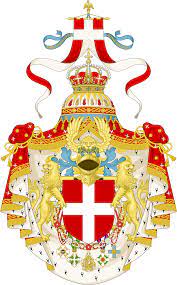
Italy’s House of Savoy is one of Europe’s oldest dynasties.  It is far older than its peers, such as the House of Windsor and the House of Borbón.  It can be traced back to 1003 AD when a feudal lord established the House of Savoy as a result of his close alliance with the Holy Roman Emperor of the era.  Over centuries, the heirs retained power and expanded their territories.  Sometime in the 1200s, Amadeus V established the Salic Law of Succession, which specified that only male descendants could inherit the Savoy wealth and territory and carry on the family lineage.    Throughout the centuries, the House of Savoy retained its power right up to the unification of Italy in 1861.
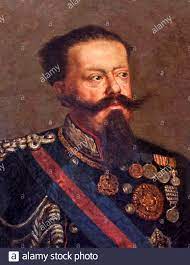
More than 800 years after the start of the House of Savoy, a King of Italy reigned on the peninsula.  Vittorio Emanuele II (1820-1878) did not hold unlimited power but he was an accomplished soldier and diplomat and earned the epithet Padre della patria, Father of the HomelandHis son, Umberto I (1844-1900) oversaw a poor southern Italy under mafia control, a failed colonial expansion into Ethiopia, and the suppression of protests over soaring bread prices.  He was killed by an anarchist’s bullet.  His son, Vittorio Emanuele III (1869-1947), became a respected head of state at first.  But the toll of World War I on Italy and the subsequent rise of Benito Mussolini changed everything.   The king had the opportunity to crush the fascist movement, but instead, embraced it.  He was already losing his grip on power even before the 1938 leggi razziali –the race laws that restricted the rights of Jews—which further caused the Savoys to lose the respect of many Italians.  Although Vittorio Emanuele III later tried to rectify his past mistakes by removing Mussolini from power, the damage was done, and he abdicated in May 1946 passing the scepter to his son Umberto II (1904-1983).  The constitutional referendum the following month was a watershed moment in Italian history: Italy embraced republicanism and turned away from the monarchy.  Father and son both died in exile, never setting foot in Italy again.

In 2002 the exile law was overturned by the Italian Parliament, and back came the Savoys.  But this time without the gravitas of the past.  While many royal families have had their internal troubles, the Savoy names have become associated more with scandals and tabloid headlines than with the serious business of government.  But then again, there really isn’t a title, a throne, or a position of power from which to govern.

The modern story began when the son of the last king of Italy, another Vittorio Emanuele, in 2019 at the age of 82 issued a decree: “the Duke of Savoy, Prince of Naples and by the grace of God direct heir to Head of the Royal House of Savoy” amended the medieval Salic Law of Succession that restricted succession in the royal line to male heirs.  His son, Emanuele Filiberto, did not have sons, so Vittorio Emanuele named his 16-year old granddaughter, Vittoria Cristina Chiara Adelaide Maria, to the top of the line of ascension to the defunct throne.  This is the Carignano branch of the Savoy family, named for the ancestral home of Vittorio Emanuele.

Prince Aimone di Savoia Aosta, a cousin and rival claimant, called the appointment totally illegitimate.  For decades, the Aosta branch of the Savoia family has argued that the Carignano branch is sullying the family name. The Aosta Savoia took issue with the marriage of Vittorio Emanuele (Vittoria’s grandfather) to a competitive water skier who was not a noble.  This same Vittorio Emanuele, now 84, has earned quite a reputation.  In 1978 he was accused of accidentally killing a German tourist with a rifle from his yacht off the coast of Corsica.  He served time in a Potenza jail on charges of illegal gambling and prostitution.  In 2004, at the wedding of the future King Felipe VI of Spain, this same Vittorio Emmanuele reportedly punched his cousin, Prince Amedeo, Duke of Aosta, twice in the face.

Vittorio’s son, Emanuele Filiberto, meanwhile, is hard at work on his variety television career.  He is a star judge on a talent show.  He won Italy’s Dancing with the Stars and nearly won its Sanremo singing competition (“they screwed me”) with a song he wrote.  He has been the face of pickled olives and appeared in an ad for an electronic cigarette company. 

And his daughter, the anointed Queen of Italy?  Vittoria spends her days at school, models midriff shirts on Instagram, dances with friends and gossips about Prince Harry and Meghan.  She wants to design her own fashion brand.  Mostly, she’s just trying to figure out what she wants to do in life.  To paraphrase Shakespeare, “Uneasy lies the head that wears the imaginary crown.”

Posted in English, Foto, Italia, La Moda, Musica, Piemonte, Politica, Storia | Leave a comment

“De mortuis nihil nisi bonum”: “dei morti niente (si dica) se non bene”.

Questo post è basato sull’articolo “Light in the Palazzo” di Ingrid D. Rowland, apparso sulla rivista New York Review of Books. È il secondo, dei tre articoli sui marmi Torlonia

Nel Libro d’ Oro della Nobiltà Italiana, il nome della famiglia Torlonia appre in ritardo. I loro titoli nobiliari risalgono a soli duecento anni fa, sembra dire ieri per gli standard romani. La storia inizia con Marin Tourlonias, un mercante francese che cambiò il suo nome in Marino Torlonia, quando venne a Roma a metà del Settecento per vendere tessuti pregiati ai piedi di Piazza di Spagna. Suo figlio, Giovanni Raimondo Torlonia, entrò nell’azienda di famiglia e anche nel settore bancario, concedendo prestiti a clienti aristocratici, che acquistavano beni con prestiti, spesso garantiti da appezzamenti di terreno, alcuni dei quali proprietà feudali con titoli annessi.

L’arrivo di Napoleone nel 1798 provocò uno sconvolgimento nell’economia che, a sua volta, causò il fallimento di molti dei clienti di Giovanni Raimondo Torlonia e l’acquisizione di un impero immobiliare da parte dell’imprenditore / banchiere. Diventò così ricco, che fu riconosciuto come un patrizio romano e il suo nome fu inserito nel Libro d’Oro. Mentre la maggior parte dei titoli aristocratici ebbero origine da titoli militari, Torlonia si fece strada personalmente nella nobiltà, anche se in realtà non fu il primo. Poi, nel 1814 in segno di gratitudine per anni di sostegno finanziario, il Papa gli diede un titolo tutto suo, Primo Principe di Civitella Cesi. Giovanni Raimondo Torlonia era ora padrone immobiliare a Roma e dintorni, in Toscana, in Umbria e nelle montagne d’Abruzzo. A Roma acquistò e ristrutturò diversi palazzi neoclassici e li decorò tutti con statue antiche e arte moderna.

Fu il secondo figlio di Giovanni Raimondo, il principe Alessandro, ad accrescere il loro vasto patrimonio di sculture acquistando intere collezioni. Il principe Alessandro acquistò anche un edificio industriale a Roma in Via della Lungara e lo trasformò in un museo. Il nuovo Museo Torlonia con settantasette sale sorgeva di fronte a un punto di riferimento della Roma rinascimentale: la villa suburbana del banchiere mercante Agostino Chigi, anche questo un palazzo pieno di arte antica. Il museo venne aperto nel 1876, ma solo per i visitatori iscritti nel Libro d’Oro. La vasta collezione del principe Alessandro rimase segreta, per la maggior parte, fino alla mostra odierna, del 2021, composta di 92 capolavori, è stata presentata a Palazzo Caffarelli nei Musei Capitolini di Roma.

Anche il catalogo della mostra “Marmi Torlonia: Collezionare capolavori” svela una triste vicenda novecentesca sull’intera collezione di 620 statue, sarcofagi, busti, vasi e rilievi. Nel 1968, il pronipote del collezionista originale, un altro principe Alessandro Torlonia, ricevette il permesso per riparare il tetto del vasto museo privato della famiglia. Il principe Alessandro fece erigere un recinto di costruzione attorno al Museo Torlonia e trasformò le sue gallerie in 93 mini appartamenti. Ammassò le antichità sfollate in tre diversi magazzini a Roma, “impilate una sopra l’altra come spazzatura”, queste le testuali parole di un giornalista. Nel 1977 un magistrato romano accusò il principe Alessandro di costruzione illegale e danneggiamento del patrimonio culturale, accuse che diedero allo stato la possibilità di sequestrare l’edificio e anche la collezione. Ma, come troppo spesso accade, il termine di prescrizione scadde e tutto venne restituito al proprietario. Tuttavia, l’accusa di danni al patrimonio culturale italiano è andata alla Corte Suprema del paese, che ha stabilito nel 1979 che “il trasferimento [al deposito] ha inflitto danni materiali e immateriali alla collezione” e che le statue sono state conservate “in spazi angusti, inadeguati, quartieri pericolosi … condannati a morte certa da un punto di vista culturale “. Il principe Alessandro rispose lasciando che i marmi Torlonia continuassero a languire sotto un crescente strato di polvere, avvolti nella plastica e nell’incuria totale. 

Per decenni lo stato italiano ha cercato di raggiungere un accordo con la famiglia Torlonia per esporre o vendere le opere. I negoziati sono falliti, fino a quando nel 2016 non è arrivata una svolta con un accordo per allestire l’attuale mostra, cioè quella del 2021. Il principe Alessandro è morto nel 2017, ma ha creato una Fondazione gestita dal nipote per gestire il patrimonio artistico di famiglia. Secondo Ingrid Rowland, come scrive sulla rivista New York Review of Books, il catalogo della mostra si addice all’occasione epocale: è elegante, informativo e completo sotto ogni aspetto tranne uno: al principe Alessandro è stato concesso il beneficio dell’antica regola romana de mortuis nihil nisi bonum, “dei morti niente (si dica) se non bene”, cioè è socialmente inappropriato parlare male dei morti perché non sono in grado di giustificarsi.

Posted in Architecture, Arte, Foto, Italia, Italiano, Roma, Storia | Leave a comment

De mortuis nihil bonum: Of the dead (say) nothing by good

This post is based on the article, “Light in the Palazzo” by Ingrid D. Rowland in the New York Review of Books.  It is the second of three installments on the Torlonia marbles.

In the Golden Book of Italian Nobility, the Torlonia name is a late entrant.  Its noble titles date back only two hundred years, yesterday by Roman standards.  The story begins with Marin Tourlonias, a French merchant who changed his name to Marino Torlonia when he came to Rome in the mid-eighteenth century to sell fine fabrics at the foot of the Spanish Steps.  His son, Giovanni Raimondo went into the family business and also into banking, extending loans to aristocratic customers who bought his dry goods—loans often guaranteed by tracts of land, some of which were feudal properties with titles attached.

Napoleon’s arrival in 1798 caused an upheaval in the economy, which, in turn, caused many of Giovanni Raimondo’s clients to default and for the businessman / banker to acquire a string of fiefdoms. He became so rich that he was recognized as a Roman patrician and his name was entered into the Golden Book.  While most aristocratic titles originated as military titles, Torlonia bought his way into nobility—though he was not the first to do so.  Then in 1814 in gratitude for years of financial support, the pope gave him a title of his own, First Prince of Civitella Cesi.  Giovanni Raimondo Torlonia was now lord and master of real estate in and around Rome, in Tuscany, in Umbria, and in the mountains of Abruzzi.  In Rome he purchased and renovated several neoclassical palazzi and decorated them all with ancient statues and modern art. 

It was Giovanni Raimondo’s second son, Prince Alessandro, who increased their vast holdings of sculpture by buying up entire collections.  Prince Alessandro also bought a factory building on the Via della Lungara and transformed it into a museum.  The new seventy-seven-room Torlonia Museum stood across the street from a landmark of Renaissance Rome: the suburban villa of the merchant banker Agostino Chigi, a palace also filled with ancient art.  The museum opened in 1876 but only to visitors inscribed in the Golden Book. Prince Alessandro’s vast collection remained hidden, for the most part, until the 2021 exhibition of 92 masterpieces were unveiled at the Palazzo Caffarelli in Rome’s Capitoline Museums. 

Even the catalog to the exhibition of “Torlonia Marbles: Collecting Masterpieces” does not reveal a sad 20th-century story about the entire collection of 620 statues, sarcophagi, busts, vases and reliefs. In 1968, the great-grandson of the original collector, another Prince Alessandro Torlonia, received a permit to repair the roof of the family’s sprawling private museum.  Prince Alessandro had a construction fence erected around the Torlonia Museum and turned its galleries into 93 mini-apartments.  He crammed the displaced antiquities into three storerooms in Rome, which one journalist described as “stacked on top of each other like junk.”  In 1977 a Roman magistrate charged Prince Alessandro with illegal construction and damaging cultural heritage, charges that gave the government the ability to sequester the building and also the collection.  But, as is too often the case, the statute of limitations expired and all was restored to the owner.  However, the charge of damage to Italy’s cultural heritage went to the country’s Supreme Court, which ruled in 1979 that “the transfer [to storage] inflicted material and immaterial damage to the collection,” and that the statues were kept “in cramped, inadequate, dangerous quarters…condemned from a cultural standpoint to certain death.”  Prince Alessandro responded by letting the Torlonia marbles continue to languish under a growing layer of dust, shrouded in plastic and malign neglect.

For decades the Italian government tried to reach an agreement with the Torlonia family to either display or sell the works.  Negotiations failed until a breakthrough came in 2016 with an accord to display the works that resulted in the 2021 exhibition.  Prince Alessandro died in 2017 but he did establish a Foundation run by his grandson to manage the family’s artistic patrimony.  According to Ingrid Rowland in the New York Review of Books, the catalog for the exhibition is befitting the momentous occasion – it is stylish, informative, and complete in every respect except one: Prince Alessandro has been given the benefit of the ancient Roman rule de mortuis nihil nisi bonum, of the dead, say nothing but good, that is, it is socially inappropriate to speak ill of the dead as they are unable to justify themselves.   

Posted in Architecture, Arte, English, Foto, Italia, Roma, Storia | Leave a comment