Football/Soccer or Tennis?

Is it possible that tennis could eclipse football in the collective consciousness of Italy?  Maybe not for the long run, but for now, Jannik Sinner has captured the imagination of all Italian sport.  His come-from-behind victory at the Australian Open was a masterful performance.  He defeated Daniil Medvedev in 5 sets to win his first Gland Slam title.  Ranked number 4 worldwide until now, Sinner defeated Djokavic (#1) in the semifinals, after beating Rublev (#5) in the quarterfinals, before his win over Medvedev (#3) on January 28, 2024. 

There is a 17-hour time difference between Melbourne, Australia, and Santa Barbara, California.  As excited as I was for Jannik, I decided not to watch the game in real time.  But when I awoke at 3 am on January 27 (8 pm on January 28 in Melbourne), I padded down to my computer in my robe.  Jannik was down 2 sets to 0 and tied in the third set.  Disappointed, I returned to bed thinking that victory was not meant to be. 

Sunday morning dawned on the west coast of the United States.  The results were in, but we watched as if in real time.  I knew about the first two sets but didn’t tell my husband.  He went for a walk with the dog.  When he returned, we watched Jannik pull out the third set.  And we watched Medvedev getting increasingly tired from his more than 20 hours on the courts leading up to the finals.  Jannik still seemed fresh and with his team managed to make some adjustments to his game to lead to the service breaks in sets 4 and 5.  How sweet it was!

Sinner comes from Alto Adige in northern Italy.  He is fluent in Italian, German, and English.  As a youngster, he excelled in sports, particularly skiing; but at the age of 13 he left home for the Italian riviera to train in tennis.  Even now, at 22 years of age, he has a clean-cut image; he is very well spoken in all languages and projects modesty and consideration of others in his press conferences.

Sinner has inspired a fan club, called the “Carota Boys,” who have followed him around the world.  The carrot theme is partly a tribute to his hair color, but also to how he ate carrots instead of a banana during a changeover during a tournament in Vienna in 2019.  “Forza Jannik Sinner” has been seen on banners throughout Italy. It is rumored that youth tennis clubs now have a waiting list due to his popularity.

On February 1, Italy’s President Sergio Mattarella will honor the 2023 Davis Cup winners that featured Jannik Sinner, as well as Sinner’s Australian Open victory.  “Italy is on top of the tennis world,” said 90-year -old Nicola Pietrangeli, the only other Italian man to win a Grand Slam singles title in 1959 and 1960 in the French Opens.

Upcoming tournaments in 2024:   Indian Wells Tournament in California (March 4 – 17),  Italian Open in Rome (May 6-9), French Open in Paris (May 20 – June 9),  Wimbledon in London (July 1 – 14),  US Open in New York (August 26 – September 8). 

On his way to #1 in the world rankings.  Forza Jannik Sinner!!!
Posted in Alpe, California, English, Foto, Italia, Liguria, New York, Roma, Santa Barbara, Storia | 5 Comments

Il cavalcavia della fauna selvatica (parte 2)

Storie di morte, come quella di M-20, l’orso italiano Appennino, e di P-22, il leone montagne di Los Angeles, non sono rare.  Quasi due milioni di grandi animali muoiono sulle strade americane ogni anno a causa di incidenti d’auto e cifre sono senza maggiori se si aggiungono piccoli animali come ragni e farfalle: il numero potrebbero raggiungere i miliardi.

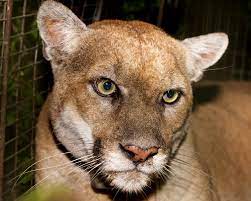
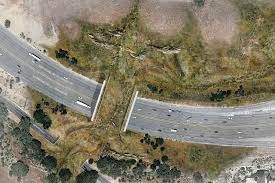
Il leone di montagna americano P-22 ha ispirato la creazione di un cavalcavia per facilitare gli attraversamenti della fauna selvatica; il ponte attraverserà una trafficata autostrada di dieci corsie, che vede quasi 400.000 auto al giorno, nei dintorno di Griffith Park a Los Angeles.  Il leone era sopravvissuto in una zona—di quasi otto miglia quadrate—molto più piccola di quanto qualsiasi leone di montagna potesse vivere.  Infatti la dimensione media del territorio di un leone di montagna maschio è di 150 miglia quadrate.

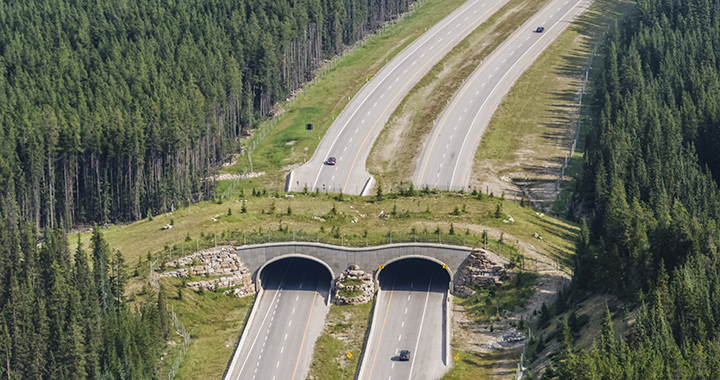
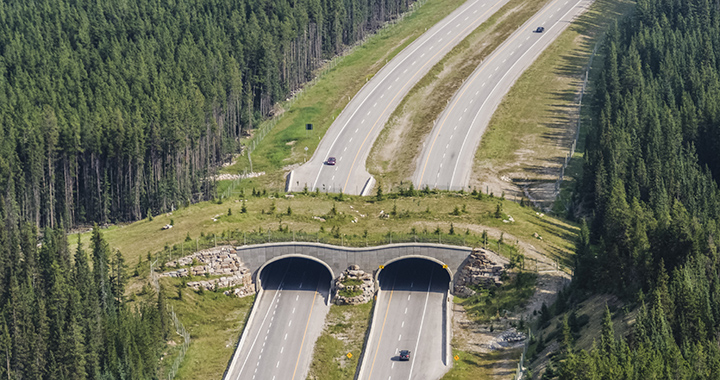
Wildlife overpass, Banff

I cavalcavi sono stati costruiti per la prima volta in Francia negli anni ’50.  Sono utilizzati in tutta Europa, in particolare in Olanda.  Questi corridoi hanno persino funzionato con animali considerato poco intelligenti.  Per esempio, in Australia a causa dei tanti incidenti d’auto con i koala, gli ingegneri del Queensland hanno creato una serie di tunnel e ponti per aiutarli ad evitare strade trafficante. Al tempo esperti di fauna selvatica ritenevano che i koala non avrebbero capito usarli, dato che i koala sono famosi per il gran tempo passato sugli alberi di eucalipto.  Invece, ai koala ci è voluto meno di tre settimane per capire come funzionava questo nuovo sistema.

Questi corridoi della fauna selvatica sono utilizzato da molti grandi animali, come orsi, alci e puma.  Hanno il merito di aiutare gli orsi grizzly a trovare compagni.  Potrebbero rappresentare un’importante salvaguardia per specie in via di estinzione, per sostenere e aumentare la popolazione.

L’attraversamento della fauna selvatica a Los Angeles è un progetto pubblico, che privato, creato dal National Wildlife Federation, insieme al dipartimento dei trasporti della California.  Quasi la metà del costo, 100 miliardi di dollari, è stato finanziato da donazioni private, tra cui del filantropo Wallis Annenberg, da cui l’attraversamento prenderà il nome.  L’attraversamento sarà costituiti da muri insonorizzati e barriere acustiche naturali, fatte di alberi alti e piantagioni fitte.  Sono progettati per filtrare il rumore dell’autostrada, poiché la maggior parte degli animali si spaventa e non si avvicina se c’è troppo rumore.  Gli ingegneri stanno anche progettando strutture per supportare gli animali nei confronti delle luci intese: barriere fotoelettriche, per rendere meno invalidanti i fari delle macchine.

L’attraversamento di Annenberg Wildlife Overpass, non solo sarà il più grande del mondo, ma ospiterà anche un ecosistema unico. I semi impiantati si adatteranno all’ecosistema circostante. Piante autoctone resistenti al fuoco copriranno la zona, mentre la vegetazione invasivo che alimenta gli incendi, come la pianta di senape nera, sarà rimosso dall’area circostante. Farfalle monarca e lucertole faranno parte della vita locale.

Sfortunatamente, P-22 non potrà mai utilizzare l’attraversamento che lui stesso ha ispirato. Ma quando verrà aperto nel 2025, l’eredità duratura del grande felino, verrà conosciuta in tutta Los Angeles e tra gli amanti della fauna selvatica.

Posted in Animali, Architecture, California, Cambiamenti climatici, Foto, Italiano | Leave a comment

Wildlife Overpass (part 2)

The stories of the deaths of M-20, the Italian Apennine bear, and P-22, the American mountain lion, are not rare.  About two million big animals die on American roads every year from vehicle accidents, and the numbers are no doubt underreported.  When you add the little ones like frogs and butterflies, the number could reach the billions.

The American mountain lion has inspired the creation of an overpass to facilitate wildlife crossings; it will span a busy 10-lane freeway, which sees about 400,000 cars a day, that had restricted P-22’s movements around Griffith Park in Los Angeles.  He had been surviving in an area—about 8 square miles—that was much smaller than any male mountain lion had ever lived.   The average male mountain lion territory is 150 miles.

Wildlife overpass, Banff

Wildlife crossings were first constructed in France in the 1950s.  They are used throughout Europe, particularly in the Netherlands.  These corridors have even worked with animals that some people considered not very intelligent.  For example, when vehicle accidents were blamed for the decline in the koala population in Australia, engineers in Queensland created a series of tunnels and bridges to help them avoid busy streets.   Some wildlife experts predicted that the koalas wouldn’t figure them out.  After all, koalas are known for hanging out in trees, stoned on eucalyptus.  But it took less than three weeks for the koalas to navigate the system. 

These wildlife corridors are used by many big animals, including bears, moose, elk and cougars.  They are credited with helping grizzly bears find mates.  They could be an important safeguard for endangered species to sustain and increase their population.

The wildlife crossing in Los Angeles is a public-private project, spearheaded by the National Wildlife Federation, along with California’s transportation department.  About half of the $100 billion cost is being funded by private donations, including from philanthropist Wallis Annenberg, for whom the crossing will be named.  The crossing includes specially designed sound walls, along with natural sound barriers of tall trees and lush plantings.  They are designed to filter out the noise of the freeway as most animals get frightened and won’t approach if there is too much noise.  Engineers are also planning to address animals’ fear of bright lights.  They are designing light barriers, both on the crossing itself and on the approach, so that headlights aren’t a deterrent.

The Wallis Annenberg Wildlife Overpass will not only be the largest in the world, but it will also host a unique ecosystem on top of it.  Seeds are being collected to match the surrounding ecosystem.  Native, fire-resistant plants will cover the crossing, while invasive, fire-fueling material, like the black mustard plant, will be removed from the surrounding area.  Monarch butterflies and lizards will be part of the local life.

Unfortunately, P-22 will never get to use the crossing that he inspired.  But when the overpass opens in 2025, it will become the lasting legacy of the big cat, popular throughout Los Angeles and among all wildlife lovers.

Posted in Animali, Architecture, California, Cambiamenti climatici, English, Foto | Leave a comment