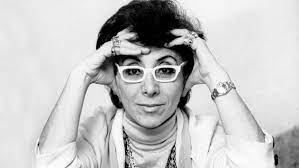
Lina Wertmüller (in English)

Born Arcangela Felice Assunta Wertmüller von Elgg Spañol von Braueich in Rome in 1928, the famous Italian film director Lina Wertmüller came from a devout Catholic family of distant Swiss descent on her father’s side.  She called her childhood “an adventure.”  It surely must have been, as she was expelled from 15 different Catholic high schools.  She took an early interest in theatre and film and worked in various capacities producing plays throughout Europe.  A breakthrough came when her friend from high school (which liceo?) married Marcello Mastroianni; he introduced her to Federico Fellini.  She became his assistant director for (1963).

She began directing her own films beginning in 1963 and although she produced at least 16, she is best known for four of them from the 1970s: The Seduction of Mimi (1972), Love and Anarchy (1973), Swept Away (1974) and Seven Beauties (1975).  Like her own name, she sometimes gave lengthy and whimsical titles to her films.  For example, Swept Away was actually Swept Away by an Unusual Destiny in the Blue Sea of August.  She holds the Guinness Book of Records for the longest movie title: Blood Feud (1978) was originally Un fatto di sangue nel comune di Siculiana fra due uomini per causa di una vedova.
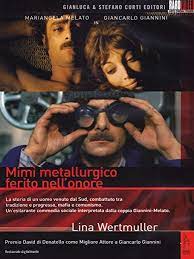
Wertmüller’s work shows great empathy for the Italian working class, particularly as victims of the politically powerful.  In The Seduction of Mimi, the protagonist is a Communist, but his main focus is finding work; he is thwarted by the mafia at every turn.  In Love and Anarchy, the protagonist is an anarchist who wants to assassinate Benito Mussolini; in the end, he is beaten to death by the fascists.

Many of Wertmüller’s films feature reversals of power in terms of class, gender, and social roles.  In Swept Away, an arrogant wealthy woman Raffaella is vacationing on a yacht in the Mediterranean Sea and talks incessantly about the virtues of her class and the worthlessness of the political left.  This infuriates the deckhand, Gennarino, an avowed communist, who does not voice his opinion in order to keep his job.  When they are marooned on an island, he has a lot to say, and she becomes subservient to him in order to survive. 

There is rape and violence in her films, and violence toward Raffaella in Swept Away.  While Wertmüller was not an avowed feminist, she did often feature strong and capable women and silly and inept men.  In The Seduction of Mimi, Mimi is a simple man who stumbles and fumbles his way through the world.  In both this film and Seven Beauties, Wertmüller makes fun of the male machismo.  In the latter film, Pasqualino is a dandy and small-time hood in Naples.  He is offended that a man has turned one of his sisters into a prostitute and sets out to avenge the family honor.  Yet, he kills a man, rapes a woman in a psychiatric ward, and deserts the Italian army.  He is sent to a German concentration camp, where in order to survive he provides sexual favors to the obese female commandant.

Wertmüller’s films are shot in beautiful settings—Rome, the islands, even brothels and the extermination camp.  Her characters are likeable no matter how inept, arrogant or criminal, perhaps because there is a sort of preposterous frenzy in many of her characters.  The dialogue is enriched with dialect…and many swear words.

Lina Wertmüller became the first female director nominated for an Oscar as Best Director for Seven Beauties.  She also received an honorary Oscar in 2019.  Her husband, Enrico Job (1934-2008), an art designer who worked on several of her pictures, could not be with her, but her adopted daughter who was born in 1991, accompanied her during her acceptance of the honor, along with Roberta Rossellini who translated for her, and Sofia Loren.

Lina Wertmüller died recently, in December 2021.

Posted in English, Film, Foto, Italia, Politica, Roma, Storia | Leave a comment

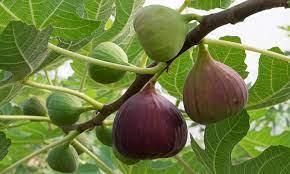
Il Fico

Si ritiene che la pianta di fico risalga a più di 11.000 anni fa e sia stato la prima pianta coltivata dall’uomo, un millennio prima del grano o dei legumi. Il fico compare in tutta la Bibbia a cominciare da Adamo ed Eva, che usano foglie di fico per coprirsi; è probabile che il Frutto Proibito fosse, infatti, un fico e non una mela.

I fichi si intrecciano in molti modi con la storia d’Italia. Fanno parte della leggenda della fondazione di Roma. Quando Romolo e Remo furono posti in un cesto e gettati nel fiume Tevere, sopravvissero quando il cesto si fermò… sotto un albero di fico. I fichi erano un alimento comune tra i romani. Si dice che i fichi fossero comparsi nella morte per avvelenamento di Augusto, nel 14 d.C., primo imperatore di Roma.  Sono stati considerati un simbolo sacro da molti: delicati, abbondanti e commestibili, i semi di fico sono simbolo di comprensione universale, unità e verità; i loro alberi forniscono raccolti abbondanti e biennali, che rimandano all’abbondanza.

I fichi sono coltivati ​​in tutta Italia, ma prosperano particolarmente al caldo sole e nei terreni di Calabria, Campania, Puglia e Sicilia. Ne esistono molte varietà, tra cui: il fico Dottato del sud (chiamato Kadota negli Stati Uniti), diverse tipologie siciliane (tra cui il Bianco, il Nero e la Melanzana), la Tarantella della Puglia, il fico di Triana della Toscana, il Paradiso a Genova che resiste alle basse temperature, quindi coltivato anche in Val Camonica, in Lombardia e in Piemonte. Il colore varia dal bianco al giallo, al verde, al viola, al marrone e al nero; tutti hanno polpa rossa. 

Il valore nutritivo dei fichi è piuttosto impressionante. Hanno il più alto contenuto di minerali, ferro, magnesio e fibre di tutti i comuni frutti, frutta secca o verdure. I fichi hanno l’80% in più di potassio rispetto alle banane e sono estremamente facili da digerire. Con solo circa 20-40 calorie per fico, viene spesso definito “il frutto più perfetto della natura”.

I fichi sono molto impiegati nella cucina italiana, dal dolce al salato. I fichi freschi possono essere consumati al naturale e sono spesso usati per le crostate; i fichi secchi sono usati per i biscotti e i fichi molto maturi per la marmellata. I fichi sono buonissimi su crostini di pane con la ricotta oppure con miele, formaggio di capra e noci; in insalata con prosciutto, mozzarella e basilico; e nel periodo natalizio con altra frutta secca.

I fichi hanno anche un posto di rilievo nelle espressioni e negli idiomi italiani.  “Non vale un fico secco” indica che qualcuno o qualcosa non vale niente. “Fare le nozze con i fichi secchi” significa essere avaro. “Cogliere i fichi in vetta” si riferisce al correre un rischio non necessario, come arrampicarsi su un fico (noto per il suo legno fragile) per cogliere i frutti dai rami più alti, che possono rompersi facilmente. Un ultimo proverbio: “Fare come gli antichi, che tagliavano il fico per cogliere i fichi” che si riferisce al fare qualcosa di drastico in cui il danno supera il guadagno. “Che fico/figo!”  è un’espressione moderna che si riferisce a qualcuno come fisicamente bello o a qualcosa di interessante. Data l’abbondanza e la versatilità dei fichi, non c’è da meravigliarsi se le sue metafore rallegrano la lingua italiana.

Posted in Abitudini, Cucina italiana, Foto, Italia, Italiano, Storia | Leave a comment

The Fig

It is believed that the fig dates back more than 11,000 years and was the first crop cultivated by humans, a millennium before wheat or legumes.  The fig appears throughout the Bible beginning with Adam and Eve, who used fig leaves to cover themselves; it is likely that the Forbidden Fruit was, in fact, a fig and not an apple.

Figs are intertwined in many ways with the history of Italy.  They are part of the legend of the founding of Rome.   When Romulus and Remus were placed in a basket and cast into the Tiber River, they survived when the basket came to rest… beneath a fig tree.  Figs were a common food among the Romans.  It is rumored that figs may have figured in the poisoning death of Rome’s first Emperor, Augustus, in 14 A.D.  They have been regarded as a sacred symbol by many:  Delicate, abundant, and edible, fig seeds signify universal understanding, unity and truth; their trees provide plentiful, bi-annual crops, which connote abundance.

Figs are grown throughout Italy, but they particularly thrive in the hot sun and soil of Calabria, Campania, Puglia e Sicily.  There are many varieties, including the Dottato fig in the south (called Kadota in the United States), several Sicilian types (including the White, the Black and the Melanzana), the Tarantella from Puglia, the Triana fig from Tuscany, the Paradiso from Genoa that withstands low temperatures, and the Val Camonica that is grown in Lombardy and Piedmont.  They range in color from white to yellow, green, purple, brown and black; almost all have red pulp.

The nutritional value of figs is quite impressive.  They have the highest mineral, iron, magnesium, and fiber content of all common fruits, nuts or vegetables.  Figs are 80% higher in potassium than bananas and are extremely easy to digest.  With only about 20 to 40 calories per fig, it is often referred to as “nature’s most nearly perfect fruit.”

Figs are well integrated into Italian cuisine, from sweet to savory dishes.  Fresh figs can be eaten plain and are often used for crostate (fruit tarts), dried figs are used in cookies, and overripe figs in jam.  Figs are delicious on toasted bread with ricotta; topped with honey, goat cheese and walnuts; in a salad with prosciutto, mozzarella and basil; and at Christmas time with other dried fruit.

Figs also figure prominently in Italian expressions and idioms.  Che fico/figo! (literally, what a fig!)is a modern expression that refers to someone or something as awesome.  It’s like saying, “how cool”!  But to say Non vale un fico secco (literally, not worth a dried fig) indicates that someone or something is worthless.  Fare le nozze con i fichi secchi (literally, to have a wedding feast with dried figs) means to be stingy.  Cogliere i fichi in vetta (literally, to collect figs at the top) refers to taking an unnecessary risk, like climbing a fig tree to pick fruit from the highest branches, which can break easily.  There is even a proverb that degrades the poor fig: Fare come gli antichi, che tagliavano il fico per cogliere i fichi (literally, to do like the ancients who cut down the fig tree to pick the figs) which refers to doing something drastic in which the damage outweighs the gain.  Given the abundance and versatility of figs, it is no wonder that its metaphors brighten the Italian language.

Posted in Abitudini, Cucina italiana, English, Foto, Italia, Storia | Leave a comment