Freezing Oligarchs’ Assets

Since the Russian invasion of Ukraine, European and American authorities have moved aggressively to freeze assets of Russian oligarchs.  They are pressuring Russian President Vladimir Putin to cease his war on the independent and sovereign nation by cutting off his money supply.
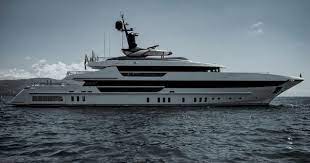
Italy has been at the forefront of this development.  In early March, Italian authorities seized in the port of San Remo, a superyacht Lena, which belonged to oligarch Gennady Timchenko.  It also impounded in the port of Imperia, Lady M, a 65-meter superyacht, which was owned by Russia’s richest man, Alexei Mordashov, a steel plant owner on the European Union’s sanctions list.  Later that month, the Italian police confiscated in the port of Trieste the yacht Sy A owned by Andrey Melnichenko, who made his fortune in fertilizer production and coal and is one of Russia’s 10 richest people.
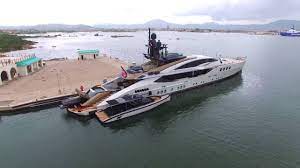
Besides luxury yachts, Italian authorities have seized villas, condos and other assets in Sardinia, the Ligurian coast and Lake Como belonging to Russian billionaires.  Given the predominant weather in Russia and the rich coastline and beauty of Italy, it is no wonder that these Russian businessmen seek solace and retreat in il Bel Paese.

The most recent seizure was the $700 million superyacht Scheherazade in the Tuscan port of Marina di Carrara.  The Italian finance ministry announced that an investigation had established that the ship’s owner was an individual that “threatened peace and international security” and that the individual’s actions amounted to the “undermining or threatening the territorial integrity, sovereignty and independence of Ukraine.”  It added that it could not name the individual until the European Council published it.

Yet speculation on ownership abounds.  For weeks, Italian media outlets reported that Eduard Khudainatov, a Russian oil tycoon who is not a billionaire and was not under sanctions, owned the yacht.  He is considered close to Igor Sechin, a powerful oligarch and close friend of Putin’s who is on the sanctions list.  However, the question was raised about how Khudainatov could afford to purchase one of the world’s most luxurious yachts.  Crew members and shipyard workers apparently openly discussed that the vessel unofficially belongs to, and is for the use of, Putin.  Investigators working for jailed Russian opposition politician Alexei Navalny say that the yacht’s owner is Putin himself.  They published a list of the crew who worked on the yacht, which included members of the Russian state agency responsible for Putin’s personal protection.
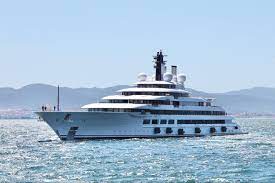
Most large yachts and the assets of Russia’s ruling and billionaire class are generally kept in tight secrecy.  They are registered by offshore corporations in island tax havens to obscure their ownership.  To erase their fingerprints further, owners use shareholders, directors and family members as proxies.  The Scheherazade is registered in the Cayman Islands in the Caribbean and is officially owned by a company in the Marshall Islands in the Pacific.  As the pressure mounts on Russian oligarchs, many of their targeted vessels have moved into the waters around Turkey, the United Arab Emirates and the Maldives, which have not imposed sanctions and are not seizing assets.

Freezing a yacht means that the owner cannot sell the ship, transfer ownership or provide maintenance services.  It’s one thing for a country to confiscate a yacht, but a country cannot take ownership and therefore cannot sell it at this time (if there is a secondary market).  Extensive legal battles are expected.  To take ownership of an oligarch’s yacht, governments have to show that the property was part of a crime.  It may be challenging to prove that yachts are “proceeds of illegal activity” versus purchased through legitimate business channels.

The United States Congress is considering a bill called “Yachts for Ukraine” that would allow authorities to seize Russian-owned assets of $5 million or more and would permit governments to sell the assets and send the proceeds to aid humanitarian and reconstruction efforts in Ukraine.  As President Biden addressed Russia in his recent State of the Union address, “We are joining with our European allies to find and seize your yachts, your luxury apartments, your private jets.  We are coming for your ill-gotten gains.”

Posted in English, Foto, Italia, la politica, Politica, Toscana | Leave a comment

La cultura e la criminalità

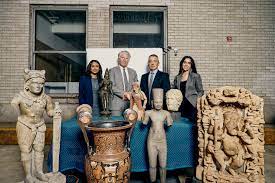
Nel dicembre 2021, l’ufficio del procuratore di Manhattan a New York ha rimpatriato in Italia 200 antichità e altri oggetti d’arte. Erano stati confiscati da importanti musei e collezioni, e rappresentano il più grande rimpatrio singolo di reliquie dall’America all’Italia. Includono un pithos, che è un grande vaso di terracotta del VII secolo a.C., insieme ad altri oggetti del Getty Museum di Los Angeles; un’idria, o brocca d’acqua, raffigurante le gesta di Ercole, della Fordham University nel Bronx; e altre antichità sequestrate dai musei di San Antonio e Cleveland e da gallerie e case in New York.

Circa l’80% degli oggetti è legato a un uomo, Edoardo Almagià, oggi antiquario con sede a Roma. Laureato a Princeton, Almagià ha vissuto e venduto opere d’arte a New York dal 1980 al 2006. Per decenni è stato indagato dalle autorità italiane e americane anche per trasporto illegale di centinaia di manufatti italiani negli Stati Uniti e deposito di falsi documenti doganali. I suoi intrighi legali risalgono almeno al 1996. Nel 2000 è stato fermato all’aeroporto Kennedy con due affreschi trafugati da Ercolano; nel 2006, anno in cui ha lasciato gli Stati Uniti, agenti federali hanno fatto irruzione nel suo appartamento di New York; ha rinunciato a 6 oggetti che sono stati successivamente dichiarati illeciti. In Italia è stato indagato per saccheggio di antiche tombe romane ed etrusche.

I privati ​​e le istituzioni che hanno acquistato l’arte trafugata lo hanno fatto tramite intermediari che le avevano negoziate con il Sig. Almagià. I musei e i collezionisti hanno affermato di non sapere che gli oggetti erano stati rubati: e qui starebbe il problema secondo Matthew Bogdanos, un pubblico ministero che dirige l’Unità per il traffico di antichità dell’ufficio del procuratore distrettuale di Manhattan.

L’ignoranza volontaria – la “difesa dello struzzo”, come la chiama Bogdanos – equivale a colpa, dice. In altre parole, se i rivenditori e gli acquirenti non sono riusciti a fare un’indagine ragionevole sulla vera proprietà di un oggetto, si presume che sapessero che era stato rubato.

Il signor Bogdanos ha un passato interessante. È cresciuto lavorando nel ristorante greco dei suoi genitori a Kips Bay, nel Lower East Side di Manhattan. Sua madre, una cameriera del ristorante di famiglia, diede a Matthew, all’età di 12 anni, una copia dell’Iliade per incoraggiare l’orgoglio della sua eredità greca. Leggeva voracemente Omero, spesso in un armadio durante i litigi a volte violenti dei suoi genitori. Dopo aver conseguito una laurea in giurisprudenza alla Columbia University, è rimasto per un master in lettere classiche.

Ora colonnello della Marina in pensione, Bogdanos è stato richiamato in servizio attivo dopo l’11 settembre. Originariamente incaricato di migliorare la sicurezza all’aeroporto di Kabul, si è irritato nel 2003 quando dei saccheggiatori hanno saccheggiato il museo nazionale iracheno, che ospitava manufatti insostituibili dalla culla della civiltà. Bogdanos mise insieme una squadra e recuperò migliaia di antichità in tutto l’Iraq, che in seguito pubblicò in un libro di memorie intitolato Thieves of Baghdad. Quando è tornato negli Stati Uniti e presso l’ufficio del procuratore distrettuale di Manhattan come procuratore per gli omicidi, ha iniziato a fare pressioni per istituire una task force per indagare e perseguire i furti e i traffici di antichità.

Infine, nel 2017, Cyrus Vance Jr, il procuratore distrettuale, ha annunciato la formazione della Antiquities Trafficking Unit, l’unica unità al mondo guidata da un pubblico ministero. Bogdanos non mostra pietà per l’enclave di vecchie famiglie, musei e case d’asta su cui indaga anche quando la politica è delicata, come lo sono con i collezionisti che hanno una reputazione di benefattori pubblici. C’è qualche clemenza per queste persone che non hanno mai visto l’interno di una cella di prigione? “Non lo farei per uno spacciatore sulla 155th Street o un pistolero sulla 187th Street.” Prende la stessa linea dura nel mondo “gentile” del commercio di antichità.

L’ufficio del procuratore distrettuale ha restituito più di 1.300 antichità alle loro terre d’origine: un frammento di sarcofago in marmo in Grecia, un’impronta di Buddha in Pakistan e un mosaico del I secolo di una nave della flotta dell’imperatore Caligola… uno dei 200 tornò in Italia nel 2021.

Posted in Arte, Foto, Italia, Italiano, New York, Roma, Storia | Leave a comment

Culture and Criminality

In December 2021, the Manhattan district attorney’s office repatriated 200 antiquities and other art objects to Italy.  They had been confiscated from major museums and collections, and they represent the largest single repatriation of relics from America to Italy.  They include a pithos, which is a large terracotta storage jar form the 7th century B.C., along with other items from the Getty Museum in Los Angeles; a hydria, or water jar, depicting the deeds of Hercules, from Fordham University in the Bronx; and other antiquities seized from museums in San Antonio and Cleveland and from galleries and homes in New York City and on Long Island.

About 80% of the items are tied to one man, Edoardo Almagià, now a Rome-based antiquities dealer. A Princeton graduate, Mr. Almagià lived and sold artwork in New York from 1980 to 2006.  He has been investigated for decades by Italian and American authorities for, among other things, illegally transporting hundreds of Italian artifacts into the United States and filing false customs documents.  His legal entanglements date back to at least 1996.  In 2000 he was stopped at Kennedy Airport with two frescoes stolen from Herculaneum; in 2006, the year he left the United States, federal agents raided his New York apartment; he relinquished 6 items that were later declared illicit.  In Italy he has been investigated for looting ancient Roman and Etruscan tombs.

The individuals and institutions that purchased the stolen art did so through intermediaries who had obtained them from Mr. Almagià.  The museums and collectors claim that they did not know the items had been stolen, and herein lies the problem, according to Matthew Bogdanos, a prosecutor who heads the Antiquities Trafficking Unit of the Manhattan District Attorney’s Office.  Willful ignorance—the “ostrich defense” as Bogdanos calls it—is tantamount to guilt he says.  In other words, if dealers and buyers failed to make a reasonable inquiry into an object’s true ownership, they were presumed to know it was stolen.

Mr. Bogdanos has an interesting past.  He grew up busing tables at his parents’ Greek restaurant in Kips Bay on the lower east side of Manhattan.  His mother, a waitress at the family restaurant, gave Matthew, at the age of 12, a copy of The Iliad to encourage pride in his Greek heritage.  He read voraciously Homer’s epic, often in a closet during his parents’ sometimes violent fights.  After earning a law degree at Columbia University, he stayed on for a master’s in classics. 

Now a retired Marine colonel, Bogdanos was recalled to active duty after 9/11.  Originally tasked with improving security at the Kabul airport, he became incensed in 2003 when looters sacked Iraq’s national museum, which housed irreplaceable artifacts from the cradle of civilization.  Bogdanos put together a team and recovered thousands of antiquities across Iraq, which he published in a memoir called Thieves of Baghdad.  When he returned to the United States and to the Manhattan DA’s Office as a homicide prosecutor, he began lobbying to establish a task force to investigate and prosecute antiquities theft and trafficking.

Finally, in 2017, Cyrus Vance Jr, the DA, announced the formation of the Antiquities Trafficking Unit, the only unit in the world led by a prosecutor.  Bogdanos shows no mercy to the enclave of old-money families, museums and auction houses he investigates even when the politics are delicate, as they are with collectors who have reputations as public benefactors.  Is there any leniency for these folks who have never seen the inside of a jail cell?  “I wouldn’t do that for a drug dealer on 155th Street or a gunrunner on 187th Street.”  He takes the same hard line in the “genteel” world of antiquities trade.

The DA’s office has returned more than 1,300 antiquities to their homelands: a marble sarcophagus fragment to Greece, a Buddha’s footprint to Pakistan, and a first-century mosaic from a ship in the emperor Caligula’s fleet…one of the 200 returned to Italy in 2021.

Posted in Arte, English, Foto, Italia, New York, Pompei, Storia, Uncategorized | Leave a comment