Culture and Criminality

In December 2021, the Manhattan district attorney’s office repatriated 200 antiquities and other art objects to Italy.  They had been confiscated from major museums and collections, and they represent the largest single repatriation of relics from America to Italy.  They include a pithos, which is a large terracotta storage jar form the 7th century B.C., along with other items from the Getty Museum in Los Angeles; a hydria, or water jar, depicting the deeds of Hercules, from Fordham University in the Bronx; and other antiquities seized from museums in San Antonio and Cleveland and from galleries and homes in New York City and on Long Island.

About 80% of the items are tied to one man, Edoardo Almagià, now a Rome-based antiquities dealer. A Princeton graduate, Mr. Almagià lived and sold artwork in New York from 1980 to 2006.  He has been investigated for decades by Italian and American authorities for, among other things, illegally transporting hundreds of Italian artifacts into the United States and filing false customs documents.  His legal entanglements date back to at least 1996.  In 2000 he was stopped at Kennedy Airport with two frescoes stolen from Herculaneum; in 2006, the year he left the United States, federal agents raided his New York apartment; he relinquished 6 items that were later declared illicit.  In Italy he has been investigated for looting ancient Roman and Etruscan tombs.

The individuals and institutions that purchased the stolen art did so through intermediaries who had obtained them from Mr. Almagià.  The museums and collectors claim that they did not know the items had been stolen, and herein lies the problem, according to Matthew Bogdanos, a prosecutor who heads the Antiquities Trafficking Unit of the Manhattan District Attorney’s Office.  Willful ignorance—the “ostrich defense” as Bogdanos calls it—is tantamount to guilt he says.  In other words, if dealers and buyers failed to make a reasonable inquiry into an object’s true ownership, they were presumed to know it was stolen.

Mr. Bogdanos has an interesting past.  He grew up busing tables at his parents’ Greek restaurant in Kips Bay on the lower east side of Manhattan.  His mother, a waitress at the family restaurant, gave Matthew, at the age of 12, a copy of The Iliad to encourage pride in his Greek heritage.  He read voraciously Homer’s epic, often in a closet during his parents’ sometimes violent fights.  After earning a law degree at Columbia University, he stayed on for a master’s in classics. 

Now a retired Marine colonel, Bogdanos was recalled to active duty after 9/11.  Originally tasked with improving security at the Kabul airport, he became incensed in 2003 when looters sacked Iraq’s national museum, which housed irreplaceable artifacts from the cradle of civilization.  Bogdanos put together a team and recovered thousands of antiquities across Iraq, which he published in a memoir called Thieves of Baghdad.  When he returned to the United States and to the Manhattan DA’s Office as a homicide prosecutor, he began lobbying to establish a task force to investigate and prosecute antiquities theft and trafficking.
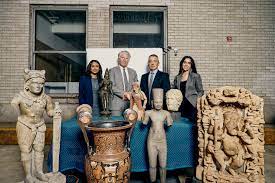
Finally, in 2017, Cyrus Vance Jr, the DA, announced the formation of the Antiquities Trafficking Unit, the only unit in the world led by a prosecutor.  Bogdanos shows no mercy to the enclave of old-money families, museums and auction houses he investigates even when the politics are delicate, as they are with collectors who have reputations as public benefactors.  Is there any leniency for these folks who have never seen the inside of a jail cell?  “I wouldn’t do that for a drug dealer on 155th Street or a gunrunner on 187th Street.”  He takes the same hard line in the “genteel” world of antiquities trade.

The DA’s office has returned more than 1,300 antiquities to their homelands: a marble sarcophagus fragment to Greece, a Buddha’s footprint to Pakistan, and a first-century mosaic from a ship in the emperor Caligula’s fleet…one of the 200 returned to Italy in 2021.
Posted in Arte, English, Foto, Italia, New York, Pompei, Storia, Uncategorized | Leave a comment

“Una svolta decisiva nella storia europea”

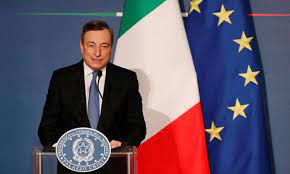
Durante la prima settimana di marzo 2022, il New York Times ha pubblicato tre articoli sull’Italia e le sue relazioni con la Russia che sono cambiate dall’invasione dell’Ucraina da parte di Putin. Il primo articolo riportava il discorso del Primo Ministro Mario Draghi al Parlamento italiano il primo marzo in cui affermava l’unità del Paese con la Nato contro la Russia.

Poiché l’Italia riceve più del 40% del suo gas naturale dalla Russia, allinearsi alla Nato e imporre sanzioni alla Russia avrebbe avuto sicuramente un effetto boomerang. “In caso di interruzioni delle forniture di gas dalla Russia, l’Italia ha più da perdere rispetto ad altri Paesi europei che fanno affidamento su fonti diverse”, ha detto Draghi, ma “questo non toglie la nostra determinazione a sostenere sanzioni che riteniamo giustificate e necessarie”. L’Italia è solidale con i suoi alleati europei.

Non è sempre stato così. Durante gran parte del secondo dopoguerra, l’Italia aveva mantenuto uno stretto legame con la Russia. Dopo la caduta del regime fascista di Mussolini, il Partito Comunista italiano era il più grande al di fuori del blocco sovietico. L’Italia una volta era vista sia dalla Russia che dai nervosi alleati della NATO come il ventre molle dell’Europa, consentendo a Putin una maggiore influenza nella regione.

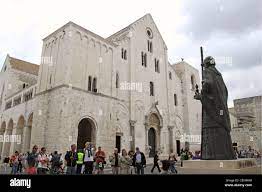
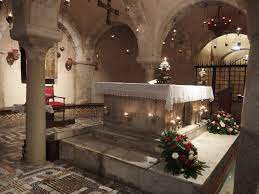
I legami dell’Italia con la Russia sono stati particolarmente forti nella città portuale di Bari in Puglia, che ospita la tomba di San Nicola, santo venerato in entrambi i paesi. I marinai portarono le reliquie di San Nicola dall’odierna Turchia a Bari 1.000 anni fa. Da allora sono sepolti nella Basilica di San Nicola. Sebbene la basilica sia cattolica romana, una volta alla settimana invita i fedeli ortodossi a svolgere il proprio servizio. Nel 2007 lo stesso Putin si recò a Bari e si inginocchiò davanti alla tomba di San Nicola. Anni prima donò una statua del santo che si erge davanti alla piazza della basilica.

Oggi Bari è epicentro delle tensioni tra i residenti ucraini e russi della città. Molti ex-ucraini vengono a pregare San Nicola per porre fine alla guerra. I residenti hanno presentato una petizione alla città per la rimozione della targa recante la dedica della statua da parte di Putin. 

La dipendenza dell’Italia dalle forniture energetiche russe ha spinto oggi Draghi ad annunciare che l’Italia accelererà progetti di diversificazione, costruendo energie rinnovabili e nuove forniture di gas, per non dipendere dalle decisioni di un singolo Paese. Oltre all’energia, con l’ascesa degli oligarchi, la Russia era diventata un mercato per l’agricoltura, le banche e i beni di lusso italiani, mercato ora in pericolo.

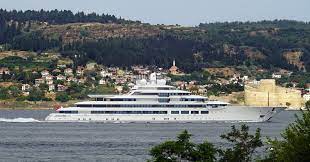
Dall’invasione dell’Ucraina, l’Unione Europea e gli Stati Uniti hanno perseguito i beni di lusso degli oligarchi vicini a Putin. Diversi superyacht sono stati sequestrati, uno in particolare è indagato nel porto toscano di Marina di Carrara. Anche nel rarefatto mondo dei superyacht, lo Scheherazade si pone al di sopra degli altri: è a 140 metri, costa 700 milioni di dollari, ha due ponti per elicotteri, una piscina con copertura a scomparsa che si trasforma in pista da ballo, una palestra completamente attrezzata e infissi dorati nei bagni.

Chiamato “Yacht di Putin” dalla gente del posto, la Guardia di Finanza italiana ha aperto un’indagine sulla proprietà dello yacht, che è avvolta dal segreto. Le interviste al capitano e all’equipaggio della nave hanno fornito poche informazioni in quanto sono sotto un “accordo di riservatezza a tenuta stagna”. Attraccata nel porto toscano dallo scorso settembre, sono in corso gli sforzi per far salpare lo Scheherazade mentre la polizia italiana corre per finire le indagini sulla proprietà. *

Draghi, ex-presidente della Banca centrale europea, ha chiesto personalmente all’Europa di adottare ulteriori misure contro gli oligarchi russi con un patrimonio di oltre 10 milioni di euro. Vuole intensificare la pressione sulla Banca centrale russa e ha chiesto alla Bank of Settlements, che ha sede in Svizzera, di aderire alle sanzioni contro gli oligarchi. 

Nel suo discorso, Draghi ha sottolineato che l’Italia e l’Europa hanno “adottato una risposta sempre più dura e punitiva a Mosca”. Ha anche detto che l’Italia ha risposto all’appello del presidente ucraino Zelensky donando armi, equipaggiamenti e veicoli militari: “Quando una democrazia sotto attacco chiede aiuto, non è possibile rispondere solo con l’incoraggiamento”. Draghi ha delineato una visione dell’Europa definendo l’invasione russa “un punto di svolta decisivo nella storia europea”. 

*Il 6 maggio, le autorità italiane hanno annunciato di aver sequestrato lo Sheherazade, affermando che il suo proprietario aveva “significativi legami economici e commerciali” con “elementi di spicco del governo russo.”

Posted in Foto, Italia, Italiano, la politica, Politica, Puglia, Storia, Toscana | Leave a comment

“A Decisive Turning Point in European History”

During the first week in March 2022, the New York Times published three articles on Italy and its relationship with Russia that has changed since Putin’s invasion of Ukraine.  The first article reported on Prime Minister Mario Draghi’s speech to the Italian Parliament on March 1 affirming his country’s unity with NATO against Russia.

Because Italy receives more than 40% of its natural gas from Russia, aligning itself with NATO and imposing sanctions on Russia would surely have a boomerang effect.  “In case of interruptions of gas supplies from Russia, Italy has more to lose compared to other European countries that rely on different sources,” Draghi said, but “this does not diminish our determination to support sanctions that we deem justified and necessary.”  Italy is standing firmly with its European allies.

This was not always the case. During much of the post-WWII era, Italy had maintained a close connection with Russia.  Following the fall of Mussolini’s fascist regime, Italy’s Communist Party was the largest outside the Soviet bloc.  Italy was once seen by both Russia and nervous NATO allies as the soft underbelly of Europe, allowing Putin more influence in the region.

Italy’s ties to Russia have been particularly strong in the port city of Bari in Puglia, which houses the tomb of St. Nicholas, a saint revered in both countries.  Sailors brought the relics of St. Nicholas from present-day Turkey to Bari 1,000 years ago.  They have been entombed in the Basilica San Nicola ever since.  While the basilica is Roman Catholic, once a week it invites the Orthodox faithful to hold their own service.  In 2007 Putin himself went to Bari and knelt in front of St. Nicholas’s tomb.  Years earlier he donated a statue of the saint that stands in front of the piazza of the basilica.

Today Bari is an epicenter for the tensions between Ukrainian and Russian residents of the city.  Many former Ukrainians come to pray to St. Nicholas to end the war.  Residents have petitioned the city for removal of the plaque bearing Putin’s dedication of the statue.

Italy’s dependence on Russian energy supplies today prompted Draghi to announce that Italy would accelerate diversification projects, building up renewable energy and new gas supplies, in order not to be dependent on the decisions of a single country.  Besides energy, with the rise of the oligarchs, Russia had become a market for Italian agriculture, banking and luxury goods, a market now in peril.

Since the invasion of Ukraine, the European Union and the United States have been pursuing the luxury assets of oligarchs close to Putin.  Several superyachts have been seized, and one in particular is under investigation in the Tuscan port of Marina di Carrara.  Even in the rarified world of superyachts, the Scheherazade rises above the others:  At 459 feet (140 meters) and at a cost of $700 million, it has two helicopter decks, a swimming pool with a retractable cover that converts to a dance floor, a fully outfitted gym, and gold-plated fixtures in the bathrooms.

Called “Putin’s Yacht” by the locals, the Italian financial police have opened an investigation into the ownership of the yacht, which is cloaked in secrecy.  Interviews of the ship’s captain and crew have yielded little information as they are under a “watertight nondisclosure agreement.”  Dry-docked in the Tuscan port since last September, efforts are now underway for the Scheherazade to set sail as the Italian police race to finish investigating ownership. *

Draghi, a former president of the European Central Bank, has personally called for Europe to take even further measures against Russian oligarchs with assets of more than 10 million euros ($11 million).  He wants to intensify pressure on the Russian Central Bank and has asked the Bank of Settlements, which is headquartered in Switzerland, to join the sanctions against oligarchs.

In his speech, Draghi emphasized that Italy and Europe had “adopted an increasingly tough and punitive response to Moscow.”  He also said that Italy had responded to the appeal of President Zelensky of Ukraine for military arms, equipment and vehicles: “When a democracy under attack asks for help, it’s not possible to respond only with encouragement.”  Draghi set out a vision of Europe calling the Russian invasion “a decisive turning point in European history.”

* On May 6, Italian authorities impounded the Sheherazade, claiming that its owner had “significant economic and commercial ties” with “prominent elements of the Russian government.”

Posted in English, Foto, Italia, la politica, Puglia, Storia, Toscana | Leave a comment