Quite possibly Italian food is the favorite cuisine throughout the world; it is adored from Asia to South America. Many Italians themselves are so attached to their national dishes that they become disappointed when their food is different outside of Italy. But, they are even more disappointed—no, downright angry—when others—especially the Americans—intentionally change a dish. After all, the Americans are messing with the recipes of their grandmother’s grandmother’s grandmother.
Well, it has happened again. Recently, the New York Times published a recipe for Rigatoni “white Bolognese.” The recipe calls for a white ragù prepared with onions, carrots, celery, cream, and dried mushrooms.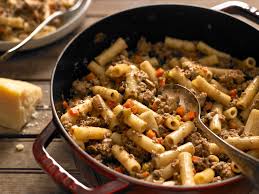
It unleashed the indigation of the Italians, especially the Emiliani. From Bologna: “We continue to repeat it: Bolognese sauce does not exist in Italy. One prepares ragù alla Bolognese with meat, tomato and without mushrooms. And the pasta is tagliatelle, never spaghetti or rigatoni.”
Among the other comments: “I would like to know who spreads these pseudo Italian recipes.” And another “It is an offense to our cuisine.” Even the Coldiretti ( the principle organization of agricultural business owners at the national level in Italy and in Europe) speaks out: “In other countries, the most bizarre versions of traditional recipes are brought to the table…like the German custom of using vegetable oil for veal cutlets alla Milanese, or that of the Dutch who do not use mascarpone in their tiramisù, all the way to the English and the Americans who go nuts for Bolognese spaghetti, which is totally unknown in our emiliana city.”
While spaghetti alla Bolognese is perhaps the most egregious case, among the other betrayed specialties, continues the Coldiretta, are “caprese salad made with processed cheese instead of buffalo mozzarella or fiordilatte…pesto pasta made with almonds, walnuts or pistachio nuts in place of pine nuts and with a common cheese instead of the unmatchable reggiano parmesan and pecorino cheeses… not to mention pizza in the most unimaginable versions, like those with pineapple or chicken.”
Since I don’t want to insult my Italian friends, I am including the recipe for “white Bolognese” rigatoni only in the English version of this post.
Rigatoni with White Bolognese Sauce
INGREDIENTS
Extra virgin olive oil
½ sweet onion, peeled and finely chopped
2 medium carrots, peeled and finely chopped
1 stalk celery, finely chopped
Sea salt
Freshly ground black pepper
1 pound mild Italian pork sausage meat, removed from casings
1 pound ground beef (not lean)
1 ½ cups dry Italian white wine
1 cube beef bouillon dissolved in 2 cups simmering water
1 ½ ounces dried porcini mushrooms rehydrated in
3 cups lukewarm water
⅓ cup heavy cream
1 pound rigatoni
¾ cup freshly grated Parmigiano-Reggiano cheese
PREPARATION
- . Add enough oil to a large, deep sauté pan to coat the base and place over medium-high heat. When the oil shimmers, add the onion, carrots and celery and sauté until glassy and just tender, about 5 minutes. Season lightly with salt and pepper. Add the sausage and beef to the pan, breaking it into walnut-size pieces, and brown well.
- . Pour in the wine and keep at a rapid simmer until the pan is almost dry. Then pour in 1 1/2 cups beef bouillon and lower the heat to medium. Simmer gently, uncovered, until the bouillon is nearly gone, stirring now and then. Meanwhile, chop the rehydrated porcini into small pieces, reserving the liquid.
- . Bring a large pot of salted water to a boil. Add mushroom liquid to the sauce to cover the meat halfway (about 1 cup) along with the porcini and continue simmering until the sauce is loose but not soupy, about 10 minutes. Taste and adjust salt and pepper; it should be highly seasoned. When the consistency is right, fold the cream in. Remove from the heat and cover.
When the pasta water is at a full boil, add the rigatoni and cook until still firm, but not hard, in the center. When the pasta is almost done, scoop out 1 cup of pasta water and reserve. Drain the pasta and then return it to the pot. Pour the pasta sauce on top and fold in with a wooden spoon. The pasta should not be dry. Add a little pasta water or mushroom liquid to loosen it. (It will continue to soak up sauce on the way to the table.) Serve in one large bowl or in individual bowls, passing the cheese at the table.

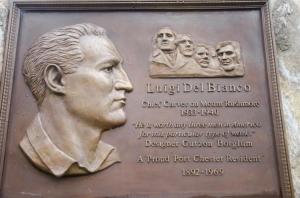
 direzione di Borghum, il progettista e l’ingegnere capo. Assunse del Bianco per essere l’intagliatore capo, con la responsibilità di affinare le espressioni facciali sulle teste di 60-piede dei presidenti George Washington, Thomas Jefferson, Theodore Roosevelt e Abraham Lincoln. Scolpiva gli occhi di Lincoln, mettendo in evidenza le pupille con pietre di granite a forma di cuneo in modo da riflettere la luce. “So che ogni linea e cresta, ogni piccolo urto e tutti i dettagli così bene,” del Bianco disse a un giornale nel 1966.
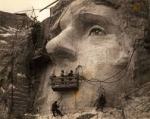 presidenti fine alla vita furono abbandonati. Del Bianco tornò a Port Chester, dove la sua azienda scolpiva centinaia di lapidi. Morì nel 1969 di silicosi, che è causata da inalazione di polvere di pietrisco.