These competitors are marathoners not simply mushroom hunters. It is not a hobby to the participants in the IV World Championship of the mushroom. This is a real race, like in the olympics. And to win they have to give and risk everything: they sweat profusely even in cold weather, they can break a leg, they can fall into a deep gully.
 In 2016 there were 523 competitors from 7 countries. The Tuscan Emilian Appenines National Park sponsors the race. Its goal is to create an alliance between the hunters and the park in order to protect the environment. It teaches the participants to use the park respectfully. Last year the park received recognition as a UNESCO biosphere reserve.
At 7 am on the day of the competition, it is dark, foggy, and freezing cold. Everyone is assembled to hear the final instructions. “So, you know the rules. Four hours of searching  and then back here, for weighing. Remember: No more than three kilos.” The speaker is Nicolò Oppicelli, mycologist: “The camouflage is fine, but put on something colorful. Last year in Liguria—there was fog there also—one person became ill and we could not find him, even though he was only 10 meters from us. It did not end well. Respect the rules. Remember that in past championships, some contestants were disqualified and did not make “una bella figura.”
Then, at 8 am, the departure. With mushrooms, as in love, almost anything goes…at least in the past. There were those who slipped into the woods the day before and hid porcini under the leaves. Then there were those who were furnished a supply by a friend who arrived in a jeep on a dirt road. And there were those who passed their mushrooms to a colleague so that he could win the medal. These tricks disqualified the participants involved.
 The winner this year was Giuseppe De Moro, 50 years, a salesman in a fishing store in Genoa. He collected 23 porcini for a total weight of 1,950 grams. How does one become a champion? “By studying the woods. Last year I was in the championship and I found nothing. Then in the spring and summer I came here to study these woods. You have to understand how they react when there is little rain. You have to find wetlands, open spaces where the leaves are not waterproof to the ground. My dad, 86 years old, sometimes accompanied and advised me. My grandfather, a teacher, told me to collect what you see, not what is hidden. He hated those who used rakes and those who destroyed the poisonous mushrooms. He said that no one must realize that you went into the woods.
“Now I will phone my dad, to tell him that his lessons have paid off. Then I will call my son who is studying engineering and say, ‘Do you know that your dad…?’”
 Ma quest’anno ci sono due notevoli eccezioni. I 17 capolavori rubati da un museo di Verona nel novembre del 2015 sono stati recuperati in maggio in Ucraina sul confine della Moldavia (vedete il post, I capolavori rubati da un museo di Verona, il 21 gennaio del 2016).
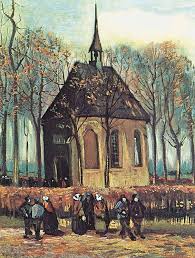
 E, più di recente, due dipinti di Van Gogh rubati durante una rapina audace da un museo di Amsterdam nel 2002 sono stati recuperati in Italia. I dipinti, “La spiaggia di Scheveningen prima di una tempesta” (del 1882) e “Una congregazione lascia la chiesa riformata di Nuenen” (del 1885) sono i primi lavori che Van
 Gogh dipinse in Olanda. Una mattina presto di dicembre, 14 anni fa, i ladri sono saliti sul tetto del museo utilizzando una scala, hanno sfondato una finestra, e poi sono fuggiti con i dipinti fuori da un lato dell’edificio con una corda. Questa rapina è considerata dall’Fbi uno dei dieci più grandi crimini dell’arte globale.
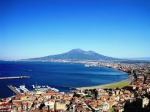 criminali più pericoloso, raffigurato anche nel film “Gomorra” del 2008. Nel mese di gennaio del 2016, i procuratori italiani hanno arrestato diversi membri della banda; di cui uno ha cominciato a collaborare con gli investigatori. Ha detto alla polizia che i due dipinti erano in una casa a Castellammare di Stabia, vicino a Napoli.
 dipinti. Nonostante sembrano essere solo leggermente danneggiati (erano stati rimossi dalle loro cornici), probabilmente valgono più di $100 milioni. Il dipinto della chiesa ha valore emotivo perché raffigura la chiesa dove il padre di Van Gogh servì come parroco. Dopo la morte di suo padre, Van Gogh aggiunse figure vestite in lutto che stavano lasciando la chiesa, e lo diede in dono a sua madre.
 years ago, burglars climbed onto the museum roof using a ladder, broke through a window, and then escaped with the paintings out the side of the building using a rope. The robbery is considered by the FBI to be one of the top ten global art crimes.