
For decades researchers have been working to defeat the devastating disease that robs memories. Now there is a turning point. A research team from the Department of Physics at the University of Bari, together with Italy’s Institute for Nuclear Physics, has developed an algorithm that can identify those who will get Alzheimer’s 10 years in advance. Leading the research in early diagnosis is a 29-year old, Marianna La Rocca, a graduate in physics and a doctoral candidate at the University of Bari.
“To intercept the first symptoms of Alzheimer’s and, in particular the cognitive decline characterized especially by the loss of memory, is important for two reasons,” according to the young researcher. The first is that these people can follow a lifestyle that helps to prevent the disease. The second is that we can identify people to recruit for clinical studies to test new cures capable of slowing the disease.”
A cure does not yet exist for Alzheimer’s. For more than 20 years drugs have been tried to slow the disease, but in vain so far, except for a few that at most alleviate some symptoms. Why? Any therapy has been initiated too late. When dementia appears, the disease by then is advanced and many neurons are already damaged irreparably, because the amyloid plaques and other degenerative phenomenon of the brain began 15-20 years earlier. To wait for the symptoms to appear in order to treat Alzheimer’s is like waiting for a person who has an infarct before curing hypertension.
The research team at the Pugliese university that developed the algorithm, had experimented with resonance imaging of 38 patients with Alzheimer’s and 29 healthy individuals. Subsequently, the experiment was repeated on 148 people of which 52 were healthy, 48 had the disease, and 48 had minor cognitive problems that in the course of 10 years became Alzheimer’s. The artificial intelligence managed to distinguish the resonance imaging of the healthy from the ill in 86% and 84% of the cases, and managed to diagnose the future development of the disease in those who were not yet suffering from it.
The new technique also has the advantage of being more economical and less invasive than other techniques used up until now. La Rocca, who has a grandmother suffering from Alzheimer’s, says that while their method is promising, it still needs improvement. It would be great, according to the researcher, if they could collect and analyze data from different Italian centers because Bari has a Center for scientific evaluations that is among the most important in the country.
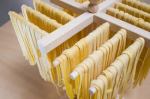 L’Italia è il leader mondiale di produzione e consumo della pasta. Nessuna sorpresa. Nel mezzogiorno, la patria del piatto nazionale, tutti o quasi (il 99%) la mangiano, in media 4 o 5 volte alla settimana e 1 su 3 la consuma ogni giorno. I meridionali tendono a mangiare pasta secca mentre gli italiani del Nord Ovest preferiscono la pasta fresca.
 Ma lo scenario di pasta è in evoluzione. Oltre alla crescita della pasta integrale, i veri tifosi della pasta stanno spostando il baricentro geografico verso il Centro Italia—dove il 45% mangia la pasta tutti i giorni rispetto al 32% del Meridione. E la porzione media di un piatto di pasta nel Sud è di circa 80 grammi a persona, che è la percentuale più bassa del Paese. (Nota bene gli americani: 80 grammi per porzione significa che ci sono 5 o 6 porzioni in una libbra di pasta.)
 Abruzzo, Molise, Puglia, Sardegna e Sicilia—zone ad altissimo tasso di conoscenza e apprezzamento di questo alimento—rispondono in linea con l’opinione nazionale. Al primo posto tra gli indicatori di qualità si trova la pasta che resta al dente alla cottura, poi la qualità del grano, seguito dalla pasta che si lega perfettamente al condimento.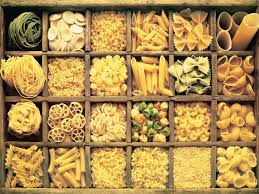
 Perché? Al Nord, la pasta rigata è diventata popolare per mascherare possibili difetti di produzione dovuti a tempi di essiccazione più lunghi. Prima dell’invenzione dell’essiccamento
  artificiale, il processo di creazione della pasta nel Nord richiedeva più tempo e era più problematico a causa dell’assenza di un microclima prevedibile e stabile. Questo tipo di pasta si cuoce anche in modo diverso. Con la sua consistenza di “picchi” e “valli”, la pasta rigata in cottura espone all’acqua più superficie, resta più al dente nella sua parte spessa e rilascia più amido da quella più sottile. Dà la sensazione di una pasta tenace anche quando è per metà sovracotta — cioè non abbastanza al dente.
 L'Olivo Santa Barbara