

Since probably well before the Renaissance, Italian sculptors were renowned throughout the world for their artistry and skill. Even in America until the late 1880s, plaster models were shipped to Italy to have them translated into marble by carvers there. The process could take more than a year.
Two trends changed this dynamic. First was the wave of Italian immigration that brought talented artists to the United States. Towns and cities like Santa Barbara were built by stone masons originally from the Veneto. Their artistry can be seen on the walls and edifices throughout the city. The hand of Ettore Cadorin can be seen in the statuary of the Santa Barbara Court House. Under the direction of Gutzon Borglum, Mount Rushmore was created primarily by Luigi del Bianco, the chief carver who refined the facial expressions of the presidents. As Borglum himself said, del Bianco “is worth any three men I could find in America…. He is the only intelligent, efficient stone carver on the work who understands the language of the sculptor.” However, his role went unrecognized, perhaps in part because of anti-Italian sentiment, until this century.
The second trend in the 1880s was a growing demand for beautiful public sculpture. The City Beautiful movement was taking hold in metropolitan areas throughout the country, and nowhere more prominently than in New York City. And it was to New York City in 1887 that Giuseppe Piccirilli emigrated with his wife, six sons, and a daughter. Giuseppe was a successful sculptor and stone carver from Massa Carrara in Tuscany, the very place where Michelangelo had found the stone for “Davide.” His sons—Ferruccio, Attilio, Furio, Getulio, Masaniello and Orazio—were all beginning to show interest and talent as well.

They opened their first studio in Manhattan but moved later to the “country” in the Bronx. Soon they met Daniel Chester French, who was emerging as a leading American sculptor. He was so impressed with the artistry of the Piccirilli family that over the next 35 years all but two of his stone sculptures were carved by the brothers. Included in this immense volume of work was Abraham Lincoln, the colossal central figure of the Lincoln Memorial in Washington, DC, built between 1914 and 1922. French sent them a 7-foot plaster model; the Piccirillis used 28 blocks of Georgia marble weighing 150 tons to carve the 19-foot statue. French tried and failed twice to persuade officials in charge of the Lincoln Memorial to add the Piccirilli name to the monument.


The Piccirilli brothers not only executed the visions of other sculptors, but they also sculpted their own original works. Their artistry—and their dual professional identities as sculptors and carvers—is evident in works throughout America, but nowhere as prominently as in New York City, which the brothers helped establish as a center for art production. They carved the famous lion sculptures outside the New York Public Library, as well as the figures in the pediment of the New York Stock Exchange. They sculpted hundreds of works in Riverside Church. They designed and produced “Youth Leading Industry,” a bas-relief installed at Rockefeller Center with the innovative use of Pyrex glass blocks. And the list goes on…. *

The Bronx studio consisted of two immense brick buildings that housed mountains of marble and granite, as well as antique busts and plaster reproductions of Greek and Roman art. To Daniel Chester French, the studio probably resembled an ancient Florence bottega like the places where the old Renaissance masters created their masterpieces. French believed that the brothers were better stone carvers than he was. His esteem for them was so high that he acquired some of their original works for the Metropolitan Museum of Art while he was serving on the museum’s board of trustees.

Yet, the Piccirillis have largely been forgotten, lost in the shadow of figures like Mr. French. Now, a filmmaker, Eduardo Montes-Bradley, wants to shine a spotlight on the family legacy. His documentary, “The Italian Factor,” portrays the brothers as prodigiously talented artists indispensable to public art in New York and throughout the country. The filmmaker also notes that, despite the brothers’ success, an original sculpture by Attilio called “The Outcast” reflects its creator’s alienation at a time of rampant anti-Italian sentiment in the country. The marble statue depicts a seated, beleaguered nude with his knees drawn to his chest one hand gripping his shoulder and the other shielding his head as if from a blow. But when the Piccirilli mother died in Italy in 1921, they had her body transported to New York. It was perhaps at her burial in the Bronx that they felt fully at home in America.
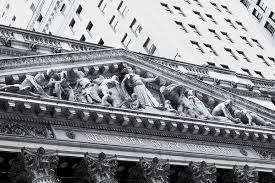
*Other notable works include the allegorical figure of America at the U.S. Custom House at Bowling Green; the statues and part of the pediment of the Brooklyn Museum; the Fireman’s Memorial at Riverside Drive; the Maine Monument, which commemorates the sinking of the battleship Maine in 1898, at the entrance to Central Park near Columbus Circle; and Seal and Fragilina, two among their original worksin the Metropolitan Museum of Art.

 L'Olivo Santa Barbara
Hey Barb, this is really intriguing information. I had no idea th
Terrific. So interesting!
<
div>
<
div dir=”ltr”>
<
blockquote type=”cite”>