The Telephone Booth

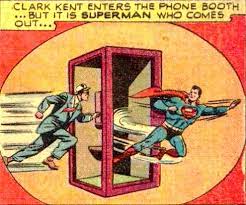
For almost a hundred years, the telephone booth has been an icon in popular culture.  It was the changing room for Clark Kent’s transformation to Superman.  It was the negotiating room for spies and counterspies in films like North by Northwest.  And for American teens in the ‘60s it was a challenge to see how many bodies you could stuff into one.  The British red “telephone box” is recognized the world over.
The design of the telephone booth changed over time from a glass-enclosed booth to a partially enclosed one that could accommodate people with disabilities.  Many locations changed to phones mounted on kiosks; the relative lack of privacy and comfort discouraged lengthy calls, especially in high-demand areas like airports.  Probably the biggest change of all is the gradual disappearance of phone booths due to the proliferation of cell phones.  In 1999, there were approximately 2 million phone booths in the United States.  Only 5% remained in service by 2018.

But Italy has a different idea.  Instead of abandoning the telephone booth, the Tim Group, an Italian telecommunications company, along with its partner Urban Vision, has re-imagined it.  The new digital stations will provide a range of services – entertainment information, charging stations for smart phones, services for ticketing and making online payments, and free calls to national landline and mobile numbers.  Municipalities will be able to support their cultural, tourism, and institutional offerings with information on cinemas, theatres, museums, concerts, and sporting and other events, on how to buy tickets, choose a restaurant, book a taxi, check weather forecasts and public transport timetables, get traffic updates, and so on.  The new digital stations will also feature sensor applications that allow people with motor disabilities, language barriers or visual impairments to access information and services.

An important objective of the new digital station is to combat violence against women.  Through a “Women+” button, it will be possible to access in real time an operator to report and request assistance for women who feel threatened or were harmed.  There will also be video surveillance.  The initiative is part of the Tim Group’s broader ‘Equality Can’t Wait’ project to address the gender gap. The new cabins will be installed initially in Milan (around 450) and will then gradually arrive in 13 other Italian cities, for a total of around 2,500 cabins, compared to the 15 thousand old cabins currently being decommissioned. The first street telephone booth in Italy was installed in Piazza San Babila in Milan in February 1952. The metal and glass structure is a feature that remained almost unchanged over the following decades. Previously, public telephones were almost exclusively installed in Public Telephone Points (PTPs), or were housed in commercial establishments such as bars, newsstands, and restaurants.  To commemorate the first street telephone booth, the first new digital station will be installed in Piazza San Babila in 2024.
Posted in Abitudini, English, Foto, Italia, Milano, Storia | 4 Comments

Smascherare un falso

Quando il curatore della Biblioteca dell’Università del Michigan ha ricevuto l’e-mail, si preoccupò più che un po’. L’e-mail era di Nick Wilding, storico della Georgia State University, studioso di Galileo ed esperto di falsi. Chiedeva informazioni sulla provenienza di uno dei beni più preziosi della biblioteca.

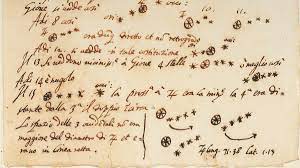
Per quasi un secolo il “manoscritto Galileo” è stato il gioiello della collezione della biblioteca. In alto c’è una lettera presumibilmente firmata da Galileo nel 1609 che descrive il suo nuovo telescopio e in basso ci sono schizzi che tracciano le posizioni delle lune di Giove attorno al pianeta. Se autentico, rappresentava i primi dati osservativi che mostravano oggetti in orbita attorno a un corpo diverso dalla terra.

In passato Wilding ha scoperto opere false di Galileo: ha dimostrato, attraverso delle prove, che una copia del trattato di Galileo del 1610 Sidereus Nuncius (“Messaggero stellato”) era un falso. Tiene un corso, come docente, sulla contraffazione, presso la Rare Book School dell’Università della Virginia. Attualmente sta scrivendo una biografia di Galileo e fra i vari documenti consultati, ha esaminato diverse immagini online, tra cui il manoscritto conservato presso l’Università del Michigan.

I suoi sospetti sono iniziati quando ha notato alcune delle strane forme di alcune lettere e la scelta di certe parole. Poi si è chiesto perché l’inchiostro sembrava identico nella parte superiore e inferiore della pagina, quando in realtà si trattava di due documenti scritti su uno stesso foglio, a distanza di mesi. “Perché è tutto esattamente dello stesso colore marrone?” Poi Wilding ha iniziato la ricerca sulla provenienza. Non ha trovato traccia del documento negli archivi italiani. La sua prima apparizione fu all’asta nel 1934, quando fu acquistata da un uomo d’affari di Detroit e poi lasciata in eredità all’università dopo la sua morte nel 1938. Il catalogo dell’asta diceva che era stata autenticata dal cardinale Pietro Maffi, arcivescovo di Pisa morto nel 1931, che lo aveva paragonato a due documenti autografi di Galileo della sua collezione. Quei documenti, ha scoperto Wilding, gli erano stati dati da Tobia Nicotra, un famigerato falsario milanese del XX secolo. 

Wilding ha chiesto all’Università del Michigan un’immagine della filigrana del documento, costituita da un cerchio con un trifoglio e il monogramma “AS/BMO”. La ricerca del monogramma l’ha portato a una lettera di Galileo del 1607 alla Morgan Library & Museum di New York, che corrispondeva quasi esattamente alla presunta lettera originale negli archivi italiani. Successivamente ha scoperto che “BMO” era l’abbreviazione della città di Bergamo. Da un libro di consultazione su carta antica e filigrane, Wilding, l’Università del Michigan e la Morgan Library hanno scoperto che le filigrane non potevano essere apparse prima del 1770, più di un secolo dopo che Galileo avrebbe creato i manoscritti.

La scoperta di questi falsi non cambia radicalmente la scoperta di Galileo. Nel 1610 Galileo scrisse un libro sulle proprie scoperte con il suo nuovo telescopio, che supportava la tesi copernicana secondo cui la terra non era il centro dell’universo, ma lo erano          i pianeti orbitavano attorno al sole. Per i suoi sforzi, l’Inquisizione convocò Galileo a Roma e lo processò per eresia. Fu fortunato a non essere stato bruciato al rogo; la sua pena detentiva fu commutata in “arresti domiciliari”: così passò gli ultimi nove anni della sua vita. Galileo fu anche il primo studioso ad aver scritto un manifesto laico per chiedere la libertà della scienza dall’interferenza religiosa.

Quanto a Nicotra, Wilding ha scoperto che iniziò a vendere lettere false e manoscritti musicali per sostenere sette amanti. La polizia, per indagare su un sospetto manoscritto di Mozart, fece irruzione nell’appartamento di Nicotra a Milano nel 1934, trovando una “fabbrica di falsi” con risguardi strappati da vecchi libri e falsi di Lorenzo de’ Medici, Cristoforo Colombo e altri personaggi storici. È stato condannato a due anni di reclusione. 

L’Università del Michigan e la Morgan Library stanno sfruttando al meglio le rivelazioni di Wilding sui questi documenti falsi. Stanno aggiornando le attribuzioni delle opere.  E stanno valutando metodi per scoprire i falsi: tutto ciò potrebbe essere oggetto di una futura mostra o simposio,

Posted in Arte, Foto, Italia, Italiano, Roma, Storia | Leave a comment

Unmasking a Forgery

When a curator at the University of Michigan Library received the email, he was more than a bit apprehensive.  The email was from Nick Wilding, an historian at Georgia State University, who is a Galileo scholar and an expert on forgeries.  He was asking for provenance information on one of the library’s most prized possessions.

For almost a century, the “Galileo manuscript” was the jewel of the library’s collection.  At the top is a letter supposedly signed by Galileo in 1609 describing his new telescope, and at the bottom are sketches plotting the positions of Jupiter’s moons around the planet.  If authentic, it represented the first observational data that showed objects orbiting a body other than the earth.

Wilding has uncovered forged Galileo works in the past: he found evidence that a copy of Galileo’s 1610 treatise Sidereus Nuncius (“Starry Messenger”) was a fake.  He teaches a course on forgery at the Rare Book School at the University of Virginia.  He is currently writing a biography of Galileo and was examining several images online, including the manuscript held by the University of Michigan.

His suspicions began when he noted some of the strange letter forms and word choices.  Then he questioned why the ink seemed identical at the top and the bottom of the page when it was actually two documents on one sheet written months apart.  “Why is it all exactly the same color brown?”  Then Wilding began his research on provenance.  He found no record of the document in Italian archives.  Its first appearance was at auction in 1934 when it was purchased by a Detroit businessman and later bequeathed to the university following his death in 1938.  The auction catalog said that it had been authenticated by Cardinal Pietro Maffi, an archbishop of Pisa who died in 1931, who had compared it to two Galileo autograph documents in his collection.  Those documents, Wilding discovered, had been given to him by Tobia Nicotra, a notorious 20th-century counterfeiter in Milan.

Wilding asked the University of Michigan for an image of the document’s watermark, which was a circle with a three-leafed clover and the monogram, “AS/BMO.”  Wilding’s search for the monogram led him to a 1607 Galileo letter at the Morgan Library & Museum in New York, which almost exactly matched the presumed original letter in Italian archives.  He subsequently discovered that “BMO” was the abbreviation for the Italian city of Bergamo.  From a reference book on ancient paper and watermarks, Wilding, the University of Michigan, and the Morgan Library discovered that the watermarks could not have appeared before 1770, more than a century after Galileo supposedly created the manuscripts.

The discovery of these forgeries does not fundamentally change Galileo’s discovery.  In 1610 Galileo wrote a book based on discoveries with his new telescope that supported the Copernican thesis that the earth was not the center of the universe but rather that the planets orbited the sun.  For his efforts, the Inquisition summoned Galileo to Rome to stand trial for heresy.  He was lucky that he wasn’t burned at the stake; his prison sentence was commuted to house arrent, under which he spent the last nine years of this life.  Galileo is also credited with writing the first secular manifesto to call for the freedom of science from religious interference.

As for Nicotra, Wilding learned that he started selling fake letters and musical manuscripts to support seven mistresses.  To investigate a suspicious Mozart manuscript, the police raided his Milan apartment in 1934, finding a virtual “forgery factory” with endpapers ripped from old books and fakes from Lorenzo de’ Medici, Christopher Columbus, and other historical figures.  He received a two-year jail sentence.

The University of Michigan and the Morgan Library are making the best of Wilding’s revelations on their fake documents. They are updating attributions to note that the document was “formerly attributed to Galileo.”  And they are considering ways to highlight the methods and motivations behind forgeries, potentially making them highlights of a future exhibit or symposium.

Posted in Arte, English, Foto, Italia, New York, Storia | 2 Comments