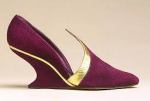
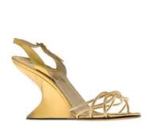
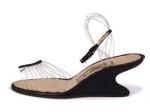
When Salvatore Ferragamo died in 1960, many people feared that his immense artistic  empire would fall apart between family disputes and lack of continued entrepreneurship. Instead, the name and the patrimony lived on. But it was Salvatore who founded the shoe empire and served the elite world of fashion.
Salvatore was born in 1898 in Bonito, a small town in the province of Avellino in the Campania region of Italy. He was the 11th of 14 children. His passion began when he made his first pair of shoes at the age of 9 for his sisters to wear at their confirmation. His family opposed his chosen profession, which was considered to be one of the most humble in southern Italy at the time. But Salvatore, who dropped out of school in the third grade, was taken on as an apprentice to a renowned Naples shoemaker. A year later he returned to Bonito to open a small shop.
At 16 Salvatore emigrated to Boston to join his brother who worked in a cowboy boot factory. Shortly thereafter he moved to join other brothers in Santa Barbara, California. The brothers opened a shoe repair shop, which was very successful in the city with one of the first film studios. Salvatore left the shop to go to Hollywood and pursue his new calling—designing footwear for movies.
Salvatore designed cowboy boots and Roman and Egyptian sandals, which captivated the  actors so much that they began ordering them for everyday use.
  His clients at that time included Rudolph Valentino, Gloria Swanson, and Joan Crawford among others. Ferragamo focused not only on style but also on fit, and took anatomy courses at the University of Southern California.
Soon he was not able to keep up with the orders for handmade shoes, especially in the cinematic world. He began to look for competent shoemakers throughout America but did not find any artisans who were able to live up to his expectations. He refused to give in to industrialization (an assembly line of shoemaking) and returned to Italy. He found suitable artisans in Florence and set up his workshop with 60 workers.
Both the Depression and the second world war took its toll on Ferragamo’s business but he  bounced back both times. When metal was scarce, he designed
  the wedge heel, the cage heel, and the platform shoe using slabs of cork. His clientele grew to include Eva Peron, Marilyn Monroe, Judy Garland, Greta Garbo, Anna Magnani, and Audrey Hepburn. He had an endless variety of elegant, frivolous, bizarre, and exclusive styles. He earned an Oscar for fashion, the “Nieman Marcus Award,” in 1947—the first awarded to a shoemaker.
After Ferragamo’s death at the age of 62, his wife and children took over the business in Palazzo Spini Feroni in Via Mannelli. The empire expanded to include other products like handbags, perfumes, and silk accessories. The Palazzo is not only the world headquarters of the company, but also the site of a museum dedicated to Salvatore Ferragamo’s life and work, which was opened in 1995.