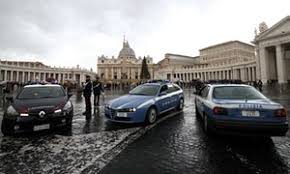
Why has Italy been spared from mass terror attacks?

This is the question that The Guardian, the British newspaper, asked in an article in June 2017.  Has Italy been lucky in recent years?  Or are there other factors that have made the country relatively safe so far?

Italy has had its share of political violence in recent decades, including the murders of Falcone and Borsellino, two prominent anti-mafia judges, in the early 1990s.  But unlike almost all of its European neighbors, it has not witnessed a major terrorist attack on its soil since the 1980s.

One theory is that Italy has been able to combat the threat of Isis domestically through the experience and tools developed in mafia investigations.  These, in turn, were born out the the so-called “years of lead,” the period between the 1960s and 1980s marked by acts of political terrorism by left- and right-wing militants.

One example is the importance of constant dialogue at the operating level between intelligence and law enforcement forces.  It was no secret in Italy that Youssef Zaghba, the 22-year old Moroccan-born Italian, was under close surveillance.  He was greeted every time he landed in Bologna, and the police checked on him several times a day.  He was one of the three terrorists behind the London Bridge attack.  But he was never stopped at the airport or interrogated in London, even though Italian officials had warned British counterparts that he was a threat.

From the days of mafia investigations, Italian authorities rely on intercepted phone calls, which can be used as evidence in court, unlike in the UK.  And, in cases related to the mafia and terrorism, they can be obtained on the basis of suspicious activity and not on solid evidence.

There are two factors unique to Italy may also make surveillance relatively easier.  First, the absence of banlieue-like spots (suburbs) in major Italian cities and the predominance of small and medium town make it easier to monitor and control the territory.

Second, and more importantly, is the relative lack of second- and third-generation immigrants who have been radicalized or could be radicalized.  This enables authorities to focus on non-citizens, who can be deported at the first signs of concern.   It also means that there are fewer people to focus on, compared to France, Belgium, and the UK.  It takes about 20 people to watch a terror suspect full time, which can put a lot of pressure on a country’s resources.

Much like the fight against Italian organized crime, infiltrating and disrupting terror networks requires breaking close social and family relationships.  In Italy, people suspected of being jihadis are encouraged to cooperate with Italian authorities, who use residency permits and other incentives.  There also is a recognition of the dangers of keeping terror suspects in jail; as with mafia bosses in the past, prison is seen as a prime territory for recruiting and networking.

Whether it’s the composition of Italy’s population, or the broad use of surveillance, or just plain luck, let’s keep our fingers crossed.


Posted in English, Foto, Italia, Mafia, Politica, Storia | Leave a comment

Il Coraggio di Essere Eroi (Part II)

Questo è la seconda (e finale) parte del post su Falcone e Borsellino.  L’articolo intero è una collaborazione con la mia amica e avvocato, Jean Perloff.   La prima parte si è conclusa con una conversazione tra Giovanni Falcone, magistrato, e Tommaso Buscetta, un informatore mafioso, che avverte Falcone sui pericoli di un’intervista.

Falcone lo interrogò e Buscetta parlò.  Risultato: nel settembre 1984, vennero spiccati 366 mandati di arresto.  Più tardi, Falcone sottolineò l’importanza delle confessioni di Buscetta: “Prima di lui non avevamo che un’idea superficiale del fenomeno mafioso.  Con lui abbiamo iniziato a guardarvi dentro.  Ci ha fornito numerosissime conferme sulla struttura, le tecniche di reclutamento, le funzioni di Cosa nostra.”

Il Maxiprocesso, come è stato chiamato, si tenne tra il 1986 e il 1987 per la prima fase (gli appelli durarono fino al 1992).  A partire dal 1984, si aprì un momento magico del pool.  Aveva sostegno umano e finanziario in tutto il ministero.  Per esempio, l’aula-bunker in cui si sarebbe svolto il Maxiprocesso fu costruita nel giro di un anno.

Nel frattempo, nell’ombra, Totò Riina stava progettando un’estate di sangue.  Diversi funzionari furono uccisi, e la paura era forte.  Falcone e Borsellino (e le loro famiglie) si trasferirono in fretta in un avamposto in Sardegna per completare i procedimenti preliminari del Maxiprocesso, che furono depositati lo stesso anno.

Con 475 imputati, il Maxiprocesso fu il più grande attacco alla mafia mai realizzato in Italia.  Si chiuse nel 1987 con 360 condanne e 114 assoluzioni.  Nel frattempo, Borsellino fu nominato procuratore della repubblica a Marsala (Trapani).  E Caponnetto ritenne chiusa la sua esperienza palermitana e era ragionevolmente sicuro che il suo posto sarebbe state preso da Falcone.  Ma il clima politica cambiò, e Falcone fu respinto da diversi appuntamenti.  Sembra che l’anzianità e la politica vinsero la competenza.  Antonino Meli, il nuovo capo dell’Ufficio istruzione di Palermo, che aveva scarsa esperienza di processi di mafia, cominciò a smantellare il pool anti-mafia.  Assegnò a magistrati esterni al pool le inchieste di mafia, e assegnò a Falcone e colleghi indagini per borseggi e scippi.

Lo scontro tra Meli e Falcone fu intenso, e infine Falcone lasciò Palermo per una posizione con il Ministero della Giustizia a Roma.  Nella capitale, Falcone non allentò il suo impegno contro la mafia.  Con un decreto da lui ideato, tornarono in carcere gli imputati di Cosa nostra scarcerati da una sentenza di Corrado Carnevale, il presidente della prima sezione penale della Corte di Cassazione.  Per disinnescare la possibile influenza di questa mossa sull’esito finale del Maxiprocesso, Falcone ideò la rotazione dei giudici della corte suprema.  In questo modo Carnevale fu assegnato ad altro incarico e la Cassazione confermò le condanne.  Nel frattempo, Borsellino tornò a Palermo come procuratore con un ruolo direttivo nelle indagini di mafia.

Sconfitto nel Maxiprocesso che gli costò l’ergastolo, Totò Riina si impegnò a vendicarsi tanto per cominciare di chi non gli aveva garantito l’impunità.  Ci fu un omicidio della mafia nel marzo 1992.  Poi la fatidica giornata del 23 maggio.  Una grande esplosione strappò l’autostrada che collegava l’aeroporto di Punta Raisi a Palermo vicino all’uscita per Capaci.  5 quintali di tritolo distrussero cento metri di asfalto e fecero letteralmente volare le auto blindate.  Giovanni Falcone morì, insieme a sua moglie e tre altre persone.

Ferito profondamente dalla morte del suo amico, Borsellino lavorò freneticamente nelle settimane seguenti.  Dietro le quinte circolava un documento nel quale Totò Riina avanzava 12 richieste allo Stato.  Si andava dalla revisione della sentenza del Maxiprocesso all’annullamento della legge che fornì forti condanne di carcere alla mafia, alla riforma delle leggi sugli informatori.  Borsellino si oppose, di fatto, firmando una condanna a morte per se stesso.

Sconsolato, Borsellino dichiarò nel 13 luglio: “So che è arrivato il tritolo per me”.  Alla moglie, lui disse: “La mafia mi ucciderà quando gli altri lo decideranno”.  E il 17, fra lo stupore di tutti, salutò uno a uno i colleghi abbracciandoli.

Il 19 luglio faceva molto caldo a Palermo.  Borsellino decise di andare a trovare la madre.  Due minute prima delle 17, l’esplosione dell’autobomba si sentì in tutta Palermo.  5 altri uomini della scorta furono uccisi insieme con Borsellino.

Oggi Totò Riina, 86 anni, rimane in carcere.  Negli ultimi anni della sua vita, Caponnetto girò l’Italia per raccontare nelle scuole la storia dei due eroi, affermando: “Le battaglie in cui si crede non sono mai battaglie perse”.  Da piccoli, Giovanni Falcone e Paolo Borsellino giocarono insieme nell’antico quartiere arabo di Palermo.  Da grandi, si ritrovarono insieme nel Pool Antimafia, in una missione pericolosa.  Poi nel 1992 morirono tra 57 giorni l’uno dall’altro come eroi.

Posted in Foto, Italia, Italiano, Mafia, Sicilia, Storia | Leave a comment

The Courage to Be Heroes (Part II)

This is the second (and final) part of the post on Falcone and Borsellino.  The entire article is a collaboration with my friend, Jean Perloff, who is an attorney and italophile.  The first part ended with a conversation between Giovanni Falcone, magistrate, and Tommaso Buscetta, a mafia informant, who warns Falcone on the dangers of interviewing him.

Falcone interrogated him, and Buscetta talked.  The result:  In September 1984, 366 arrest warrants were issued.  Later, Falcone emphasized the importance of Buscetta’s confessions: “Before this we only had a superficial idea of the mafia.  Now we had a look inside.  He furnished so much information on the structure, the recruitment methods, and the workings of Cosa Nostra.”

The Maxi Trial, as it was called, took place between 1986 and 1987 for the first phase (the appeals lasted until 1992).  Beginning in 1984, it was a magical time for “the pool.”  It had human and financial support throughout the ministry.  For example, the fortified holding cell in which the Maxi Trial would take place was constructed within a year.

In the meantime, in the shadows, Totò Riina was planning “a summer of blood.”  Several officials were murdered, and fear was rampant.  Falcone and Borsellino (and their families) were moved in haste to an outpost in Sardinia to complete the preliminary proceedings of the Maxi Trial, which were filed the same year.

With 475 indictments, the Maxi Trial was the greatest attack ever achieved against the mafia in Italy.  It ended in 1987 with 360 convictions and 114 acquittals.  In the meantime, Borsellino was appointed prosecutor of the republic at Marsala in Trapani.   Caponnetto considered his experience in Palermo to be finished and was sure that his post would be taken by Falcone.  But the political climate had changed, and Falcone was rejected from several appointments; it seems that seniority and politics conquered competence.  Antonino Meli, the new head of the magistrates in Palermo who had little experience in mafia matters, began to dismantle the anti- mafia pool.  He assigned investigations of the mafia to magistrates outside of the pool and gave to Falcone and his colleagues pickpocketing and purse-snatching cases.

The clash between Meli and Falcone was intense, and finally Falcone left Palermo for a position in the Ministry of Justice in Rome.  His work against the mafia did not ease up.  With a decree that Falcone conceived, many Mafiosi were returned to jail who had been released through a sentence by Corrado Carnevale, the president of the first penal section of Italy’s Supreme Court.  To defuse the possible influence of this move on the outcome of the final appeals of the Maxi Trial, Falcone came up with the idea of rotating the judges on the supreme court.  In this way, Carnevale was assigned elsewhere, and the court confirmed the sentences.   In the meantime, Borsellino returned to Palermo as a prosecutor with a direct role in mafia investigations.

Defeated in the Maxi Trial that led to life sentences for many Mafiosi, Totò Riina vowed revenge beginning with those who had been guaranteed impunity.  There was a hit in March of 1992.  Then the fateful day of May 23.  A huge explosion ripped apart the autostrada that connected the airport of Punta Raisi to Palermo near the exit for Capaci.  With an impact like an earthquake, 500 kg of TNT destroyed 100 meters of asphalt and sent flying the armored car.  Giovanni Falcone was dead, along with his wife and 3 others.

Wounded deeply by the death of his friend, Borsellino worked frenetically in the ensuing weeks.  Behind the scenes, a document was circulating in which Riina proposed 12 requests/demands to the State, from the revision of Maxi Trial sentences to the annulment of the law that provided tough jail sentences for the mafia, to the reform of laws on informants.  Borsellino was opposed, in effect, signing a death sentence for himself.

Disconsolate, Borsellino declared on July 13: “I know that the TNT awaits me,” and to his wife he said, “The Mafia will kill me when they decide to.”  And on July 17, to the amazement of everyone present, he greeted his colleagues, one by one, to say goodbye hugging them.

July 19 was a very hot day in Palermo.  Borsellino decided to visit his mother.  Two minutes before 5 pm, the explosion of the auto bomb could be heard throughout Palermo.  Five other men in the escort were killed along with Borsellino.

Today Totò Riina, 86, is still in jail.  In the last years of his life, Caponnetto toured schools throughout Italy to tell the story of the 2 heroes: “The battles in which you believe are never lost battles.”  As youngsters, Giovanni Falcone and Paolo Borsellino played together in the ancient Arab quarter of Palermo.  As adults, they worked together on a dangerous anti-mafia mission.  Then in 1992 they died 57 days apart as heroes.


Posted in English, Foto, Italia, Mafia, Sicilia, Storia | 1 Comment