Unmasking a Forgery

When a curator at the University of Michigan Library received the email, he was more than a bit apprehensive.  The email was from Nick Wilding, an historian at Georgia State University, who is a Galileo scholar and an expert on forgeries.  He was asking for provenance information on one of the library’s most prized possessions.

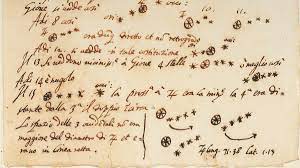
For almost a century, the “Galileo manuscript” was the jewel of the library’s collection.  At the top is a letter supposedly signed by Galileo in 1609 describing his new telescope, and at the bottom are sketches plotting the positions of Jupiter’s moons around the planet.  If authentic, it represented the first observational data that showed objects orbiting a body other than the earth.

Wilding has uncovered forged Galileo works in the past: he found evidence that a copy of Galileo’s 1610 treatise Sidereus Nuncius (“Starry Messenger”) was a fake.  He teaches a course on forgery at the Rare Book School at the University of Virginia.  He is currently writing a biography of Galileo and was examining several images online, including the manuscript held by the University of Michigan.

His suspicions began when he noted some of the strange letter forms and word choices.  Then he questioned why the ink seemed identical at the top and the bottom of the page when it was actually two documents on one sheet written months apart.  “Why is it all exactly the same color brown?”  Then Wilding began his research on provenance.  He found no record of the document in Italian archives.  Its first appearance was at auction in 1934 when it was purchased by a Detroit businessman and later bequeathed to the university following his death in 1938.  The auction catalog said that it had been authenticated by Cardinal Pietro Maffi, an archbishop of Pisa who died in 1931, who had compared it to two Galileo autograph documents in his collection.  Those documents, Wilding discovered, had been given to him by Tobia Nicotra, a notorious 20th-century counterfeiter in Milan.

Wilding asked the University of Michigan for an image of the document’s watermark, which was a circle with a three-leafed clover and the monogram, “AS/BMO.”  Wilding’s search for the monogram led him to a 1607 Galileo letter at the Morgan Library & Museum in New York, which almost exactly matched the presumed original letter in Italian archives.  He subsequently discovered that “BMO” was the abbreviation for the Italian city of Bergamo.  From a reference book on ancient paper and watermarks, Wilding, the University of Michigan, and the Morgan Library discovered that the watermarks could not have appeared before 1770, more than a century after Galileo supposedly created the manuscripts.

The discovery of these forgeries does not fundamentally change Galileo’s discovery.  In 1610 Galileo wrote a book based on discoveries with his new telescope that supported the Copernican thesis that the earth was not the center of the universe but rather that the planets orbited the sun.  For his efforts, the Inquisition summoned Galileo to Rome to stand trial for heresy.  He was lucky that he wasn’t burned at the stake; his prison sentence was commuted to house arrent, under which he spent the last nine years of this life.  Galileo is also credited with writing the first secular manifesto to call for the freedom of science from religious interference.

As for Nicotra, Wilding learned that he started selling fake letters and musical manuscripts to support seven mistresses.  To investigate a suspicious Mozart manuscript, the police raided his Milan apartment in 1934, finding a virtual “forgery factory” with endpapers ripped from old books and fakes from Lorenzo de’ Medici, Christopher Columbus, and other historical figures.  He received a two-year jail sentence.

The University of Michigan and the Morgan Library are making the best of Wilding’s revelations on their fake documents. They are updating attributions to note that the document was “formerly attributed to Galileo.”  And they are considering ways to highlight the methods and motivations behind forgeries, potentially making them highlights of a future exhibit or symposium.

Posted in Arte, English, Foto, Italia, New York, Storia | 2 Comments

Il Museo dell’arte salvata

Collaborazione fra il Comando dei Carabinieri per la Tutela del Patrimonio Culturale e la squadra di polizia italiana, di fama mondiale, dedita al recupero di opere d’arte rubate. La squadra fondata nel 1969, ha rintracciato e rimpatriato in Italia più di 3 milioni di reperti. Istituita nel 2017, l’Unità per il traffico di antichità dell’ufficio del procuratore distrettuale di Manhattan a New York, ha restituito più di 1.300 antichità alle loro terre d’origine. Durante le lore collaborazioni, queste due eccezionali squadre hanno recuperato sufficienti opere d’arte da musei e collezionisti americani, da allestire un nuovo museo a Roma.

Il Museo dell’Arte Salvata inaugurato nel giugno 2022 in una sala realizzata all’interno delle Terme di Diocleziano, è annesso e presidiato dal Museo Nazionale Romano. La sua prima mostra, durata fino a metà ottobre scorso, comprendeva 100 statuine, statue, urne, piatti e monete etrusche, greche e romane risalenti all’VIII-IV secolo a.C.  Questi reperti erano stati rubati da tutta Italia, per poi essere introdotti di contrabbando negli Stati Uniti. Uno dei reperti più rilevanti della mostra è un pithos bianco su rosso del VII secolo a.C., raffigurante l’accecamento di Polifemo, il gigante con un unico occhio della mitologia greca e raccontato nell’Odissea di Omero; era stato recuperato da J. Paul Getty Museum di Los Angeles. Un altro pezzo degno di nota è un busto in marmo dell’imperatore romano Settimo Severo, rubato da un museo italiano nel 1984, ritrovato decenni dopo a New York poco prima di essere messo all’asta da Christie’s.

“Arte salvata” è un termine ampio, e il museo alla fine mostrerà i molteplici modi in cui le opere d’arte possono essere restaurate da esperte mani, recuperandole non solo dai ladri, ma anche dalle macerie dei terremoti, dagli antichi naufragi nel Mediterraneo e dalle devastazioni del tempo. Il museo intende “mostrare al mondo l’eccellenza del nostro lavoro” in tutti questi campi, afferma Dario Franceschini, Ministro della Cultura italiano.

La politica del ministero della Cultura italiano è stata quella di restituire i manufatti recuperati ai musei più vicini al sito da cui molto probabilmente erano stati saccheggiati. Data la natura clandestina degli scavi dei tombaroli, il processo di reinserimento può essere arduo per il team di archeologi incaricato del compito. Molti dei pezzi pregiati provenivano originariamente da Cerveteri, città etrusca a nord-ovest di Roma, nota per la sua complessa necropoli ben conservata, e oggi per il suo museo archeologico. Lì sarà esposto il prezioso Cratere di Eufronio, saccheggiato da una tomba di Cerveteri nel 1971 e venduto un anno dopo al Metropolitan Museum of Art per 1 milione di dollari, una somma senza precedenti per l’epoca. Ad unirsi al cratere ci sarà una kylix, o coppa, sempre di Eufronio, che il Getty Museum ha restituito in Italia dopo che sono emerse prove della sua oscura provenienza.

Restituire i manufatti ai loro siti originali aiuta a collocarli nel contesto storico. Cerveteri, ad esempio, fu un importante snodo etrusco, un grande mercato. L’arte rimpatriata offre ai musei locali nuove opportunità per ampliare il loro fascino. Il Cratere di Eufronio è ormai diventato un simbolo della città stessa.

Le attuali opere in mostra al Museo dell’arte Salvata mostrano il lavoro delle squadre di furti d’arte in entrambi i paesi. Sulla base delle prove fornite dall’Unità dei Carabinieri, lo scorso dicembre l’Unità Traffico di Antiquariato ha consegnato all’Italia oltre 200 reperti, il più grande rimpatrio dall’America all’Italia. Nel luglio 2022, l’ufficio del procuratore distrettuale di Manhattan ha disposto la restituzione di 142 ulteriori oggetti, tra cui l’affresco di Ercolano, che era stato trafugato dalla città sepolta sotto la cenere vulcanica dopo l’eruzione del Vesuvio nel 79 d.C. Gli sforzi congiunti di entrambi i paesi forniranno mostre continue nel nuovo museo di Roma e, forse, cosa ancora più importante, contrasteranno il mercato nero dei manufatti archeologici.

Per altri post su questo argomento, vedere:

• La controversia su chi possiede l’arte del mondo, ottobre 2015

• Perché tanti capolavori italiani si trovano fuori dall’Italia? marzo 2017

• La statua di Zeus in trono, luglio 2017

• Il bronzo “Getty”, marzo 2019

• Rubato, Gestohlen, Rubato, aprile 2019

• Gli uomini dei monumenti italiani, agosto 2019

• Cultura e criminalità, maggio 2022

Posted in Arte, California, Campania, Foto, Italia, Italiano, New York, Roma, Storia | 1 Comment

The Museum of Rescued Art

The Carabinieri Command for the Protection of Cultural Heritage is Italy’s world-renowned police squad dedicated to recovering stolen art.  Founded in 1969, it has tracked down and repatriated to Italy more than 3 million artifacts.  Established in 2017, the Antiquities Trafficking Unit of the Manhattan District Attorney’s Office in New York has returned more than 1,300 antiquities to their homelands.  Working together, these two crackerjack squads have repatriated enough stolen art from American museums and collectors to populate a new museum in Rome.

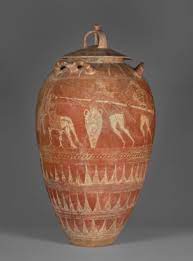
The Museum of Rescued Art opened in June 2022 in a hall that was built as part of the Baths of Diocletian and is annexed to and overseen by the National Roman Museum.  Its first display, which runs through mid-October, includes 100 Etruscan, Greek and Roman figurines, statues, urns, plates and coins that date back to the eighth to fourth centuries B.C.E.  They had been stolen from across Italy and smuggled into the United States.  One artifact on display is a white-on-red pithos from the seventh century B.C.E. that depicts the blinding of Polyphemus, the one-eyed giant from Greek mythology and recounted in Homer’s Odyssey; it had been recovered from the J. Paul Getty Museum in Los Angeles.  Another notable piece is a marble bust of Roman emperor Septimus Severus, which had been stolen from an Italian museum in 1984 and was found decades later in New York just before going up for auction at Christie’s.

“Rescued Art” is a broad term, and the museum will eventually showcase the many ways in which artwork can be salvaged—not only from thieves, but also from the rubble of earthquakes, from ancient shipwrecks in the Mediterranean, and from the ravages of time by Italy’s expert restorers.  The museum intends to “show the world the excellence of our work” in all these fields, says Dario Franceschini, Italy’s Culture Minister.

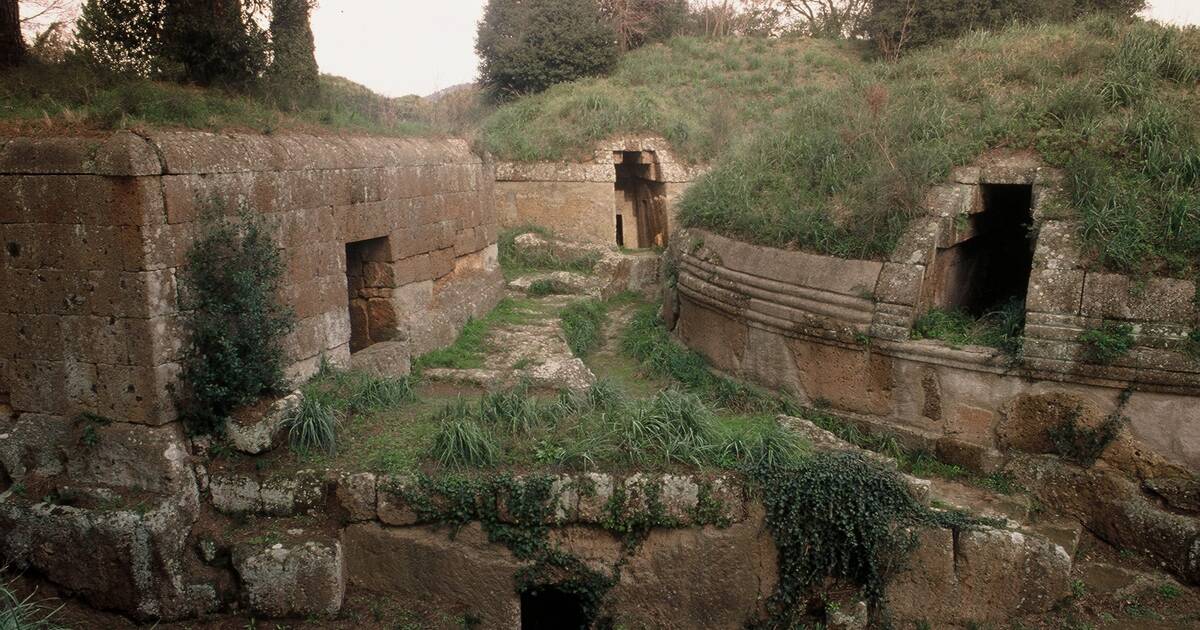
The policy of the Italian culture ministry has been to eventually return recovered artifacts to the museums closest to the site from which they had been most likely looted.  Given the clandestine nature of the excavations by tombaroli, or tomb raiders, the re-homing process can be arduous for the team of archaeologists assigned to the task.  Many of the prized pieces originally came from Cerveteri, an Etruscan town northwest of Rome, known for its well-preserved necropolis complex, and today for its archeological museum.  The treasured Euphronius Krater will be displayed there; it had been looted from a Cerveteri tomb in 1971 and sold a year later to the Metropolitan Museum of Art for $1 million, an unprecedented sum at that time.  Joining the krater will be a kylix, or drinking cup, also by Euphronius, which the Getty Museum returned to Italy after evidence emerged of its murky provenance.

Returning artifacts to their original sites helps to place them in historical context.  Cerveteri, for example, was an important Etruscan hub, a major market.  Repatriated art gives local museums fresh opportunities to broaden their appeal.  The Euphronius Krater has now become a symbol of the city itself. 

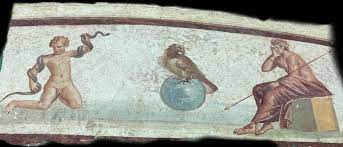
The current works on display at the Museum of Rescued Art showcase the work of the art theft squads in both countries.  Working on the evidence provided by the Carabinieri unit, the Antiques Trafficking Unit turned over 200 artifacts to Italy last December, the single largest repatriation from America to Italy.  In July 2022, the Manhattan District Attorney’s Office arranged for the return of 142 additional items, including the Ercolano Fresco, which had been stolen from Herculaneum, a town buried under volcanic ash after the eruption of Mount Vesuvius in 79 A.C.E.  The joint endeavors from both countries will provide ongoing displays at the new museum in Rome, and possibly more importantly, thwart the black market in archaeological artifacts.

For more posts on this topic, see:

  • The controversy of who owns the art of the world, October 2015
  • Why are so many Italian masterpieces found outside of Italy?  March 2017
  • The statue of Zeus enthroned, July 2017
  • The “Getty” Bronze, March 2019
  • Stolen, Gestohlen, Rubato, April 2019
  • Italy’s “Monuments Men,” August 2019
  • Culture and criminality, May 2022
Posted in Arte, California, Campania, English, Foto, Italia, New York, Roma, Storia | 2 Comments