How Much Do You Know About Venice?

Every day I receive trivia questions in my email.  Here is a recent quiz from Trivia Genius – 10 questions and answers about Venice, La Serenissima.

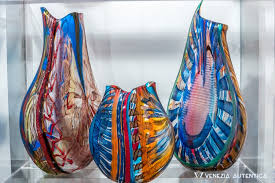
Venice is well-known for its contributions to what artisanal industry?

  1. Glassblowing
  2. Sculpture
  3. Clockmaking
  4. Embroidery

Answer: Glassblowing has been prevalent in Venice and the neighboring island of Murano since at least the 1200s, when Venetian artisans revolutionized the field of glass-making by discovering new techniques to create colorless glass and perfectly smooth mirrors. Today, Venice’s beautiful glass creations are popular souvenirs for tourists.

Which of the following is NOT true about gondolas?

  1. They are often raced in regattas
  2. They are perfectly symmetrical
  3. They are rowed with a single oar
  4. They contain eight different types of wood
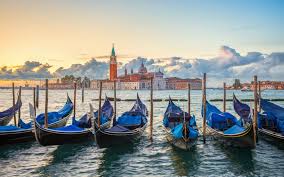
Answer: In fact, each gondola is asymmetrical, so it can be stabilized by the weight of its gondolier. Every gondola is custom-made for its specific gondolier, resulting in the maximum stability of each boat.

Which of the following is NOT true about the Piazza San Marco, Venice’s main public square?

  1. It is the lowest point in the city and floods easily
  2. It is home to Caffè Florian, one of Italy’s oldest bars
  3. It was originally constructed ca. 900 A.D.
  4. It is one of over 100 piazzas in Venice

Answer: Although Venice is home to many squares called “campos” or “piazzales,” the Piazza San Marco is technically the only piazza in all of Venice. It is so magnificent that Napoleon once called it “the world’s most beautiful drawing room.”

What material did early Venetians use to construct the foundations of their buildings?

  1. Granite
  2. Marble
  3. Wood
  4. Metal

Answer: Venice’s buildings were built on marshy mud and sand. They have foundations of timber, which are still strong because they have become petrified due to the lack of oxygen in the soft, marshy soil. The wood used in the construction of Venice was delivered by boat all the way from the forests of Slovenia.

Which famed explorer was born in Venice and now lends his name to Venice’s main airport?

  1. Marco Polo
  2. Amerigo Vespucci
  3. Christopher Columbus
  4. Ferdinand Magellan

Answer: Marco Polo’s writings about his travels to China (where he lived for 17 years) were enormously popular. Born in Venice in 1254, Polo returned to Venice after his travels were complete to compile his successful book, “ Il Milione.” He later died in Venice in 1324.

What is the name of the oldest bridge in Venice, which crosses the city’s famous Grand Canal?

  1. Constitution Bridge
  2. Scalzi Bridge
  3. Accademia Bridge
  4. Rialto Bridge

Answer: The Ponte di Rialto, or Rialto Bridge, was built between 1588 and 1591 to span the width of the Grand Canal. Made out of stone, it was designed and constructed to replace an unstable wooden bridge that had collapsed and been burnt.

Venice is home to the world’s oldest public what?

  1. Casino
  2. Opera house
  3. Zoo
  4. Shoe store

Answer: The Theatre Saint Moses was a theatre that opened in 1638 and featured an area where patrons could gamble during intermission. The casino proved to be enormously popular and kick-started a new craze, with more than 120 casinos opening in Venice by 1744.

Venice’s famed Bridge of Sighs connects two what?

  1. Cemeteries
  2. Theatres
  3. Prisons
  4. Bakeries

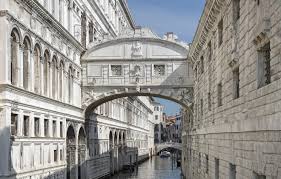
Answer: The Bridge of Sighs connects an old prison inside the Doge’s Palace to a newer one across the Rio di Palazzo. It was named after the fact that prisoners crossing the bridge would supposedly sigh upon enjoying their last glimpse of freedom.

What animal is considered to be symbolic of Venice?

  1. Bear
  2. Lion
  3. Fish
  4. Tiger

Answer: The Lion of St. Mark is a popular symbol of Venice that appears throughout the city. The symbol honors St. Mark, who is the patron saint of Venice and can be found on Venice’s official flag.

Venice’s Contarini Fasan Palace is traditionally believed to be the home of which Shakespearean heroine?

  1. Juliet
  2. Portia
  3. Ophelia
  4. Desdemona

Answer: Contarini Fasan Palace is traditionally believed to be the home of Desdemona, Othello’s doomed wife in Shakespeare’s play ”Othello.” Shakespeare wrote two plays that take place in Venice: ”Othello” and ”The Merchant of Venice.”

Posted in Architecture, Arte, English, Foto, Italia, Storia, Veneto, Venezia | 1 Comment

Per non dimenticare

La Giornata internazionale della memoria dell’Olocausto è il 27 gennaio di ogni anno, ed è contrassegnata da speciali commemorazioni e tributi a coloro che sono morti, sopravvissuti e che hanno assistito le vittime durante la seconda guerra mondiale. Quest’anno (2021), l’Istituto Italiano di Cultura di Los Angeles ha trasmesso online un video del 2006 per i suoi membri, Volevo Solo Vivere.* Diretto da Mimmo Calopresti e prodotto da Stephen Spielberg, questo documentario presenta gli innumerevoli orrori che nove cittadini italiani ebrai dovettero sopportare. Il film inizia con Mussolini e le leggi razziali italiane del 1938,  per poi raccontare i ricordi della deportazione e dell’internamento di questi nove persone nei campi di sterminio ad Auschwitz-Birkenau, la separazione, la sofferenza di tutti e la morte di tanti, fino agli ultimi giorni della loro liberazione, il 27 gennaio 1945.

Una delle storie più avvincenti è raccontata da una donna durante la liberazione: incredula osservaalcuni nazisti di Auschwitz mentre si tolgono le uniformi e cercano di mimetizzarsi con i prigionieri. Per un momento ha l’opportunità di prendere una pistola e sparare a una ex-guardia, ma il suo codice morale ha trionfa sul suo desiderio di vendetta. Descrive anche il primo cibo che mangiò al momento della liberazione: delle albicocche, offerte da un soldato americano. Ancora oggi associa il gusto delle albicocche alla gioia della libertà.

Ho visto questo documentario con la mia amica Jean Perloff, che vive a Santa Barbara e parla correntemente l’italiano. In realtà, l’abbiamo visto ognuna a case propria a causa della pandemia, ma abbiamo parlato del film insieme dopo averlo visto.  Abbiamo anche discusso delle nostre esperienze nei musei dell’Olocausto. Jean ha raccontato la sua esperienza al museo di Gerusalemme: “Yad Vashem è il memoriale ufficiale di Israele per le vittime dell’Olocausto. È dedicato alla preservazione dei ricordi dei morti, onorando gli ebrei che si sono battuti contro i loro oppressori nazisti e coloro che hanno aiutato gli ebrei bisognosi. Costruito nel 1953, Yad Vashem si trova sul versante occidentale del Monte Herzl, noto anche come Monte della Rimembranza. Il memoriale si compone di due tipi di strutture: alcune dedicate allo studio scientifico dell’Olocausto e del genocidio in generale, altre dedicate ai memoriali e ai musei per il grande pubblico.

“Un obiettivo fondamentale dei fondatori di Yad Vashem era riconoscere i non ebrei che, a rischio personale e senza motivazioni finanziarie o evangelistiche, scelsero di salvare gli ebrei dal genocidio dell’Olocausto. Quelli riconosciuti da Israele sono onorati in una sezione di Yad Vashem, conosciuta come il Giardino dei Giusti tra le Nazioni. Questi, i Giusti protesseroo i loro vicini ebrei in un momento in cui prevalevano pregiudizi, ostilità e indifferenza “.

Ho condiviso con Jean le mie esperienze in due musei americani dell’Olocausto, uno a Washington, D.C. e l’altro a Los Angeles. Lo United States Holocaust Memorial Museum, che si trova sul National Mall, è l’istituzione nazionale americana per la documentazione, lo studio e l’interpretazione della storia dell’Olocausto e funge da memoriale americano per i milioni di persone uccise durante l’Olocausto. Dalla sua apertura nel 1993, il Museo ha accolto più di 40 milioni di visitatori, tra cui più di 10 milioni di bambini in età scolare. Una delle presentazioni più agghiaccianti e memorabili per me nel museo è l’esposizione di migliaia e migliaia di scarpe di coloro che sono morti. Sebbene questa sia un’immagine potente per gli adulti, il museo è vitale per insegnare a bambini e adulti i pericoli del pregiudizio e dell’odio e la necessità di coltivare un senso di responsabilità morale.

Il Museum of Tolerance — Beit HaShoah (House of the Holocaust) è un museo multimediale a Los Angeles progettato per esaminare il razzismo e il pregiudizio in tutto il mondo con una forte attenzione alla storia dell’Olocausto. Il Museo si occupa di atrocità e genocidio in tutti i continenti, insieme a questioni come il bullismo e i crimini d’odio. Istituito nel 1993, il museo accoglie circa 350.000 visitatori all’anno (prima della pandemia), circa un terzo dei quali sono bambini in età scolare. Nella sezione dell’Olocausto del museo, si scoprono i 6 milioni di ebrei assassinati, insieme a innumerevoli altri, tra cui omosessuali, polacchi, zingari e portatori di handicap. Per bilanciare le statistiche a livello individuale, ogni visitatore all’ingresso del museo riceve una scheda generata dal computer con il nome e l’immagine di un bambino ebreo. Alla fine dell’esperienza museale, si deposita nuovamente la carta nel computer, che poi stampa la carta con l’eventuale destino del bambino. Nel mio caso, ho ricevuto una carta di un ragazzo ebreo italiano … che è morto nell’olocausto. 

* Organizzato dall’Istituto Italiano di Cultura di Los Angeles e dalla Consulata Generale d’Italia a Los Angeles con il Museum of the Holocaust of Los Angeles, il Museum of Tolerance Los Angeles, Università di Southern California Shoah Foundation, AJC (American Jewish Committee) Los Angeles, ADL (Anti-Defamation League) Los Angeles e Milken Community School.

Posted in Uncategorized | 2 Comments

“Never Forget”

International Holocaust Remembrance Day is January 27 every year, which is marked with special commemorations and tributes to those who died, to those who survived, and to those who assisted the victims throughout World War II.  This year (2021), the Italian Cultural Institute of Los Angeles offered its members an online video from 2006, Volevo Solo Vivere (I Only Wanted to Live).*  Directed by Mimmo Calopresti and executive produced by Stephen Spielberg, this documentary presents the Italian Jewish experience through the eyes of nine Italian citizens who endured countless horrors.  The film begins with the days of Mussolini and the Italian racial laws of 1938, and then recounts the memories of deportation and internment of these nine in the Auschwitz-Birkenau death camps, the separation and suffering of all and the deaths of so many, through to the final days of their liberation on January 27, 1945.

One of the most compelling stories is told by a woman who, during liberation, watched in disbelief as some of the Nazis at Auschwitz removed their uniforms and tried to blend in with the prisoners.  For a moment, she had the opportunity to grab a pistol and shoot a former guard.  Her decision to abide by her own moral code triumphed over her desire for revenge.  She also described the first food she ate upon liberation—apricots given to her by an American soldier.  To this day, she associates the taste of apricots with the joy of freedom.

I watched this documentary with my friend Jean Perloff, who lives in Santa Barbara and is fluent in Italian.  Actually, we watched it in our own homes because of the pandemic, but talked about the film together after viewing it.  In the spirit of “Never Forget,” we also discussed our experiences at Holocaust museums.  Jean recounted her experience at the museum in Jerusalem: “Yad Vashem is Israel’s official memorial to Holocaust victims.  It is dedicated to preserving the memories of the dead, honoring the Jews who fought against their Nazi oppressors and the Gentiles who helped the Jews in need.  Built in 1953, Yad Vashem is located on the western slope of Mount Herzl, also known as the Mount of Remembrance.  The memorial consists of two types of structures:  some are dedicated to the scientific study of the Holocaust and genocide in general, and others are memorials and museums for the general public. 

“A fundamental goal of the founders of Yad Vashem was to recognize non-Jews who, at personal risk and without financial or evangelistic motivation, chose to save Jews from the ongoing genocide during the Holocaust.  Those recognized by Israel are honored in a section of Yad Vashem known as the Garden of the Righteous Among Nations.  These Righteous individuals protected their Jewish neighbors at a time when prejudice, hostility and indifference prevailed.”

I shared with Jean my experiences at two American Holocaust museums—one in Washington, DC, and the other in Los Angeles.  The United States Holocaust Memorial Museum, which is located on the National Mall, is American’s national institution for the documentation, study and interpretation of Holocaust history, and serves as America’s memorial to the millions of people murdered during the Holocaust.  Since its dedication in 1993, the Museum has welcomed more than 40 million visitors, including more than 10 million school-age children.  One of the most chilling and memorable exhibits for me in the museum was a display of thousands and thousands of shoes of those who died.  While this is a powerful image for adults, the museum is vital in teaching children and adults the dangers of prejudice and hatred and the need to cultivate a sense of moral responsibility.

The Museum of Tolerance—Beit HaShoah (House of the Holocaust) is a multimedia museum in Los Angeles designed to examine racism and prejudice around the world with a strong focus on the history of the Holocaust.  The Museum deals with atrocities and genocide on all continents, along with issues like bullying and hate crimes.  Established in 1993, the museum welcomes about 350,000 visitors annually (before the pandemic), about a third of which are school-age children.  In the Holocaust section of the museum, one learns about the 6 million Jews murdered, along with countless others, including homosexuals, Poles, gypsies, and the handicapped.  To balance the statistics on an individual, human level, each visitor at the museum entrance receives a computer-generated card with the name and picture of a Jewish child.  At the end of the museum experience, one deposits the card back into the computer, which then prints the card with the eventual destiny of the child.  In my case, I received a card of an Italian Jewish boy … who perished in the Holocaust.

*Organized by the Cultural Institute in Los Angeles and the Consulate General of Italy in Los Angeles with the Holocaust Museum LA, the Museum of Tolerance Los Angeles, USC Shoah Foundation, AJC Los Angeles, ADL Los Angeles and the Milken Community School.

Posted in Uncategorized | 1 Comment