Risi e Bisi (rice and peas)

Has the pandemic changed our attitude toward culinary authenticity?  Are we more or less likely to “break the rules” and try new variations in the interest of curiosity, diet, taste, or simply, just for fun?  Sometimes I think that The New York Times baits its Italian and Italian-American readers with modifications to classic pasta dishes like carbonara, puttanesca and Bolognese.  In fact, the internet blew up when the newspaper published a vegan Bolognese, which, of course, omitted the meat and dairy that are traditionally integral to the dish.  The recipe featured seared mushrooms and toasted walnuts, enhanced by balsamic vinegar, tomato paste, soy sauce and Marmite, a popular British sandwich spread.  Besides the outrage, there were many positive comments about this “rich, robust and complex” dish.  Sometimes I wonder if The Times’ chefs should choose a completely neutral name—say, one named after their own cities, instead of messing with a classic—to cool down the temperatures.

So, it was with trepidation that I checked out the newspaper’s rendition of Risi e Bisi (https://cooking.nytimes.com/recipes/1022094-risi-e-bisi), a Venetian springtime specialty to celebrate the feast of San Marco on April 25.  The major modification was the addition of firm, baby zucchini.  I checked out the comment section.  To my relief, nobody fainted at the Cipriani in Venice.  In fact, the comments were relatively mild and modest.  One reader objected to the use of olive oil in the recipe: “olive oil was scarce in Venice; only butter should be used.”  Another noted that carnaroli rice is low in starch and that vialone nano yields a creamier result. 

To find some discussion or debate on Risi e Bisi, you had to consult the doyens of Italian cooking.  Of course, one thing the best chefs agreed on was the star of the show—the peas.  One must use the youngest and freshest peas available—and preferably ones you grow yourself.  Peas are best when they are small and sweet, before the sugars turn to starch.  Heaven forbid one uses canned peas or frozen peas (well, maybe the latter in a pinch, but then why not make a different dish if that is what you have on hand).  The other advantage of fresh peas is that you can add the pods to the dish, which makes the peas taste even sweeter. 

The burning question:  do you eat it with a spoon or fork?  Marcella Hazan explains in her bookbooks: “risi e bisi is not risotto with peas. It is a soup, albeit a very thick one, which should be runny enough to require a spoon.”  Elizabeth David and others in their books recommend the use of a fork.  The Venetians refer to the consistency as “all’onda,” a reference to the waves in the sea.  However, they would probably all concur on the use of a napkin.  Here is a classic recipe (with quantity conversions) from my favorite Italian cookbook, L’Italia in Cucina, which features recipes, traditions and products by each of Italy’s 20 regions:

Risi e Bisi from Locanda Da Condo, Farra di Soligo (Treviso)

Ingredients (for 4 people)

About 10-11 oz. di riso

About 1.5 pounds of organic peas in pods

1 spring onion

A bunch of parsley

About 2 oz. of pancetta or guanciale

A glass of dry white wine

About 3.5 oz. of grana padana

About 8-9 oz. of butter

Salt and pepper

For the broth:

An onion, a carrot, a celery stalk and some leaves, several parsley stalks

Salt

Preparation

  1. With salted water and the aromatic vegetables, prepare the vegetable broth.
  2. Shell the peas from the pods.  Blanch the pods, then puree to obtain a dense cream that you then set aside.
  3. Brown in about 2 oz. of butter the pancetta that has been roughly chopped, then puree in a mixer to reduce also to a cream.
  4. Brown in about 3.5 oz. of butter the onion chopped finely and begin to toast the rice: when it begins “to sing,” pour in the wine and cook until it evaporates.  Add the peas, the pancetta “cream”, and then gradually during the cooking the pea pod “cream.”  Continue cooking with the vegetable broth.  Halfway through, add the chopped parsley.
  5. Once the rice is cooked, taste for salt and pepper, whisk in the remaining butter and the grated grana padana cheese.

Serve immediately “molto all’onda!
Posted in Uncategorized | 1 Comment

Cani con uno straordinario senso di orientamento

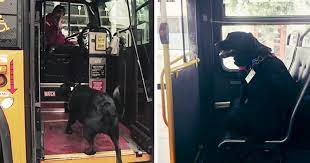
Eclisse viaggia da solo in autobus a Seattle nello stato di Washington. È una razza mista di Labrador retriever nero il cui proprietario ha portata molte volte in centro in un parco per cani. Ma quando un giorno il proprietario si è distratta alla fermata dell’autobus, Eclisse è salita sull’autobus da sola. Sapeva esattamente a quale fermata scendere. Ora la sua imbracatura rossa è dotata di un abbonamento per l’autobus. Viene accolta sull’autobus da tifosi adoranti e trascorre diverse ore al parco facendo esercizio e facendo amicizia. Quando è ora di partire, prende l’autobus per casa… da sola.

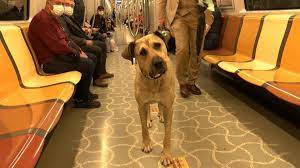
Boji è il cane pendolare di Istanbul. Questo pastore anatolico di razza mista con pelliccia marrone dorata e orecchie flosce viaggia su traghetti, autobus e treni e ha conquistato il cuore dei cittadini. Poiché non ha un proprietario, i funzionari della città hanno fatto in modo che fosse vaccinato e dotato di un microchip per monitorare i suoi viaggi. Boji è stato in 29 stazioni della metropolitana in un giorno, viaggiando fino a 30 chilometri.

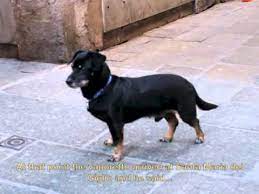
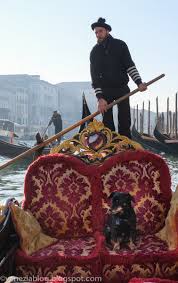
Poi c’è Sandro che meglio di chiunque altro sa destreggiarsi nel dedalo di vicoli e calli, oltre che di gondole e vaporetti, di Venezia. Un cane di razza mista nera con accenti marroni bruniti, Sandro è alto appena un piede e pesa meno di 12 libbre. Ogni mattina Sandro accompagna il suo proprietario Nicola Grossi, un gondoliere veneziano, a lavorare vicino a Rialto.

La loro vita insieme non è iniziata in questo modo. Quando viveva al Lido, Nicola ha salvato Sandro da una vita di abbandono; inizialmente Sandro era diffidente e scortese. Ma presto ha seguito Nicola in bicicletta che andava ogni mattina al lavoro in un negozio. Lo ha poi incontrato alla fine della giornata lavorativa. Nel frattempo, esplorava l’isola lunga di 15 km e sembrava conoscere ogni angolo. Quando Nicola si è trasferito a Venezia vera e propria, Sandro lo accompagnava ovunque…prima a piedi, poi nella sua piccola barca a motore e in gondola. Essendo il più giovane di 8 figli, Nicola ha fatto molte visite alla sua famiglia con Sandro al suo fianco, inclusa sua madre nell’isola della Giudecca.

Man mano che le conoscenze cartografiche di Sandro aumentavano, spesso lasciava la gondola per inseguire le proprie avventure. Poi arrivavano le telefonate con gli avvistamenti di Sandro. (Il numero di telefono di Nicola era scritto sull’etichetta del collare di Sandro.) “Ho visto il tuo cane in Campo Santo Stefano” oppure “Ho visto il tuo cane a San Polo”. I membri dell’equipaggio del vaporetto chiamavano Nicola, pensando che il cane si fosse perso. Nicola doveva rassicurarli tutti che Sandro sapeva esattamente dove stava andando. Una delle mete preferite era la casa della madre di Nicola alla Giudecca dove avrebbe pranzato prima di partire per un’altra gita.

Sandro ha anche capito il sistema delle gondole: ogni gondola che parte da una determinata stazione segue un percorso prestabilito. Nicola ha sempre ruotato da un giorno all’altro tra le varie stazioni, il che significava che Sandro doveva anche imparare vari percorsi. E ha dovuto impararli non solo quelli dell’acqua, ma anche lo stesso percorso per terra attraverso le strade labirintiche della città. Verso la fine della giornata, Nicola trovava Sandro ad aspettarlo pronto a raggiungerlo nella gondola.

Nel corso degli anni Sandro ha sviluppato la cataratta e ha dovuto stare più vicino a Nicola durante i giorni. Poi alla fine del 2019, poco prima del suo 19esimo compleanno, Sandro è morto. Ha portato con sé una complessa mappa interna di Venezia… per terra e per mare.

Posted in Animali, Foto, Italia, Italiano, Venezia | Leave a comment

GPS Dogs

Eclipse rides the bus solo in Seattle.  She’s a black Labrador retriever mix whose owner took her many times downtown to a dog park.  But when the owner got distracted one day at the bus stop, Eclipse hopped on the bus by herself.  She knew exactly which stop to get off.  Now her red harness is fitted with a bus pass.  She is greeted on the bus by adoring fans and spends several hours at the park getting exercise and making friends.  When it’s time to leave, she takes the bus home…solo.

Boji is Istanbul’s commuter dog.  This Anatolian shepherd mix with golden-brown fur and floppy ears rides ferries, buses and trains and has won the hearts of citizens.  Because he does not have an owner, city officials arranged for him to be vaccinated and fitted with a microchip to track his journeys.  Boji has been to 29 metro stations in a day, traveling up to 20 miles.

Then there is Sandro who knows better than anyone how to negotiate the maze of alleys and calli, as well as gondolas and vaporetti, of Venice.  A black mixed breed dog with burnished brown accents, Sandro stands barely a foot tall and weighs less than 12 pounds.  Each morning, Sandro accompanies his owner Nicola Grossi, a Venetian gondolier, to work near the Rialto. 

Their life together didn’t start out this way.  Living at the time on the Lido, Nicola rescued Sandro from an early life of neglect; understandably Sandro was distrustful and unfriendly.  But soon he followed Nicola on his bike going to work each morning at a store.  He then met him at the end of the work day.  In the meantime, he explored the 15 km long island and seemed to know every nook and cranny.  When Nicola moved to Venice proper, Sandro accompanied him everywhere…first on foot, then in his small motor boat and in the gondola.  As the youngest of 8 children, Nicola made many family visits with Sandro at his side, including to his mother on the island of Giudecca.

As Sandro’s cartography knowledge increased, he would often leave the gondola to pursue his own adventures.  Then the phone calls started coming in with Sandro sightings.  (Nicola’s phone number was written on the tag of Sandro’s collar.)  “I saw your dog in Campo Santo Stefano” or “I saw your dog in San Polo”. Vaporetto crew members would call thinking the dog was lost.  Nicola had to reassure them all that Sandro knew exactly where he was going.  A favorite destination was Nicola’s mother’s place on Giudecca where he would receive lunch before taking off on another jaunt. 

Sandro even understood the gondola system:  Each gondola that departs from a particular station follows a set route.  Nicola has always rotated from one day to the next among various stations, which meant that Sandro had to also learn various routes.  And he had to learn them not only by water but also the same route on foot via the city’s labyrinthine streets. Toward the end of the day, Nicola would find Sandro waiting for him on a fondamenta (canal side) ready to rejoin him on the gondola.

Over the years, Sandro developed cataracts and had to stay closer to Nicola during the days.  Then at the end of 2019, shortly before his 19th birthday, Sandro died.  He took with him a complex internal map of Venice…by land and by sea.

Posted in Animali, English, Foto, Italia, Venezia | 1 Comment