
Can you guess? I would have thought hundreds, closer to 1,000. The answer is 192. They all pretty much have the same size and format. They generally contain the holder’s name, place and date of birth, signature, and other identifying information.
Passports vary by color and by freedom or restrictions of travel throughout the world. The web site, Passport Index, offers the panorama of nations and passports throughout the world. What color of passport is most prevalent? First, red, then blue, then green. You can see how beautiful this is on the site. You can also navigate around a geographic map of the world to discover the passport for a country, or see any passport in an  alphabetical listing by country.
 Perhaps the most interesting feature on the site is the “Passport Power Rank.” It is an index from 1 to 80 that classifies passports based on the number of countries or states that the holder can visit without a visa. At the top—rank 1—are only two countries, the United States and Great Britain, which have the liberty to visit 147 other countries. Rank 2 belongs to France, Germany, and South Korea with 145 countries. In third position is Italy and Sweden with 144 nations to visit without a visa.
With 143 countries at rank 4 are Singapore, Denmark, Finland, Japan, Luxembourg,  and the Netherlands. San Marino has rank 20 (123 nations) and Vatican City has rank 25 (113 nations). At rank 80 are the Palestinian territories, the African archipelago of São Tomè and Principe, the South Sudan, Myanmar, and the Solomon Islands, where the number of nations that can be visited without a visa falls to 28.
 passeggero. A sfrecciare tra un punto e l’altro saranno però gli scooter, guidati da autisti amatoriali. E la città dove l’app esordisce? Roma, la città con più scooter in Italia.
 I guidatori sono tutti in possess di assicurazione e devono superare un esame dato dalla ditta. “Scooterino” non ha un tassametro. Chi viaggia paga un “rimborso spese,” che sono carburante e tempo. L’app non ha scopo di lucro; quindi, le guide non hanno bisogno di un’assicurazione “commerciale.”
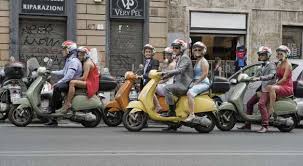 all’Italia le strategie che ha imparato negli ultimi anni nella Silicon Valley: “Da imprenditore vedo i problemi come opportunità….E l’Europa ha qualche situazione da risolvere. Quando ho avuto l’idea di “Scooterino” ero a Roma per visitare la mia famiglia che vive là. Aspettavo l’autobus che non arrivava. Vedevo sfrecciare tutti questi scooter verso di me e ho pensato che di sicuro qualcuno stesse andando nella mia stessa direzione. Ho lasciato il mio lavoro in California: mi sono voluto buttare dentro questa idea.”
 This is how it works: the client brings up the app and requests a trip indicating from where to where he or she wants to go. A driver on a scooter identifies the client’s position with GPS. When he arrives, he loads the passenger on the scooter and gives him a required helmet. At the end of the trip both participants leave feedback on the app.

