
The 2019 word of the year is “climate emergency,” according to the Oxford English Dictionary. The term is defined as “a situation in which urgent action is required to reduce or halt climate change and avoid potentially irreversible environmental damage resulting from it.” And Italy is doing something about it.
According to a recent article in the New York Times, Italy is the first country in the world to teach climate change in schools. Starting in 2020 all students will take 33 hours of climate change lessons. They will be integrated into many subjects, such as geography and physics, which will no longer be studied in the traditional way. What is the point of learning place names and locations or studying the geography of lakes and rivers if many of them have dried up or disappeared? What is the point of learning the names and locations of the seas without understanding the impact of pollution and the melting of glaciers? Millions of students will begin to understand what global warming means, not only in their own lives, but also throughout the world.
The curriculum will vary by age range. For children 6 to 11, Italy’s education minister says, “we are thinking of using the fairy-tale model” in which stories from different cultures would emphasize a connection to the environment. Middle schoolers would be expected to learn more technical information, and high school students would explore the United Nations’ 2030 Agenda for Sustainable Development.
Science tells us that the next 10 years are crucial. Teaching children and teenagers about climate change, one hopes, would also have the important effect of passing the information to parents and, ultimately, to putting pressure on the politicians. Too many politicians in Italy and the United States either don’t believe in climate change or believe it is not an imminent concern even though the rise in temperatures has been underway for decades.
In Italy, the anti-establishment Five Star Movement has claimed environmental concerns at the heart of its identity. It has supported taxes on sugar and plastic. But Matteo Salvini, leader of the League party, has a skeptical view of climate change, seems ignorant of the scientific basis, and ridicules environmental advocacy. The threat to this new educational initiative to teach children about climate change is a change in government. Not so long ago, a left-leaning government attempted to introduce educational programs to spot disinformation, but they were discontinued when the government lost power.
In the United States, a recent National Public Radio (NPR) poll discovered that most teachers do not teach climate change. Yet, 80% of parents wish they did. In addition, 67% of Republicans and 90% of Democrats (regardless of whether they have children) agree that the subject should be taught in schools. This is a critical time, as President Trump is pulling the United States out of the landmark 2016 Paris Agreement dealing with greenhouse-gas emissions, among many other things.
Teaching children about climate change will help them understand the gravity of what is happening, from deforestation to melting glaciers, from fires to floods. One hopes that they will become advocates and leaders in the way that precious resources, like water, are managed. As Italy’s education minister says, “every country needs to do its part to stop the ‘Trumps of the world.’”
He added, “The 21st century citizen must be a sustainable citizen.”
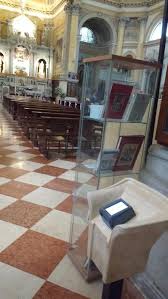 La chiesa di San Giacomo a Chioggia (in Veneto) è la prima in Italia ad avere installato un Pos dispositivo nel suo santuario. Ispirato a un precedente in Svezia, l’installazione del dispositivo consente ai fedeli di utilizzare le carte di debito e di credito per fare le loro offerte. Il dispositivo è incastonato in una colonnina di marmo bianco, poco distante dalle porte d’ingresso. Il display indica tre opzioni: Offerta candela, Offerta messa, Offerta
 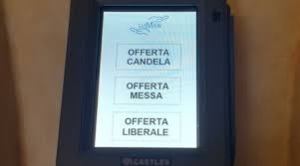 liberale. Una candela può costare uno, due o tre euro, anche se può essere fornito un contributo più generoso. La Santa Messa inizia con 10 euro. Dopo la selezione, si striscia il bancomat o la carta di credito.
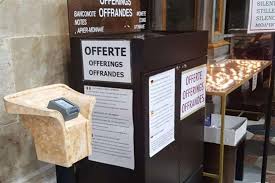 preghiera e desideravano poi accendere una candela o lasciare un’offerta. Ma spesso non avevano monete o provenivano da paesi stranieri in cui l’uso della carta di credito è la norma. Ho notato che i pellegrini presentavano le carte di credito nel negozietto del duomo anche per oggetti da pochi euro. Ho chiesto informazioni alle banche e poi ho appreso del sistema nella chiesa di Chioggia. Ho deciso di sperimentarlo nella cattedrale di Torino per un periodo di un anno”.
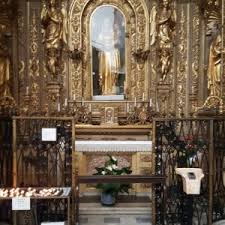 La cattedrale ha installato due POS in marmo, uno davanti alla cappella che custodisce la Sindone e l’altro nella navata destra dedicata a Maria. L’esperimento è iniziato nell’agosto 2019 al culmine della stagione turistica. Finora il nuovo sistema ha registrato donazioni medie mensili di oltre cento euro. “Il nuovo sistema non sostituirà i tradizionali bussolotti”, conclude don Franco, “ma dovrebbe essere visto come un’opportunità aggiuntiva per i fedeli che desiderano fare un’offerta elettronicamente e con una maggiore protezione. Penso che se questi sistemi POS fossero adottati in altre chiese, certamente ridurrebbe il rischio di furto che purtroppo viene perpetrato troppo spesso nelle parrocchie”.
 L'Olivo Santa Barbara