Playing and praying go well together at the Vatican, which holds a soccer tournament that’s  big and getting bigger. The Clericus Cup involves more than 350 priests, deacons, and seminarians from the Vatican who play in the annual event.
The rule book of the Clericus Cup, like the Bible, contains certain commandments. The first is, “do not commit a foul on an opponent who has a free path to the goal.” If a player does not obey, the punishment is not a red card or a yellow card. It is a blue card that leads to soccer’s version of purgatory: a 5-minute trip to the sidelines for spiritual reflection.
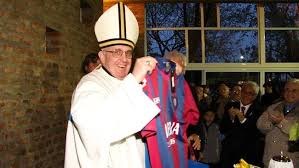 In the Vatican, faith and soccer are both considered essential, according to the Pope. “It’s beautiful when a parish has a sports club. Something is missing without one,” says Pope Francis, who supports Argentinian soccer. But the Pope does not have a favorite team among the 16 that will play for two months beginning in March. The tournament is played on a hilltop in Vatican City on Columbus Pius XI Field, a place with artificial turf but also a breathtaking view of St. Peter’s Basilica.
The players say that that one of the most satisfying aspects of the game is to see how players 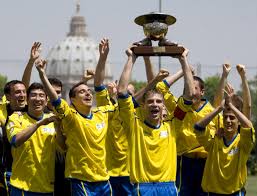 come together as a team and to see how the bond strengthens throughout the tournament.
The Clericus Cup is one of the few international soccer events that is dominated by North America. The North American Martyrs won in 2012 and 2013. But at times the physical and spiritual worlds collide. This year the Martyrs will not have a high-scoring forward who injured his knee. He must be able to genuflect when he becomes a priest. So he is retiring early for a greater good.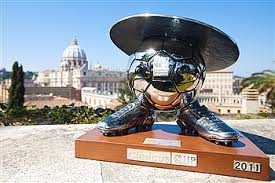
 osato dire che nel sugo lui ci mette pure “l’aglio in camicia.”
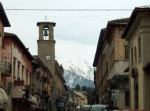 bianco, pomodoro San Marzano, pepe e peperoncino.” I puristi, guidati dal sindaco della cittadina che detiene la paternità della ricetta, si sono ribellati: nè aglio nè cipolla nella ricetta originale della salsa tanto amata.
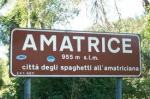 italiano abbi sbagliato un ingrediente fondamentale per una delle paste più famose del mondo?