Some Laws are Different in Italy

Here is a short list of funny, strange, or interesting laws in Italy that, for all I know, we do not have in the United States.  I don’t know the origin of these laws, nor the details or definitions.  And I don’t know if these laws are enforced or enforceable.
• In Milan a law states that locals must constantly smile or risk being fined.  Those attending a funeral or visiting a hospital are exempt.
• It’s against the law in Florence to eat or drink in the immediate vicinity of the main churches and public buildings.
• The Supreme Court of Cassation ruled that it is legal for anyone living in Italy to grow marijuana from balconies or terraces.
• A few years ago the Italian Supreme Court ruled that having sex in a car that is parked in a public place is a felony, carrying a possible prison sentence of 3 months to 1 year.
• In the coastal town of Eraclea (Veneto), building a sandcastle on the beach is prohibited since it might obstruct the passage of someone strolling on the beach.
• Turin has a law that requires dog owners to walk their poochies at least 3 times a day to avoid a fine of 500 euros.  It is also against the law to “turn one’s dog into a ridiculous fluffy toy”.
• When a vendor or shop owner gives change to a customer, it is never handed directly, but rather always laid on the counter or put in a receptacle on the counter.
• It is against the law to feed the pigeons in St. Mark’s Square in Venice!
• In Naples dog poop samples are tested and then matched to a DNA database.  Owners who do not clean up after their dogs are fined 500 euros.  How ironic in a city with huge garbage problems!

Posted in Abitudini, Animali, Differenze culturali, English, Italia | 5 Comments

I capolavori rubati da un museo di Verona

Museo Civico di Castelvecchio

Museo Civico di Castelvecchio

La sera dell giovedì 19 novembre 2015, 17 capolavori d’arte sono stati rubati dal Museo Civico di Castelvecchio di Verona.  Tre uomini mascherati e vestiti di nero sono entrati nel museo al cambio della guardia.  Hanno legato il responsabile della sicurezza e un cassiere.  Un rapinatore osservava gli ostaggi, mentre gli altri facevano irruzione nelle sale espositive.  Hanno preso le chiavi del responsabile della sicurezza e hanno utilizzato la sua auto per fuggire.

La Signora di Licnidi

La Signora di Licnidi

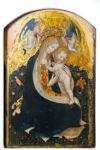
La loro refurtiva include “La Signora di Licnidi” (ca. 1602) di un giovane Peter Paul Rubens, “Sacra Famiglia con una Santa” (ca. 1500) di Andrea Mantegna, “Madonna della guaglia” (ca. 1420) di Antonio Pisano (noto come Pisanello), “Giudizio di Salomone” (ca. 1575) di  Jacopo Tintoretto, e inoltre le opere di Jacopo Bellini, Giovanni Francesco Caroto, e Hans de Jode.

“Qualcuno li ha inviati, erano abili, sapevano esattamente dove stavano andando,” ha detto il sindaco di Verona Flavio Tosi.  Un portavoce del museo ha spiegato che i ladri sono arrivati dopo che i visitatori erano usciti dall’edificio,  ma prima che gli allarmi fossero stati attivati.  Filmato dalle 48 telecamere dentro e intorno ai locali è stato dato alla polizia.

Sacra Famiglia con una Santa

Sacra Famiglia con una Santa

Un furto di questa grandezza, uno dei più estesi della storia d’Italia, avrebbe dovuto essere di prima pagina sui giornali italiani.  Ma in mezzo alla copertura degli attentati terroristici di Parigi, e diventata una notizia  di “pagina posteriore”.   Non ho letto circa questo per due giorni, ma poi e’ apparso un articolo che ha condannato la insufficiente protezione in Italia del suo patrimonio artistico:

“Che strano Paese il nostro.  Lascia pressochè incustoditi, per mancanza di fondi, capolavori d’arte esposti in pubbliche strutture.  E nel contempo investe denaro per un apparato burocratico che complica la vita ai collezionisti e ai mercanti per bene.  Se avete in casa l’opera d’un maestro del Cinquecento sarete costretti a controlli, verifiche, pile di documenti e interminabili e faticosissime trafile.  Lo Stato no.  Può permettersi di esporre decine di magnifici quadri, con l’ingresso a disposizione dei criminali…. Sempre occupato a disperdere soldi, prebende ed energie in mille iniziative anzichè dare la massima attenzione nel tutelare i tesori artisitici delle nostre straordinarie città.

Madonna della guaglia

Madonna della guaglia

“Alcune ipotesi investigative sostengono che le opere trafugate sarebbero entrate nel circuito di qualche eccentrico e banditesco miliardario.  Fermo restando che restano invendibili a causa della loro notorietà, l’ipotesi più plausibile e auspicabile è quella d’una richiesta di riscatto.  Esiste un matto disposto a custodirle in segreto per sempre e tramandarle clandestinamente ai suoi discendenti?

Giudizio di Salomone

Giudizio di Salomone

“Con questo furto, uno dei più eclatanti tra quelli avvenuti in Italia, è stata mutilata una parte del nostro patrimonio storico e artistico.  Per non parlare del danno economico.  La stima di 15 milioni di euro, sul valore delle diciassette opere scomparse, è assai bassa.  Com’è possibile quantificare il prezzo della “Sacra

Famiglia con una Santa” di Andrea Mantegna?  Negli ultimi trent’anni sul mercato delle

Discesa al Limbo

Discesa al Limbo

aste l’unico quadro certamente attribuito a Mantegna, una piccola tempera su tavola “Discesa nel Limbo”, è stato aggiudicato da Sotheby’s nel gennairo del 2003 per 28,6 milioni di dollari.

“Che danno può essere? Alto.  Molto alto.  Sia economico che morale….La difesa del nostro patrimonio artistico coincide con la difesa della nostra civiltà.  I nostri valori sono custoditi dalla nostra storia.”

Posted in Arte, Foto, Italia, Italiano, Storia, Verona | Leave a comment

Art Masterpieces Stolen from Verona Museum

Museo Civico di Castelvecchio

Museo Civico di Castelvecchio

On the evening of Thursday, November 19, 2015, 17 masterpieces were stolen from the Museo Civico di Castelvecchio in Verona.  Three masked men dressed in black entered the museum at the change of guard and tied up and gagged the security officer and a cashier.  One robber watched the hostages while the others raided the exhibition rooms.  They took the security officer’s keys and used his car to escape.  (What if he had had a FIAT 500?)

The Lady of Licnidi

The Lady of Licnidi

Their haul included “The Lady of Licnidi” (ca. 1602) by a young Peter Paul Rubens, “Holy Family with a Saint” (ca. 1500) by Andrea Mantegna, “Madonna of the Quail” (ca. 1420) by Antonio Pisano (known as Pisanello), “King Solomon’s Court” (ca. 1575) by Jacopo Tintoretto, as well as works by Jacopo Bellini, Giovanni Francesco Caroto, and Hans de Jode.

Holy Family with a Saint

Holy Family with a Saint

“Someone sent them, they were skilled, they knew exactly where they were going,” said Verona mayor Flavio Tosi.  A museum spokesperson explained that the thieves arrived after the building emptied but before the alarms had been activated.  Footage from the 48 cameras in and around the premises has been given to the police.

A theft of this magnitude, one of the most extensive in Italy’s history, should have been the headline in Italy’s newspapers.  But amidst the coverage of the terrorist attacks in Paris, it fell to “back page” news.  I didn’t read about it for 2 days, but then there appeared a pretty scathing condemnation of Italy’s protection of its artistic heritage:

Madonna of the Quail

Madonna of the Quail

“What a strange country we have.  For lack of funds, Italy leaves virtually unattended works of art exhibited in public facilities.  At the same time, the state invests in a bureaucracy that complicates life for collectors and sellers.  If you have at home the work of a master, you will undergo controls, audits, endless piles of documents, exhausting processes.  But the government can afford to expose dozens of magnificent paintings with access at the disposal of criminals.  It is too busy dispersing money, perquisites and energy in a thousand initiatives rather than giving the utmost attention to protect the treasures of our extraordinary cities.

King Solomon's Court

King Solomon’s Court

“Some hypotheses claim that the stolen works would become part of the collection of some eccentric billionaire.  They are unsalable because of their notoreity and therefore the most plausible and desirable hypothesis remains – that of a ransom demand.  Can there be a madman willing to store them in secret forever and pass them clandestinely to his descendants?

Descent into Limbo

Descent into Limbo

“With this theft, part of the historical and artistic heritage of Italy has been mutilated.  Not to mention the economic damage.  The estimate for the 17 paintings at 15 million euros is extremely undervalued.  How is it possible to quantify the price of the “Holy Family with a Saint” by Mantegna?  In the last 30 years on the auction market, the only painting positively attributed to Mantegna was a small tempera, “Descent into Limbo,” which sold at Sotheby’s in 2003 for $28.6 million.

“What is the price of all this?  High.  Very high.  Both economic and moral.   The defense of our artistic heritage goes hand-in-hand with the defense of our civilization.  Our values are stored in our history.”

Posted in Arte, English, Foto, Italia, Storia, Verona | 1 Comment