
Risotto is one of the classic dishes in Italian cuisine. I don’t think risotto is difficult to make, but some people are hesitant to try. Perhaps it is because it takes more or less constant stirring from beginning to end. In fact, I think the easy part is that the quantities don’t have to be exact in my opinion. Also, once you have made it a couple of times and feel comfortable with how the rice absorbs the broth, you can make risotto with anything—mushrooms, squash, radicchio, meat.
Before I list the ingredients and the recipe, here are some pointers and points of contention that I gleaned from my own experience and from researching different recipes. First, because a risotto must be cooked in a uniform manner on the stovetop, it is important to choose the right pot—neither too tall not too narrow. The ideal pot is probably one that eventually contains the rice and the broth at a height of 2 or 3 fingers.
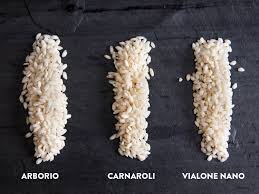 Arborio, Carnaroli, or Vialone nano are the ideal varieties of rice to use. Arborio is the most widely available in supermarkets, but Italians generally prefer the other two, which have smaller grains, are starchier, and absorb liquid a little better. Many people suggest that at the outset, the rice should be washed; others say that this causes the rice to lose its consistency and to split apart during cooking.
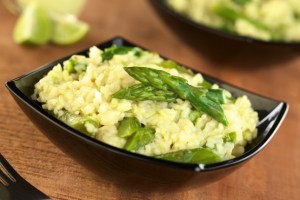
You can use either an onion or shallot at the outset of cooking. They should be chopped so that they are no larger than the grains of rice. Then they should be wilted gently in olive oil without taking on color. Then the rice should be toasted lightly, wine or other alcohol added, and the boiling broth added little by little while stirring more or less constantly. Some recipes add the cut asparagus after the onion and before the rice; I prefer parboiling the asparagus and adding them at the last minute to preserve their crunchiness. Another point of debate is whether it is necessary to add butter at the end.
In any case, it is advisable to serve the risotto as soon as it reaches the desired consistency. The bowl or plate on which it is served should not be warmed in advance; otherwise the cooking continues. As much as I like leftovers that sometimes taste better the following day, I find that risotto reheated the following day just doesn’t taste great.
Ingredients
- 1 pound asparagus, cut into 1-inch lengths
- 5 cups canned vegetable or chicken broth
- 2 tablespoons olive oil
- 1/2 cup chopped shallot or onion
- 1 1/2 cups Arborio rice
- 1/2 cup or more of dry white wine
- 6 tablespoons (3/4 stick) butter
- 3/4 cup freshly grated Parmesan cheese (about 3 ounces)
- Salt and pepper to taste
Preparation
- Blanch asparagus pieces in large pot of boiling, salted water 2 minutes. Add tips and cook one minute more. Rinse asparagus under cold water. Drain asparagus well.
- Bing broth to simmer in small saucepan.
- Heat olive oil in saucepan over medium heat. Add shallot and sauté gently until transparent, about 4 minutes. Add rice and stir for about 3 minutes. Add wine and cook until liquid evaporates.
- Add boiling broth about a cup at a time and stir more or less continuously. Continue until rice is tender but slightly firm in the center and the mixture is creamy, about 20 minutes. Add asparagus stalks and reserve points for decoration at the end.
- Remove from heat, add butter and stir to incorporate. Add parmesan, season with salt and pepper.
Buon Appetito!
 migliori drink nel mondo. Il Negroni è il secondo dopo l’Old Fashioned. Gli altri nei primi dieci sono il Manhattan, Daiquiri, Martini, Whiskey Sour, Margarita, Sazerac, Moscow Mule, and the Mojito.
 Il Conte Camillo Negroni (1868—1934) era un membro eccentrico, creativo, e affascinante dell’élite artistica e culturale di Firenze. Un giorno tra il 1917 e il 1920, si trovò in un elegante bar del centro di Firenze. Ordinò un “Americano” ma poi chiese al giovane barista, Fosco Scarselli, di “irrobustire” il suo drink. Scelse un gin britannico, che avrebbe aumentato il livello alcolico senza diminuire il bel colore rosso. Fu guarnito con un’arancia per distinguerlo dal suo predecessore. Per un breve periodo, questo drink fu conosciuta come “un Americano nel modo del Conte Negroni”, ma ben presto semplicemente, “Negroni”.
 Negroni Sbagliato, in cui il drink è stato alleggerito sostituendo il gin con lo spumante brut. Infatti, il barista a Milano prese una bottiglia per un’altra e pensando di versare il gin aggiunse il brut. Piacque ai presenti … e poi tantissimi altri. In Inghilterra lo chiamano Negroni Mistaken e nei paesi di lingua spagnola Negroni Equivocado.
 Poi c’è il Negroski con vodka al posto del gin. E Il Western Style Negroni con Wild Turkey bourbon al posto del gin, guarnito con gocce di cioccolato amaro. Fortunatamente il Conte Negroni non è qui per testimoniarli.
 L'Olivo Santa Barbara